Tadany Um refúgio para a alma e um convite à consciência.

Artificial Intelligence is often presented as something radically new, almost futuristic. In reality, it has been evolving quietly for decades. What has changed in recent years is not its existence, but its presence.
By Acharya Tadany Cargnin dos Santos.
Published in Diário de Santa Maria, January 15, 2026.
Artificial Intelligence is often presented as something radically new, almost futuristic. In reality, it has been evolving quietly for decades. What has changed in recent years is not its existence, but its presence.
More recently, with the emergence of Generative Artificial Intelligence (GAI), technology has stepped out of the background and become part of everyday life, influencing how we write, learn, plan, communicate, and solve problems.
This transformation is no longer limited to technology specialists. It now reaches people in offices, schools, hospitals, industries, small businesses, governments, and homes.
To understand this change, it is important to remove the technical complexity. Traditional computer systems are efficient at following clear instructions, such as calculating numbers, storing data, or automating repetitive tasks. Earlier forms of AI added the ability to recognize patterns, such as detecting fraud, suggesting products, or forecasting demand.
Generative Artificial Intelligence, however, goes further. It is capable of creating new content based on learning from large volumes of information—texts, summaries, ideas, images, lesson drafts, or organizational plans.
In practical terms, this means a professional can request a summary of dozens of pages in just a few minutes. A teacher can generate a draft of a lesson plan, or tests. A small business owner can create marketing messages or responses to customers. A student can ask for simpler explanations of complex topics.
In everyday organizational life, Generative AI often acts as an assistant. Instead of searching through emails or folders, people can ask direct questions such as, “What was decided in the last meeting?” or “Can you summarize this class?” or “What is the best business strategy for this product?”
In healthcare, professionals can organize notes and patient histories, saving time that can be dedicated to human care.
At home, the influence is equally visible. People use AI to plan trips, create shopping lists, write personal messages, or explore creative writing. In other words, what once required time or specific skills has become more accessible.
Even so, it is essential to understand that this technology does not replace human intelligence (at least for now). Generative AI does not truly understand values, cultural feelings, or personal meaning. As a result, it can make confident mistakes or overlook subtle human emotional nuances.
This means that while GAI can draft a message, only a person can choose the appropriate tone for a sensitive conversation. It can suggest ideas, but ethical judgment and critical thinking remain human responsibilities.
This brings a clear responsibility. As Generative AI becomes more present, it is essential to verify information, protect data, and take responsibility for decisions made, since privacy, ethics, and discernment are not optional—they are essential conditions for trust.
In addition, a human transition is also underway. Many tasks will be automated or eliminated, while others will gain even greater value, such as creativity, interpretation, spirituality, empathy, leadership, and relationship building. Consequently, continuous learning has ceased to be a slogan and has become a practical necessity.
In conclusion, when used wisely, Generative AI reduces everyday friction, frees up time, and expands possibilities. However, its true value does not lie in replacing people, but in allowing them to focus on what is most human: understanding, discernment, creativity, and purpose. At the end of the day, it is imperative to recognize that Generative AI is neither a miracle nor a threat, but a reflection of the choices we make in how we use it.
Acharya Tadany.
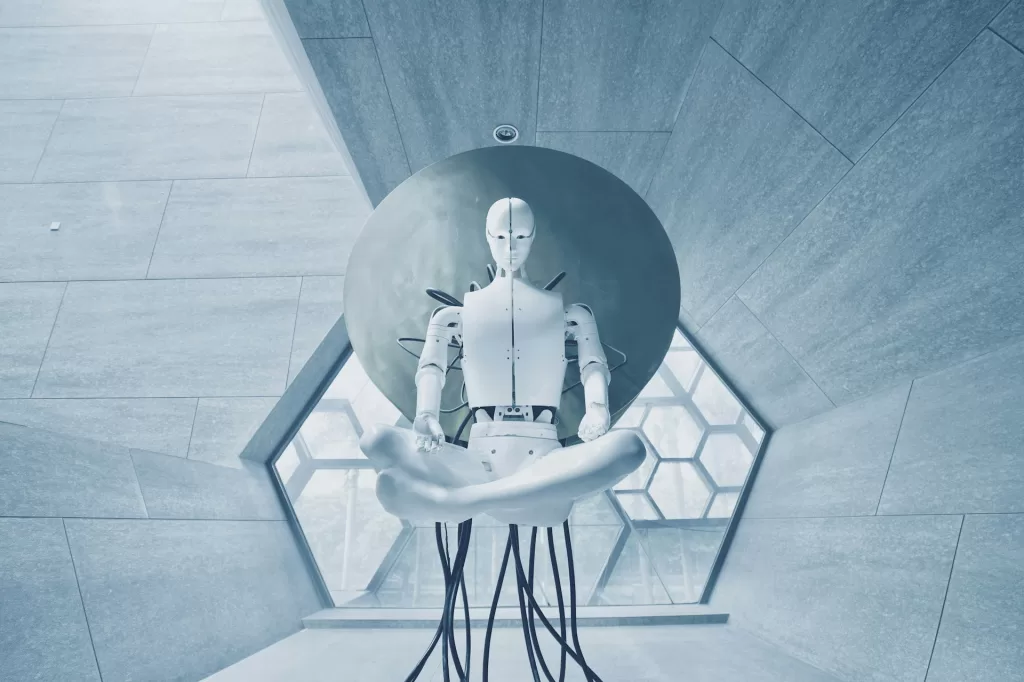
Photo by Aideal Hwa on Unsplash