Tadany Um refúgio para a alma e um convite à consciência.

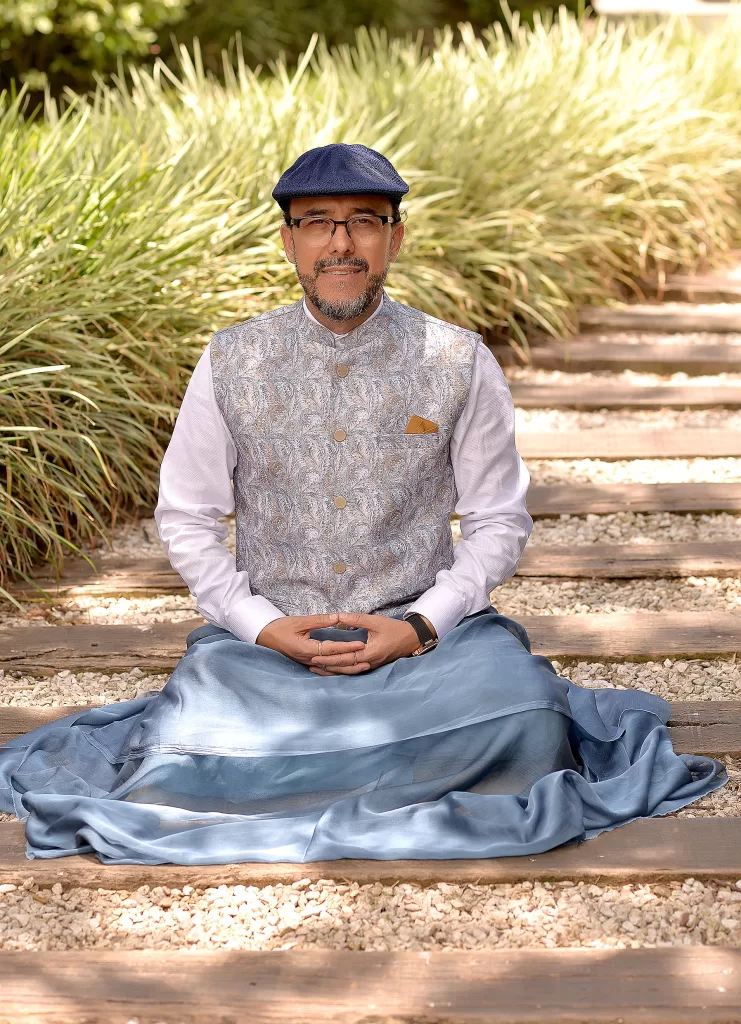
In this deeply systematic class, Acharya Tadany provided a comprehensive exploration of meditation within the Bhagavad Gītā and Patañjali’s Ashtaṅga Yoga, presenting the eight limbs as a progressive roadmap from external ethical foundations to complete self-knowledge, with the first five limbs (bahiraṅga sādhana) — Yama (five ethical restraints: ahiṁsā, satya, asteya, brahmacarya, aparigraha), Niyama (five positive observances: śauca, santoṣa, tapas, svādhyāya, īśvara praṇidhāna).
Then, āsana (steady posture), prāṇāyāma (breath regulation), and pratyāhāra (sense withdrawal) — creating the necessary physical, energetic, and mental stability for meditation ((antaraṅga sādhana)).
While the final three limbs — dhāraṇā (concentration/fixing the mind), dhyāna (sustained, effortless meditation), and samādhi (complete absorption/integration) — constitute the actual meditative process known as samyama when practiced together.
Acharya Tadany used vivid analogies (photographer adjusting focus for dhāraṇā, maintaining steady shot for dhyāna, becoming lost in the scene for samādhi, or managing children for the wandering mind; bird in a cage for prāṇāyāma) to make the stages accessible, emphasizing that true Vedic meditation is always spiritually oriented (focused on an iṣṭa deity or the Self), involves directing thoughts toward divine contemplation rather than removing them, and progresses from personal deity meditation to realization of the impersonal Ātman, transcending duality.
He clarified key distinctions — meditation vs. mere concentration, thought direction vs. thought removal, iṣṭa vs. Ātman — and stressed that the entire system serves as preparation for understanding one’s true nature, with Krishna’s teachings in the Gītā providing the practical and philosophical foundation for this transformative journey toward liberation.