Tadany Um refúgio para a alma e um convite à consciência.

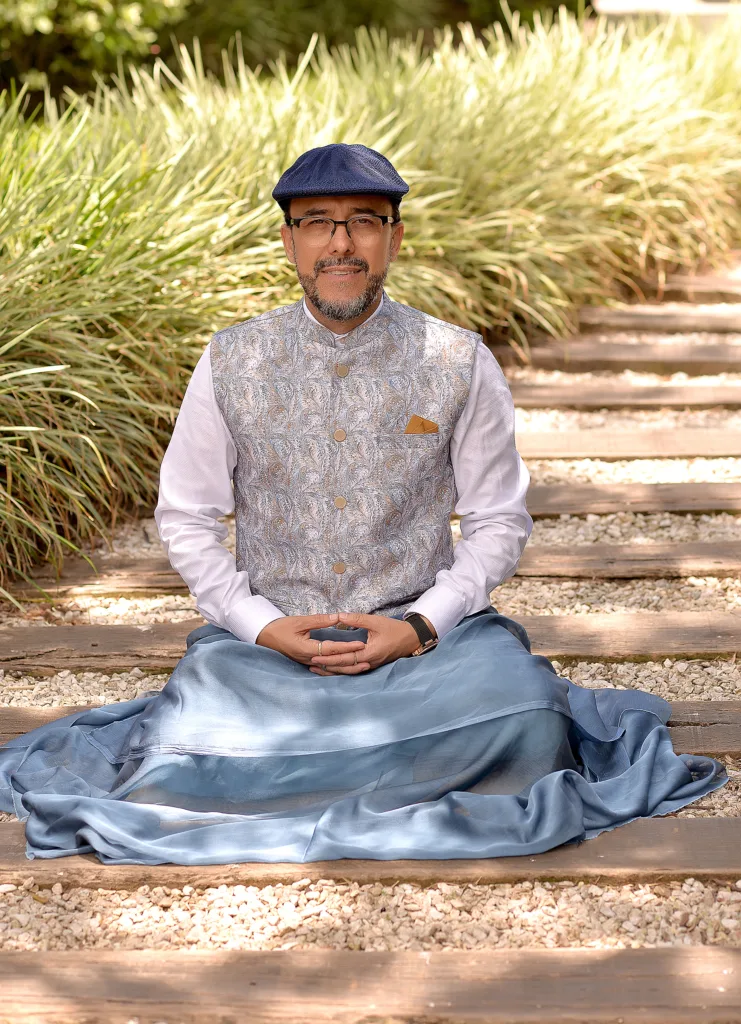
Bhagavad Gītā Chapter 2 – Class 39 Summary
The Eternal Nature of Ātmā: Beyond Birth, Death & Fear
Acharya Tadany | April 10, 2025
In this deeply clarifying class on Sāṅkhya Yoga, Acharya Tadany addressed a profound student question: “If we inherently know our true nature, why do we forget it? And why do souls keep returning to the cycle of birth and death?” He then unfolded one of the most important philosophical teachings in the Gītā — the eternal, indestructible nature of ātmā versus the temporary nature of anātmā.
Krishna’s Three Perspectives to Convince Arjuna
Krishna employs three distinct approaches to address Arjuna’s crisis:
1. Philosophical Perspective (Ādhyātmika Dṛṣṭi) — Understanding the eternal nature of ātmā versus the temporary body (anātmā).
2. Ethical/Moral Perspective (Dhārmika Dṛṣṭi) — The righteous duty of a warrior.
3. Worldly Perspective (Laukika Dṛṣṭi) — Practical and social consequences of action versus inaction.
Despite the different angles, Krishna’s ultimate message remains consistent: Arjuna should fight, but from a higher state of understanding.
The Nature of Ātmā (The Eternal Self)
Fundamental Characteristics
– Eternal — Exists beyond time; has no beginning and no end.
– All-pervading — Like space, present everywhere, not confined to any location.
– Formless — Has no physical shape, boundaries, or material characteristics.
– Indestructible — Cannot be cut, burned, wetted, or dried.
– The Observer — Pure consciousness; always the subject, never the object of knowledge.
Ātmā vs. Body and Mind
Ātmā (Soul)
– Eternal and unchanging
– Independent existence
– Ultimate reality
– Source of consciousness
– Formless and all-pervading
– Cannot be perceived by the senses
Body
– Temporary and perishable
– Dependent existence
– Subject to birth and death
– Physical and material
– Has form and boundaries
– Perceivable by the senses
Mind
– Temporary and constantly changing
– Dependent on ātmā
– Subject to modifications
– Subtle but still material
– Consists of thoughts and emotions
– Can be observed
Key Analogies Used in the Teaching
The Space Analogy
Just as space is formless, all-pervading, and cannot be seen, yet we accept its existence, similarly ātmā is formless and all-pervading. We cannot perceive it with the senses, but it is the fundamental reality underlying all existence.
The Photographer Analogy
A photographer cannot appear in their own photograph as the subject, yet no one denies the photographer’s existence. Similarly, ātmā, as the eternal observer (consciousness), can never become an object of observation. Consciousness illuminates everything else but cannot be objectified itself.
The Glass and Metal Example
A glass has dependent existence — it depends on the material (metal, plastic, etc.) from which it is made. The material has more fundamental existence than the form. Likewise, the body and mind have dependent existence, while ātmā has independent, ultimate existence.
Why Ātmā Cannot Be Perceived
1. Formless entities cannot be seen because vision requires boundaries and shapes.
2. Physical objects are perceivable because they have defined forms.
3. Ātmā, being formless and all-pervading like space, has no boundaries to be perceived.
4. The absence of perception does not mean absence of existence.
Core Teaching: Ātmā is never an object of knowledge but always the subject — the eternal observer. Just as the eye cannot see itself, consciousness cannot be objectified. It remains forever as the witness of all phenomena.
Practical Application to Arjuna’s Dilemma
Since ātmā is eternal, indestructible, and not an object that can be destroyed, Arjuna need not grieve or fear “killing” others in battle. The eternal essence (ātmā) of all beings cannot be killed — only the temporary physical body undergoes change. From the highest philosophical standpoint, there is no real killing or dying.
The Path to True Security and Peace
True security and peace can only be found by relying on the real substance (ātmā) rather than temporary or dependent things. When we base our sense of security on the body, possessions, relationships, or any changing phenomena, we inevitably experience anxiety and suffering.
Hierarchy of Reality
1. Ultimate Reality — Ātmā (eternal, independent, unchanging)
2. Dependent Reality — Mind (temporary, dependent on ātmā)
3. Gross Reality — Body and physical world (most temporary, dependent on both ātmā and mind)
Key Philosophical Insights
– Distinction between Real and Unreal: That which is eternal and unchanging is real; that which is temporary and changing is relatively unreal or has dependent existence (mithyā).
– Source of Suffering: Suffering arises from identifying with the temporary (body and mind) rather than recognizing our true nature as eternal ātmā.
– Nature of Consciousness: Consciousness (ātmā) is self-luminous and does not depend on anything else to exist or to know.
– Transcendence of Duality: From the perspective of ātmā, dualities like life-death, pleasure-pain, gain-loss are all temporary modifications in the realm of the body and mind.
Essential Message: Understanding the eternal, indestructible nature of ātmā liberates one from fear and attachment. By recognizing that our true Self is beyond birth and death, beyond form and change, we can act in the world with wisdom and equanimity, free from the anxiety that comes from identifying with temporary phenomena.
Hariḥ Om
Acharya Tadany