Tadany Um refúgio para a alma e um convite à consciência.

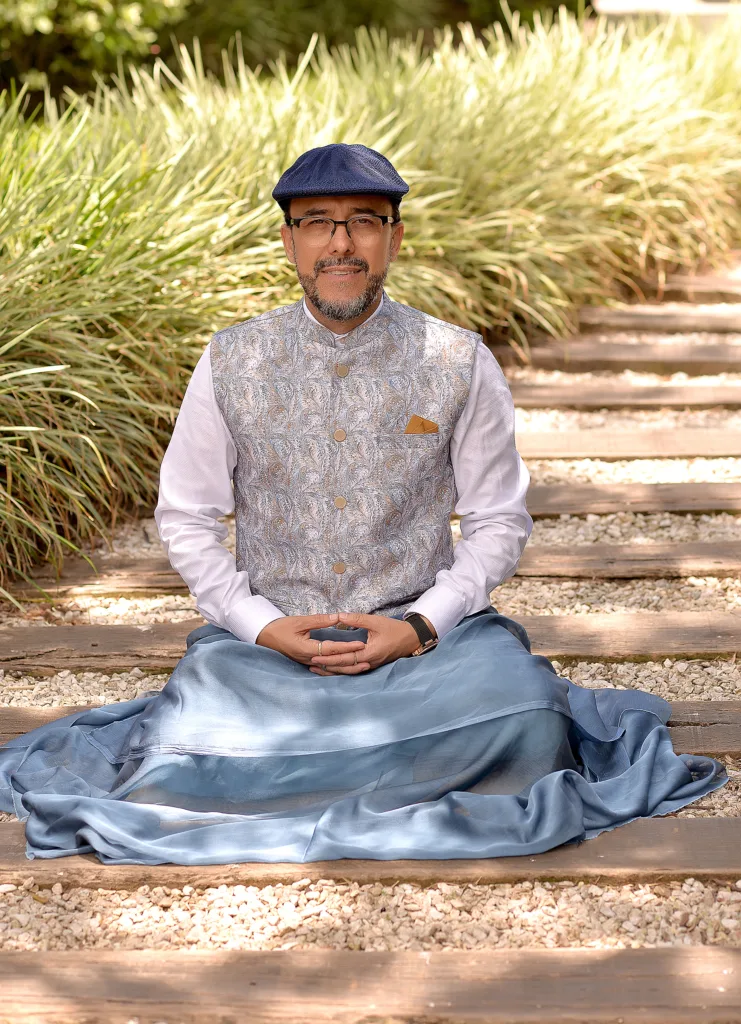
Bhagavad Gītā Chapter 4 – Class 176 Summary
Lifestyle Paths: Gṛhastha vs. Saṃnyāsi – Freedom Beyond External Choices
Acharya Tadany | April 9, 2026
In this profound session on Jñāna Karma Sannyāsa Yoga, Acharya Tadany addressed one of the most common misconceptions in spiritual life: the belief that liberation (mokṣa) depends on adopting a particular external lifestyle — whether that of a householder (gṛhastha) or a renunciate (saṃnyāsi).
The Two Lifestyle Paths
The Householder Path (Gṛhastha)
Advantages:
– Engagement with worldly responsibilities offers rich opportunities for spiritual growth through action.
– Family and social connections provide practical contexts for practicing dharma.
– Material security is built through personal effort and intelligent planning.
Challenges:
– Constant management of multiple obligations and relationships.
– Risk of attachment to outcomes, possessions, and roles.
– Security concerns tied to material well-being.
– Tendency to equate freedom with favorable external circumstances.
The Renunciate Path (Saṃnyāsi)
Advantages:
– Freedom from worldly responsibilities and obligations.
– Dedicated focus on spiritual practice and self-inquiry.
– Simplified lifestyle with fewer external distractions.
Challenges:
– Complete reliance on divine grace and providence for material needs.
– Absence of conventional security structures or safety nets.
– Requires profound trust and surrender.
– Risk of spiritual pride or escapism if not properly understood.
The Central Teaching: Self-Knowledge as True Liberation
Acharya Tadany emphasized that true freedom (mokṣa) does not come from choosing between gṛhastha or saṃnyāsi lifestyles. It arises from ātmā svarūpa jñānam — direct knowledge and realization of one’s true nature as the Self.
Key Insights:
1. For the wise person (jñānī), both action and inaction are equally liberating.
2. Neither activity nor renunciation becomes a source of bondage when self-understanding is present.
3. External circumstances and lifestyle choices do not determine spiritual freedom.
4. The understanding of oneself as the eternal witness (ātmā) transcends all dualities of action and inaction.
Krishna’s Teaching in Verses 18–24
Krishna reveals one of the most profound paradoxes in the Gītā:
“The one who sees inaction in action and action in inaction is truly wise among humans. Such a person is a yogi who has accomplished all actions.”
This teaching points to the realization that:
– The Self (ātmā) never acts, even when the body-mind complex is engaged in activity.
– Identification with the sense of doership (kartṛtva) creates bondage, not the action itself.
– True renunciation is internal — the renunciation of the egoic sense of “I am doing.”
Practical Implications
Beyond Lifestyle Choices
The teaching dissolves the common misconception that spiritual liberation requires a specific external lifestyle. Whether one lives as a householder managing family and social responsibilities or as a renunciate depending entirely on divine providence, freedom is determined by self-knowledge, not by circumstances.
The Role of Understanding
Intellectual knowledge must mature into direct recognition:
– Conceptual understanding is only the beginning.
– Contemplation and inquiry deepen it.
– Direct recognition of one’s nature as pure awareness brings liberation.
– This recognition remains stable regardless of external activity or inactivity.
Key Sanskrit Terms
– Citta — The mind-stuff; the totality of mental processes (thoughts, emotions, memories).
– Ātmā — The Self; pure consciousness, the witness of all experiences, never affected by them.
– Karma — Action in its fullest sense (physical, verbal, mental); also the law of cause and effect.
– Gṛhastha — Householder; one living in the world with family and social responsibilities.
– Saṃnyāsi — Renunciate; one who has formally renounced worldly life for spiritual pursuit.
– Ātmā svarūpa jñānam — Knowledge of one’s true nature as the Self; self-realization.
– Mokṣa — Liberation; freedom from the cycle of birth and death and all forms of bondage.
Post-Class Q&A: Understanding Karma
Acharya clarified that karma encompasses three dimensions:
– Kāyika Karma — Physical actions and movements.
– Vācika Karma — Verbal actions and communication.
– Mānasa Karma — Mental actions (thoughts, intentions, attitudes).
Even when one appears physically inactive, karma can still be generated through mental processes and underlying attitudes.
True Inaction occurs only when there is no subject-object relationship in awareness — as in deep sleep (suṣupti), where consciousness exists without duality or experiential content. However, even in pure awareness, the potential for karma remains until full realization.
Conclusion
This class illuminated Krishna’s profound teaching that spiritual freedom is not contingent upon external lifestyle choices. Whether one engages fully with worldly responsibilities or renounces them entirely, liberation comes through the recognition of one’s true nature as the unchanging witness of all experience. The path of knowledge (jñāna yoga) transcends the apparent duality of action and inaction, revealing that the Self remains ever-free, regardless of what the body-mind complex does or does not do.
Hariḥ Om
Acharya Tadany