Tadany Um refúgio para a alma e um convite à consciência.
By Acharya Tadany
Published in the Diário de Santa Maria, March 12, 2026.
Courage is a subtle value and, for that very reason, easily misinterpreted. In many circumstances, what presents itself as courage is nothing more than recklessness, impulsivity, or a refined form of inner blindness. For example, when an action is born from prejudice, ignorance, or a limited view of life and people, it may appear bold, but it lacks discernment and responsibility.
There is also a false courage that arises from arrogance, from fear disguised as strength, or from the inability to recognize limits. This pseudo-courage expresses itself through aggressiveness, the imposition of ideas, and the denial of reality. And although it may appear firm, it is internally fragile, for it is not sustained by truth nor by a profound understanding of the impact of each action. Consequently, its inevitable result is suffering, fragmentation, and the separation between human beings.
On the other hand, genuine courage possesses a completely distinct nature. It is silent, lucid, and deeply ethical. It is not born from the desire to defeat the “other,” but from the willingness to remain faithful to the truth, even when that requires renunciation, discomfort, or solitude.
This courage manifests through love, fraternity, and an unnegotiable commitment to justice and the common good. It is the courage to act correctly when no one is watching, to uphold values when they cease to be popular, and to maintain dignity even in adverse scenarios.
Human history reveals yet another mysterious aspect of courage: at times, it seems to disappear for one or more generations, as if it were dormant. In certain periods, entire societies seem to lose their sense of responsibility, moral clarity, and spiritual discernment. However, courage never disappears completely. It remains latent, awaiting favourable conditions to resurface, often emerging with renewed strength precisely in moments of greatest crisis.
Furthermore, on an individual level, there exists an intimate, honest, and inevitable question: was courage transmitted to us as a heritage, or must it be discovered by ourselves?
If courage was received as a legacy— through family, cultural, or spiritual examples — then our task is to preserve it, refine it, and manifest it with awareness, consistency, and frequency. But if it was not offered to us as a heritage, that does not exempt us from responsibility. On the contrary, it becomes an inner calling to allow this force to awaken as an inalienable expression of the soul itself.
In other words, courage is always a personal and non-transferable choice. It is not just about possessing it or not, but about how to use it. It can be suppressed, denied, or distorted, transforming into a destructive and segregating force. Or, it can be cultivated with wisdom, becoming a conscious power at the service of truth, virtue, and the good of humanity.
Authentic courage does not oppress, does not divide, and does not wound. It illuminates, sustains, and transforms. When aligned with consciousness, ethics, and lucidity, it becomes one of the highest expressions of human and spiritual maturity.
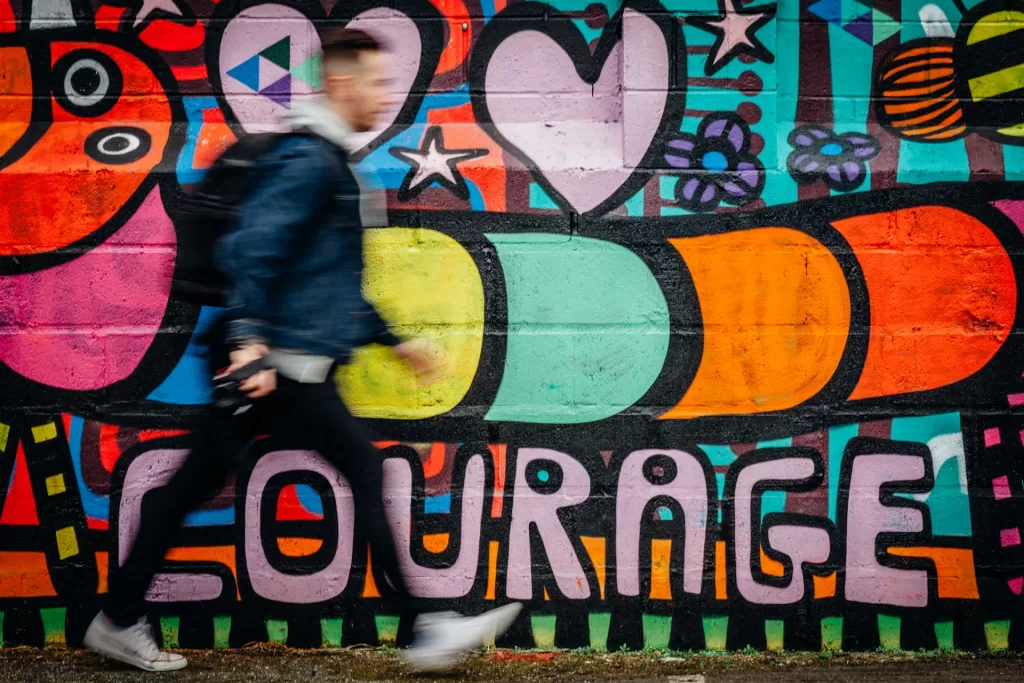
Photo by Oliver Cole on Unsplash