Tadany Um refúgio para a alma e um convite à consciência.

when invisible forces control what enters our field of attention, a natural question arises: where is our freedom?
This reflection is essential, because a mind bombarded by incessant stimuli loses its capacity for stillness. And when silence becomes uncomfortable, solitude —the nectar of self-reflection—becomes unbearable.
By Acharya Tadany Cargnin dos Santos.
Published in Diário de Santa Maria, December 4, 2025.
We live in an era in which the outer world moves faster than the inner world. Technology has advanced at a speed for which the human soul was never truly prepared. And in this acceleration, something subtle yet profound is happening: we are gradually allowing machines to organize our attention and, through it, our emotions and our intelligence.

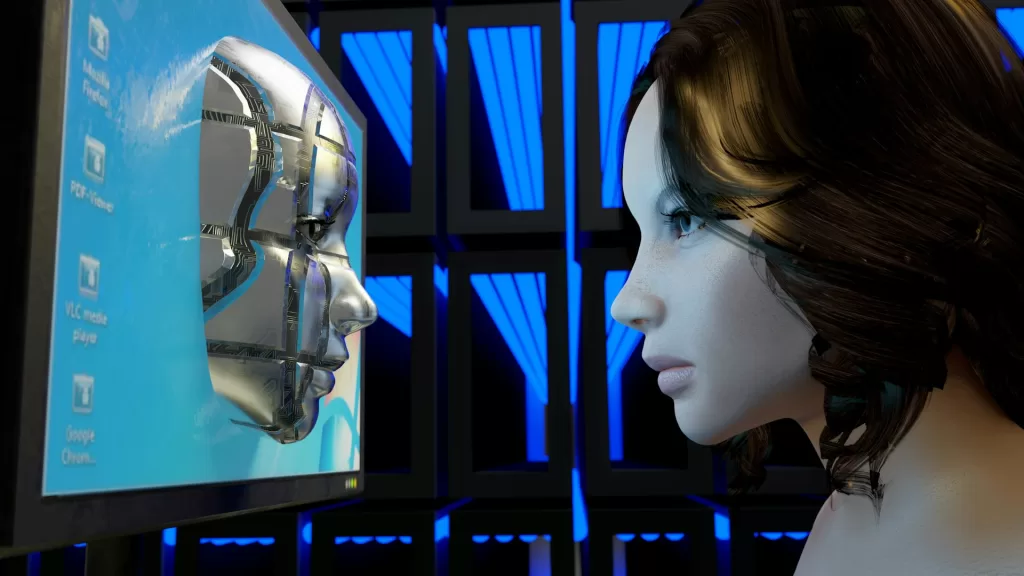
The algorithms of social media and entertainment are not mere tools—they are invisible environments. They do not speak to us directly, but silently organize what enters our cognition. And whatever enters our consciousness shapes who we become.

It is important to remember that, once, human emotions were refined through silence, relationships, nature, prayer, and reflection. Today, they are increasingly shaped by systems designed to keep us excited, reactive, and connected.

In other words, fear, comparison, indignation, fantasies, and desires are no longer just human vulnerabilities—they have become strategic resources, for they are the emotions that generate clicks, screen time, data, and profit.

And so, without noticing, we begin to live outsourced lives. We wait for reactions and comments to feel validated. We compare our inner reality with mathematically edited fragments of other people’s lives. In other words, we live under the illusion of being connected, yet we feel increasingly alone.

However, the real tragedy does not lie in technology itself, but in the unconscious dependence it creates. For when we stop inhabiting our essence, we begin to inhabit how we are socially perceived by others—and in this existential confusion, the soul begins to wither.

Furthermore, personal intelligence is also being reshaped, since algorithms do not reward depth—they reward speed. They do not promote contemplation, but reaction. Consequently, they fragment knowledge into infinite pieces, yet rarely lead to integration.

As a result, the modern mind is becoming wide but shallow, well-informed but not wise. We slide through an avalanche of information, yet rarely linger in its understanding.

Thus, the capacity for silence, focus, and deep reflection slowly dissolves. And what we lose is not intelligence, but the inner space in which intelligence transforms into wisdom.

Another subtle danger lies in the way algorithms create intellectual cocoons. By showing us constantly what we already believe, they hinder genuine encounters with others. Differences become uncomfortable, dialogue turns into confrontation, and learning becomes defense.

One of the basic principles of education is that a mind that is never challenged becomes rigid; a consciousness that refuses to be questioned cannot evolve. And in this intellectual prison, autonomy begins to erode.

Essentially, what we see determines what we think, what we think shapes what we feel, and what we feel directs the way we live.

However, when invisible forces control what enters our field of attention, a natural question arises: where is our freedom?

This reflection is essential, because a mind bombarded by incessant stimuli loses its capacity for stillness. And when silence becomes uncomfortable, solitude — the nectar of self-reflection — becomes unbearable.

Yet silence has always been the womb of wisdom. Stillness has always been the gateway to truth.
Even so, we must recognize that technology will continue to evolve—that is inevitable. But individual consciousness must evolve faster.

Consequently, the greatest challenge of our time may not be technological, but spiritual. It is not about rejecting the digital world, but about not allowing it to replace the inner world. For if consciousness does not mature at the same pace as machines, we risk becoming operators of devices yet strangers to ourselves.

Finally, in this complex ecosystem, it is crucial to understand that it is in withdrawal, not in distraction, that the human being finds himself again. It is in silence, not in noise, that he regains his wholeness. And it is in conscious attention—not in automatic reactions—that freedom manifests once more.

Acharya Tadany
Photo by Andres Siimon on Unsplash