Tadany Um refúgio para a alma e um convite à consciência.

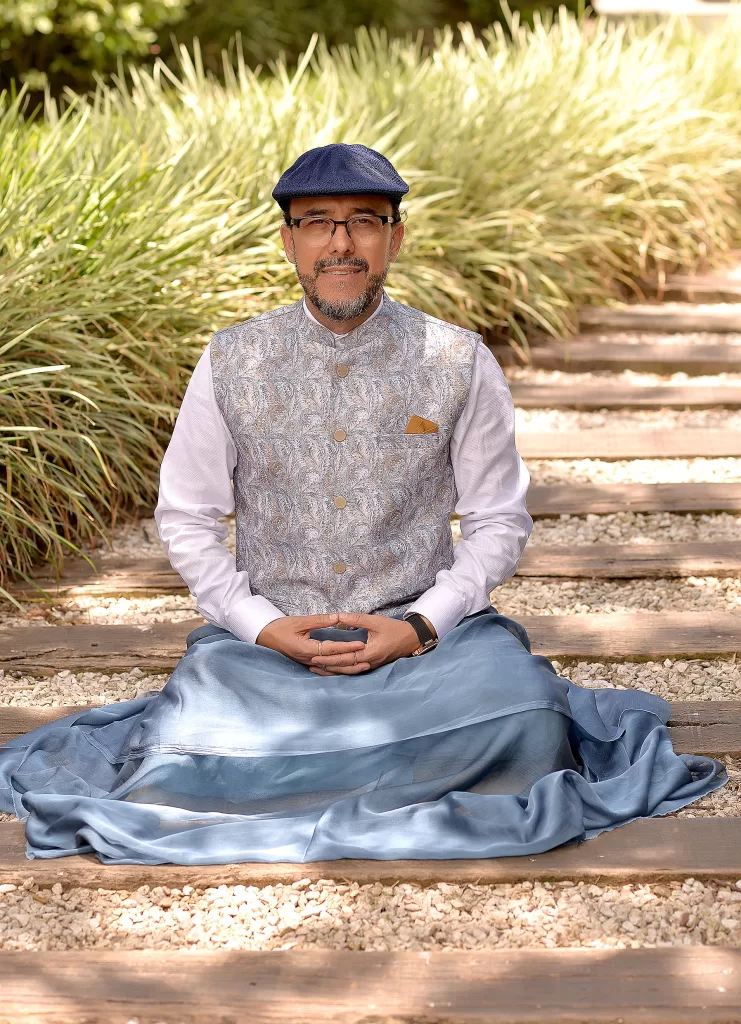
In this insightful class, Acharya Tadany addressed the profound challenge of interpreting sacred texts like the Upanishads and the Gītā, warning that many approach them not to discover truth but to validate pre-existing beliefs, leading to misinterpretation and missing the transformative power of the teachings.
Then, Acharya Tadany emphasized instead the traditional guru-disciple lineage, where knowledge is transmitted with proper context, personalized guidance, and spiritual transmission through interactive dialogue, far beyond the intellectual insights of independent reading.
He also clarified that karma yoga and karma mārga refer to the same path (as taught in Chapter 3), and highlighted the art of adaptive pedagogy: balancing authentic Sanskrit terminology with accessible language to ensure understanding over mere memorization.
After that, the class then explored Krishna’s mission as avatāra—to remove Arjuna’s fear of performing his warrior duties amid familial consequences—revealing the universal inevitability of action (karma): no being, whether worldly, spiritual, or divine, can escape it, as even renunciation, ashrams, and cosmic functions (creation, sustenance, destruction) involve responsibilities.
Acharya Tadany explained that the real bondage arises not from action itself but from the mental disturbances it generates—pre-action anxiety (fear of failure) and post-action attachment (pride/regret)—using the powerful jackfruit analogy: just as coconut oil prevents sticky latex from adhering, knowledge (jñāna) acts as the protective coating that allows one to engage fully in worldly duties without becoming mentally or emotionally entangled in their consequences.
Krishna’s own life in the Mahābhārata serves as the living demonstration: intense involvement in politics, war, diplomacy, and relationships, yet perfect inner peace and detachment.
The class concluded that the spiritual path is not escape from action but transformation of our relationship to it—through knowledge (discrimination, viveka) and practice (yoga, equanimity, offering actions)—enabling us to live fully in the world while remaining free within, with deeper exploration of this “action without disturbance” promised in upcoming classes.