Tadany Um refúgio para a alma e um convite à consciência.

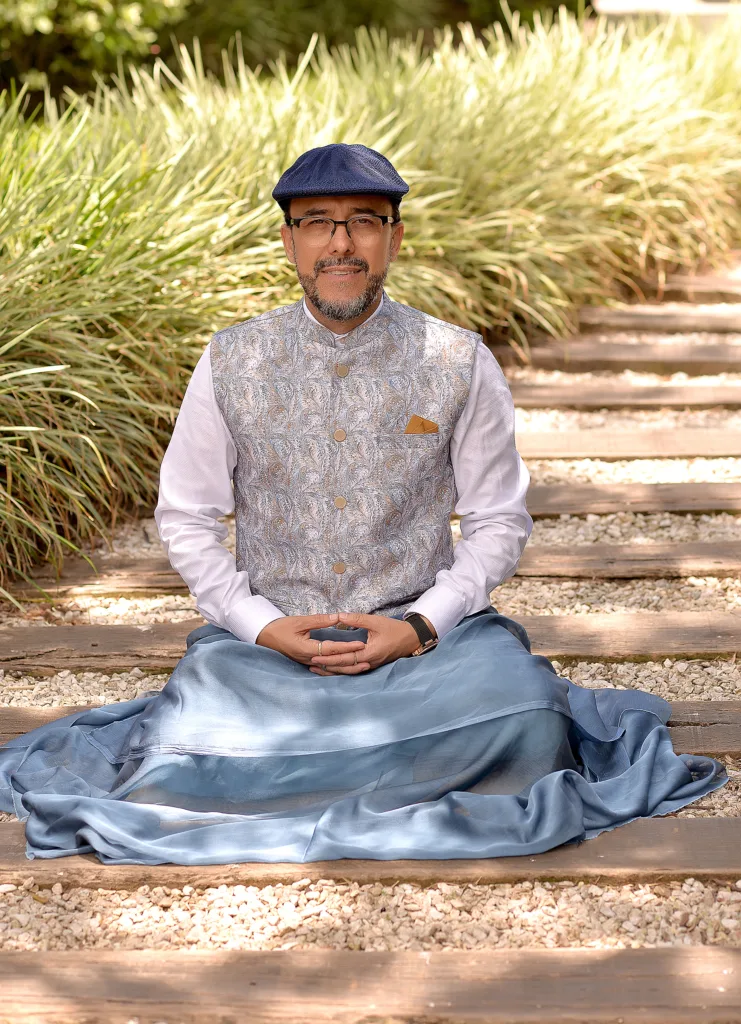
Bhagavad Gītā Chapter 4 – Class 173 Summary
The Dual Nature of Self: Ātmā & Ahaṅkāra
Acharya Tadany | March 19, 2026
In this illuminating session on Jñāna Karma Sannyāsa Yoga, Acharya Tadany clarified the fundamental duality at the heart of human experience and the path to liberation.
The Two Aspects of Self
| Aspect | Ātmā (Higher Self) | Ahaṅkāra (Lower Self / Ego) |
|—————–|———————————————|———————————————-|
| Nature | Pure consciousness (caitanya) | Mind-intellect-ego complex (thoughts, desires, identification) |
| Function | Actionless witness (sākṣī) | Performs all actions, accumulates karma |
| Karma | Free from karma; never acts | Bound by karma; creates saṃsāra |
| Change | Eternal, unchanging, ever-present | Constantly changing, limited |
| Fulfillment | Source of inherent pūrṇatva (completeness) | Perpetually incomplete; seeks externally |
Core Insight
The jñānī (wise person) achieves lasting fulfillment not through the finite achievements of the lower self (ahaṅkāra), but by recognizing and abiding in the higher Self (ātmā). The lower self can never be pūrṇa — no matter how many successes, possessions, or roles it accumulates — because it is inherently limited. True mastery (Swami — one who is master of oneself) arises only when identification shifts from the acting ego to the actionless witness.
Four Essential Principles
1. Seeking through the lower self creates perpetual incompleteness — every accomplishment of ahaṅkāra is finite and leaves something missing.
2. Detachment from lower-self identification is true mastery — the jñānī no longer claims “I am doing” or “I am this role.”
3. Recognition of ātmā brings inherent pūrṇatva — fullness is not gained; it is revealed when false limitations are dropped.
4. This wisdom ends karma and saṃsāra — actions continue (as prārabdha), but without egoic doership, they no longer bind.
Key Terms
– Sentient (Cetanam) — Capacity for perception and feeling; belongs to consciousness (ātmā), not matter.
– Jñānī — One who has realized the Self as distinct from the ego.
– Pūrṇatva — Completeness/fullness; our natural state.
– Swami — Master of the lower self; one who abides in ātmā.
– Saṃsāra — Cycle of birth-death-action-karma driven by ahaṅkāra.
Practical Framework
– Problem: Identifying with ahaṅkāra → endless seeking, dissatisfaction, karma bondage.
– Solution: Viveka (discrimination) → recognize ātmā as the true “I,” the ever-present witness.
– Result: Freedom from compulsive doership; actions become karma-free offerings; life unfolds in inherent peace and completeness.
This teaching from Chapter 4 directly addresses Krishna’s emphasis on jñāna as the means to transcend karma while remaining engaged in the world. The jñānī acts, yet remains untouched — like the lotus leaf in water or the sun illuminating without being affected.
Key Takeaways
1. Ātmā is actionless witness; ahaṅkāra is the doer bound by karma.
2. Fulfillment (pūrṇatva) is never achieved through egoic accomplishments — it is our natural state.
3. True mastery is detachment from lower-self identification.
4. Wisdom breaks the cycle: recognize the Self → end doership → end saṃsāra.
5. Live fully in the world while rooted in the unchanging witness.
Hariḥ Om
Acharya Tadany