Tadany Um refúgio para a alma e um convite à consciência.

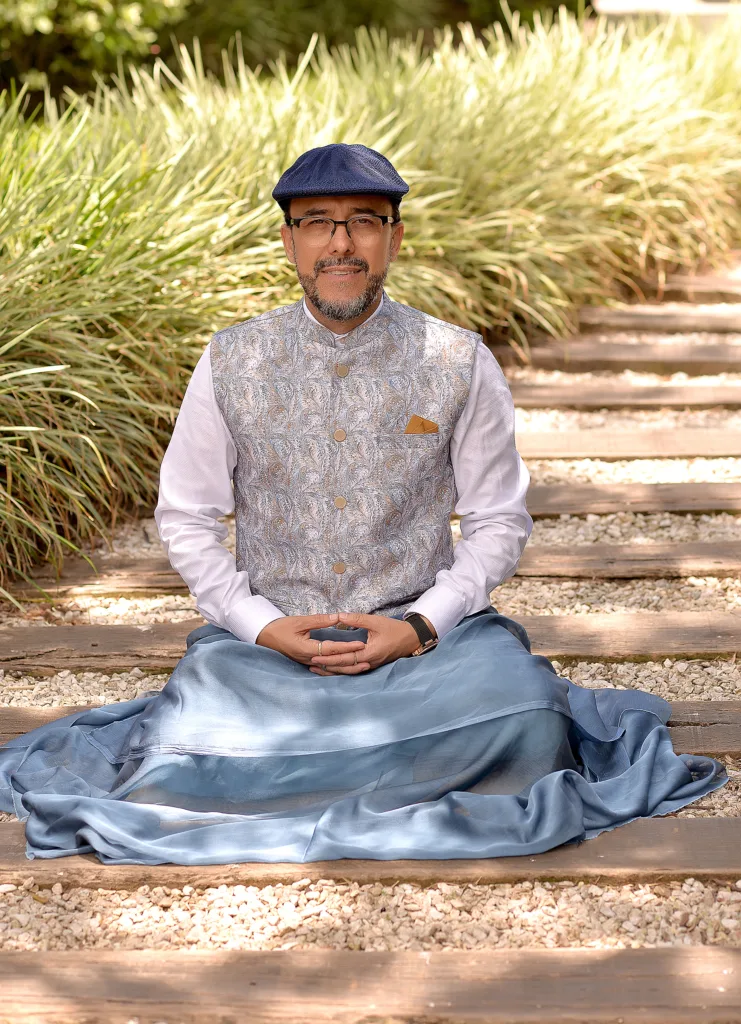
Summary to Share with Students — Bhagavad Gītā Chapter 4, Class 178
By Acharya Tadany
April 23, 2026
In this deeply illuminating class, Acharya Tadany unfolded one of the Gītā’s most transformative teachings: liberation does not depend on abandoning life, but on understanding life correctly.
A central distinction was made between sannyāsa and vairāgya. External renunciation may involve leaving worldly roles, but inner detachment is a matter of vision. The revolutionary teaching of the Gītā, as emphasized by Acharya Tadany, is that mokṣa does not require withdrawal from the world, but freedom from dependence upon it. One may remain fully engaged in family, profession, and society, and yet live inwardly free.
The class then moved into a systematic unfolding of the path to liberation through jñāna, showing how spiritual knowledge gives rise naturally to detachment, freedom from anxiety, and recognition of oneself as eternal consciousness.
A major portion of the class explored five foundational Vedāntic principles regarding consciousness:
• Consciousness is not produced by the body or brain.
• It is an independent, self-revealing reality that illumines all experiences.
• It is not confined by bodily boundaries, though it appears individualized.
• It is unaffected by death, for death belongs only to the body.
• And after death, while consciousness remains, interaction through the physical world ceases because the bodily instrument is absent.
Through these principles, Acharya Tadany carefully led students into the vision that ātmā is ever-free, untouched, and unchanging.
The teaching then expanded into the doctrine of the three bodies (śarīra traya) — the gross body (sthūla śarīra), subtle body (sūkṣma śarīra), and causal body (kāraṇa śarīra). Particular emphasis was given to the sūkṣma śarīra, its role in karma, transmigration, and continuity across births.
A powerful clarification was made: the subtle body reincarnates, not ātmā.
The subtle body carries impressions, tendencies, and karmic momentum; the Self neither comes nor goes.
This distinction led to a profound correction of a common misconception: ātmā is not the traveling entity. It is the changeless witness of all journeys.
In the questions after class, Acharya addressed past-life memory, karmic continuity, and the appearance of individuality, using the classic metaphor of space appearing divided by pots, though space itself is never divided.
Practically, the teaching returned again and again to witness-consciousness, discrimination (viveka), and inner detachment (vairāgya) as living disciplines. Detachment was shown not as indifference, but as freedom from possessiveness, allowing love, action, and compassion to become purer.
A beautiful insight running through the class was this:
Spiritual practice does not create freedom — it removes ignorance about the freedom already present.
The final message was unmistakable:
Mokṣa is not a future achievement, nor an escape from life. It is the recognition, here and now, that one is not a limited body-mind subject to birth and death, but the eternal consciousness in whose light all experiences arise and pass.
Essential Takeaway:
From right knowledge comes detachment. From detachment comes peace. From peace comes the assimilation of one’s true nature.
And this, as Acharya Tadany emphasized, is the living heart of the Bhagavad Gītā.
Hari Om.
Acharya Tadany