Tadany Um refúgio para a alma e um convite à consciência.

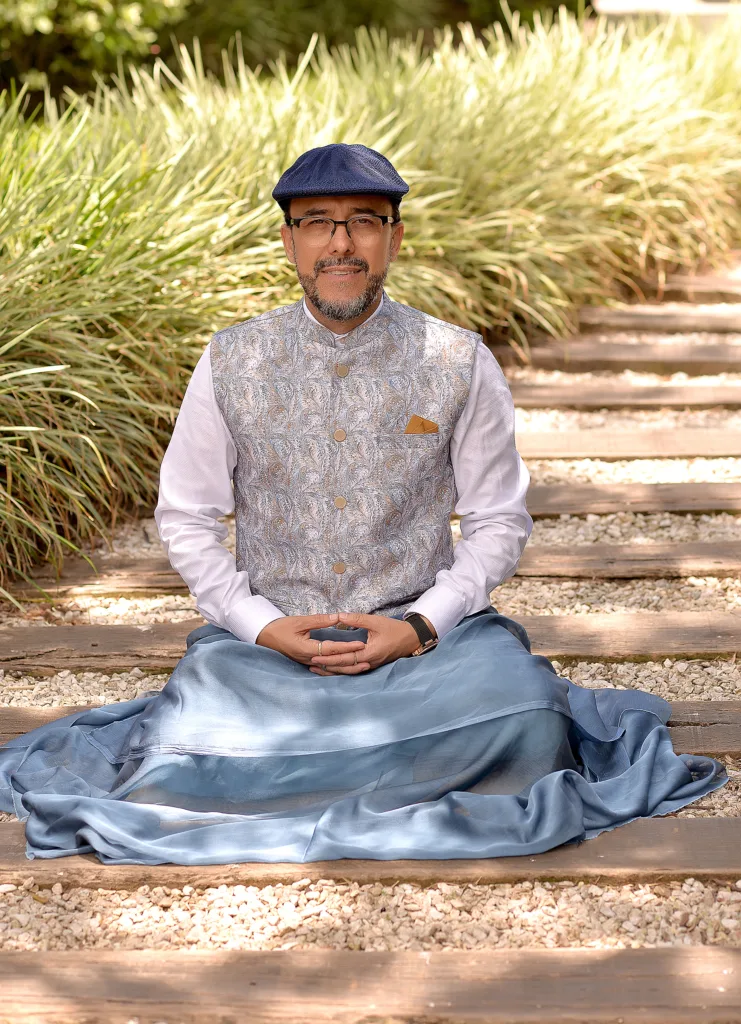
Summary to Share with Students — Vivekacūḍāmaṇi Class 118
By Acharya Tadany
April 22, 2026
In this profound class, Acharya Tadany continued the inquiry into kāraṇa śarīram (the causal body), explaining it as the domain of Avidyā at the individual level and Māyā at the universal level, constituted by the three guṇas: rajas, tamas, and sattva.
The central focus of the class was Śankarācārya’s subtle classification of sattvaguṇa into three levels, revealing the inner map of spiritual evolution:
1. Malina Sattvam (Impure Sattva)
When sattva is overpowered by rajas and tamas, the mind remains restless, scattered, and extroverted. Such a person remains absorbed in saṁsāra, often pursuing countless desires without questioning life’s deeper purpose. Through Bhagavad Gītā Chapter 9, Acharya Tadany showed how misdirected desires, actions, and knowledge keep one bound.
2. Miśra Sattvam (Mixed Sattva)
This is the state of the sincere spiritual seeker. Though not yet free, the person has diagnosed the problem of ignorance and has begun the path toward liberation. Here arise śraddhā (trust), bhakti (devotion), mumukṣutva (longing for freedom), yama-niyama, and daivī sampatti. Acharya beautifully described this as a person who has begun the medicine; recovery is underway.
A powerful insight of the class was that Bhagavad Gītā’s “jñānam” (Chapter 13), “daivī sampatti” (Chapter 16), and Vivekacūḍāmaṇi’s miśra sattvam all point to the same spiritual qualifications. Values are not secondary to knowledge; they are themselves expressions of knowledge maturing.
3. Śuddha Sattvam (Pure Sattva)
Introduced as the culmination of this progression, pure sattva is the condition in which the mind becomes a transparent medium for the recognition Aham Brahmāsmi — I am Brahman. This is the condition of freedom.
A major practical teaching was that knowledge simplifies life. As understanding grows, many inner conflicts disappear not through repression, but because they no longer present themselves as meaningful options. This was linked to Pujya Swami Dayananda’s expression of the “choiceless life” — a life guided by clarity rather than compulsion.
Acharya Tadany also highlighted the indispensable role of dharma and values in Vedānta. Truthfulness, humility, fearlessness, compassion, and integrity are not moral ornaments but the very ground upon which liberation becomes possible.
A beautiful insight from the Q&A was that **sattva is the power of clarity, the force that removes inner incompleteness, dissolving the roots of attachment, aversion, desire, and anger.
Essential Takeaway:
The class offered a luminous map of the spiritual journey — from worldly entanglement (malina sattvam), through qualified seeking (miśra sattvam), to liberation (śuddha sattvam). It was a reminder that mokṣa is not a leap into the unknown, but a gradual refinement of vision through knowledge, values, and clarity.
Hari Om.
Acharya Tadany