Tadany Um refúgio para a alma e um convite à consciência.

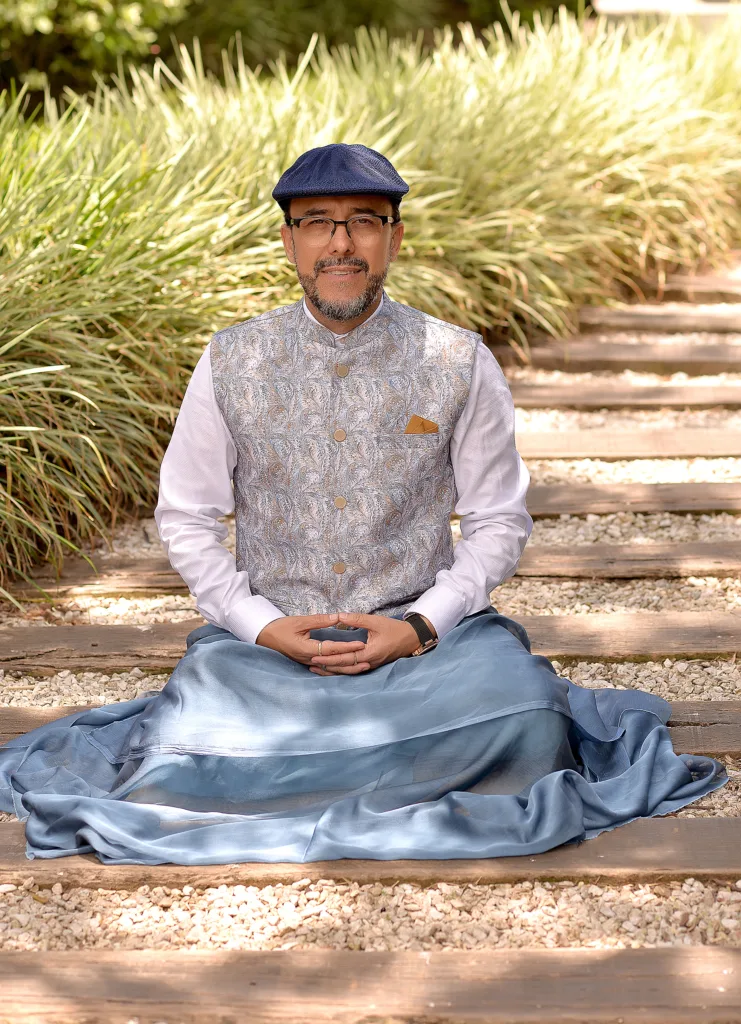
Bhagavad Gītā Chapter 2, Class 41. Summary.
By Acharya Tadany
April 24, 2025
In this profound class, Acharya Tadany continued unfolding the essential vision of ātmā, drawing students deeper into the distinction between the Self and the body-mind complex.
The class began with the fundamental nature of ātmā as eternal, all-pervading, indestructible, and ever the experiencer, never an object of experience. A central point emphasized was that ātmā is neither a doer (akartā) nor an instigator of action. All action belongs to the body-mind complex; the Self remains the untouched witness.
Acharya Tadany presented spiritual understanding as a two-stage process.
First comes the discernment that consciousness is distinct from the body — that the body is known, and therefore cannot be the knower. This is the initial separation of the seer from the seen.
The second movement is more subtle and transformative: claiming one’s identity as that very consciousness, no longer merely understanding it as a concept, but assimilating it as one’s true nature.
A major theme of the class was doership and freedom from doership.
Actions, Acharya explained, are generally driven by incompleteness, by the search for fulfillment in what is temporary. Yet the jñāni acts differently — not from lack, but from fullness; not from personal gain, but from compassion and love. Action may continue, but without inner bondage.
A beautiful distinction was drawn between physical independence and cognitive independence.
Freedom does not mean escaping bodily conditions or worldly interdependence, which is impossible. Rather, true freedom lies in no longer identifying with the body and its limitations. This is cognitive independence — the freedom born of Self-knowledge.
The class also explored fear, especially the fear of pain and death, tracing it to misidentification with the mortal body.
Fear begins to dissolve when one understands:
• The body is subject to change and death.
• ātmā is not.
• Pain belongs to the body and mind, not to consciousness.
• What is unborn cannot die.
Thus fearlessness is not cultivated through denial, but through understanding.
Another profound insight was that liberation is not the cessation of action but freedom from the notion “I am the doer.” When doership dissolves, karma loses its binding force.
Actions may continue through the body-mind, but inwardly there is freedom.
The practical emphasis of the class was on a shift of vision — from taking oneself to be a perishable individual to recognizing oneself as the awareness in whose light body, thoughts, emotions, and experiences are known.
As Acharya Tadany repeatedly pointed out, the body is an instrument; consciousness is never modified by what the instrument undergoes.
Essential Takeaway:
Suffering, fear, and bondage arise from mistaking the temporary for the Self. Freedom begins when one recognizes: I am not the changing body-mind; I am the changeless witness of all change.
And in that recognition, the Gītā’s promise of liberation begins to become real.
Hari Om.
Acharya Tadany