Tadany Um refúgio para a alma e um convite à consciência.

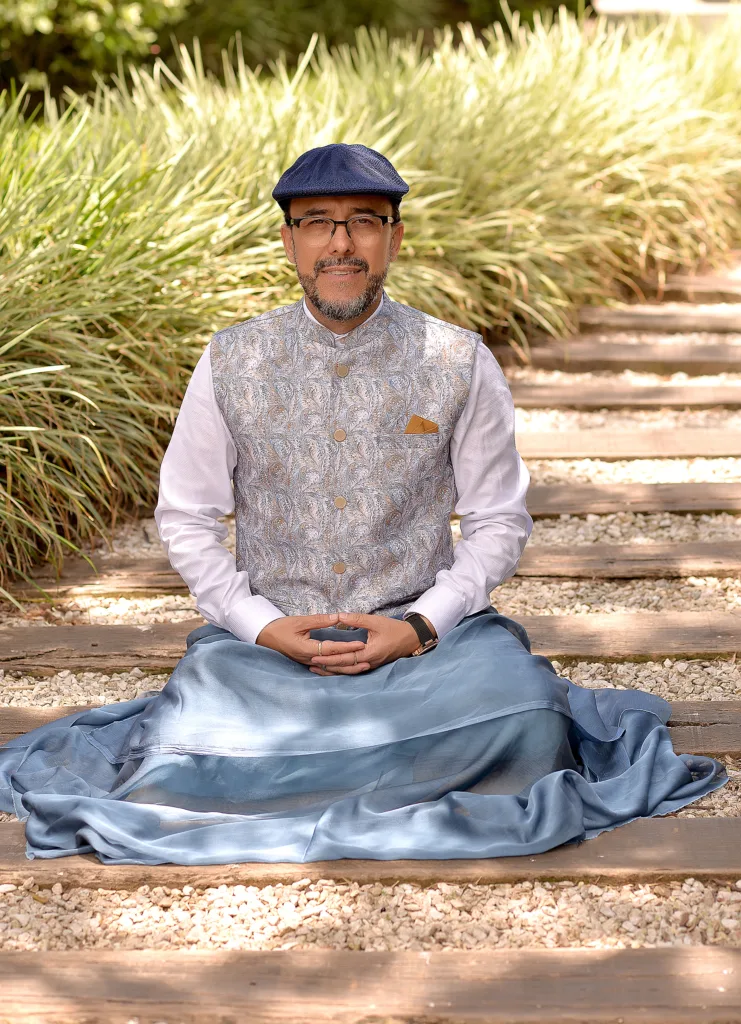
॥ भगवद् गीता ॥ – … Bhagavad Gītā …
Chapter 4, Summary – Class 191, by Acharya Tadany
Aug 6, 2026.
Summary
The Three Types of Gurus
Acharya Tadany provided a comprehensive introduction to the three distinct categories of gurus, each serving a unique and complementary function in a seeker’s spiritual journey.
The first is the dīkṣā-guru (initiating guru), who performs sacred rituals, ceremonies, and formal initiations that connect the student to a particular spiritual lineage or practice.
The second is the preraṇa-guru (inspirational guru), who provides emotional support, motivation, and encouragement, helping the seeker maintain enthusiasm and devotion on the spiritual path.
The third, and most crucial for self-knowledge, is the teaching guru (simply called guru in the classical sense), who imparts systematic, structured knowledge of the scriptures through proper methodology.
Acharya Tadany emphasized that while all three types have legitimate and important roles, they should not be confused with one another—each addresses different needs at different stages of spiritual development.
The teaching guru, however, is indispensable for gaining ātma-jñāna (self-knowledge), as this knowledge can only be transmitted through proper teaching, not through ritual or inspiration alone.
The Mirror Analogy: Śāstra-Darpaṇa
Acharya Tadany presented a profound and illuminating analogy to explain the unique nature of self-knowledge and why it requires special means of knowledge.
He pointed out that we cannot see our own face directly—no amount of effort or turning our head will allow us to see it without external help. For this, we need a mirror (darpaṇa).
Similarly, we cannot know our true self (ātman) through direct perception or ordinary means of knowledge; we need the special “mirror” of scripture (śāstra-darpaṇa).
However, Acharya Tadany emphasized that simply having a mirror is not enough—the mirror must be properly held at the right angle and distance, and it must be clean and free from distortions. If the mirror is dirty, tilted, or improperly positioned, it will not reflect reality accurately.
In the same way, the scriptures must be properly presented, interpreted, and unfolded by a qualified teacher (guru) who understands both the methodology of teaching and the subject matter itself. The teacher acts as the one who “holds the mirror” of scripture correctly and “cleans” it by removing misinterpretations and distortions, allowing the student to see their true nature clearly reflected in the teachings.
This analogy beautifully captures why self-knowledge requires both scripture and a qualified teacher—neither alone is sufficient.
Why a Teaching Guru is Essential
Acharya Tadany explained in detail why a teaching guru is absolutely essential for gaining self-knowledge (ātma-jñāna), and why this knowledge cannot be obtained through any other means such as meditation, ritual, practice, or personal effort alone.
He clarified that the fundamental problem we face is ignorance (ajñāna) about our true nature—we do not know who we really are. Ignorance is not something that can be removed by action, practice, or experience; it can only be removed by knowledge, just as darkness can only be removed by light, not by any amount of physical effort.
Since self-knowledge is a matter of understanding rather than doing, it requires teaching—systematic, structured, and methodical instruction. The teaching guru provides this through what Acharya Tadany described as a question-based methodology, similar to how any academic subject is taught.
The teacher presents the subject matter systematically, addresses the student’s doubts and questions, clarifies confusions, and unfolds the meaning of the scriptures in a way that removes ignorance and reveals understanding.
This is not mystical or mysterious—it is straightforward pedagogy applied to the highest subject matter. Without a qualified teacher who can explain the scriptures correctly, a student may read the same texts repeatedly without gaining the intended understanding, just as a person might look at a medical textbook without comprehending it unless a qualified doctor explains it properly.
The Bhagavad Gītā Teaching Model
Acharya Tadany used the example of Krishna and Arjuna in the Bhagavad Gītā as the paradigmatic model of how self-knowledge should be transmitted from teacher to student. He pointed out that Krishna does not function as an initiating guru performing rituals for Arjuna, nor merely as an inspirational guru offering emotional support and motivation. I
nstead, Krishna engages Arjuna in a systematic, structured teaching dialogue that addresses Arjuna’s fundamental confusion and self-ignorance. When Arjuna is overwhelmed by confusion and sorrow on the battlefield, Krishna does not simply tell him to feel better or perform certain practices—instead, he unfolds the knowledge of dharma (duty), karma (action), ātman (the self), and the nature of reality through logical exposition, reasoning, and scriptural authority.
The entire Bhagavad Gītā follows a question-and-answer format where Arjuna raises doubts, seeks clarification, and Krishna responds with detailed explanations, examples, and reasoning. This teacher-student dialogue demonstrates that self-knowledge is not transmitted through mystical transmission, grace alone, or personal realization—it is taught systematically through proper methodology, just as any valid knowledge is transmitted.
The Bhagavad Gītā itself is thus not just a spiritual text but a teaching manual that shows how a qualified guru imparts self-knowledge to a prepared student.
Knowledge vs. Practice
Acharya Tadany addressed a crucial and often misunderstood distinction between knowledge and practice in spiritual life. He explained that while spiritual practices (sādhana) such as meditation, ritual worship, chanting, and ethical discipline have their legitimate place in preparing and refining the mind, self-knowledge itself is not gained through practice but through proper understanding.
This is a fundamental point: you cannot practice being yourself—you already are yourself. What is needed is not a transformation or achievement but the removal of the ignorance that prevents you from knowing who you already are.
Self-ignorance is a cognitive problem, not a practical problem, and therefore requires a cognitive solution—knowledge (jñāna), not action (karma). Meditation might calm the mind and make it more receptive to teaching, rituals might create devotion and focus, but neither can directly remove the fundamental ignorance about one’s true nature.
Only the systematic teaching of a qualified guru who can unfold the meaning of scriptures like the Upaniṣads and Bhagavad Gītā can accomplish this.
Acharya Tadany emphasized that this is not to diminish the value of practice—practices prepare the ground—but to clarify that knowledge and practice serve different purposes and should not be confused.
The role of the teaching guru is specifically to impart knowledge, which is the direct means for removing self-ignorance.
Question from Previous Class
Acharya Tadany explained the importance of self-knowledge and the role of a teaching guru in acquiring it, using the analogy of a mirror to illustrate how scriptures and proper guidance are needed to reveal one’s true nature. He emphasized that while initiating and inspirational gurus have their roles, a teaching guru is essential for systematic and structured knowledge transfer, as demonstrated in the Bhagavad Gita between Krishna and Arjuna.