Tadany Um refúgio para a alma e um convite à consciência.

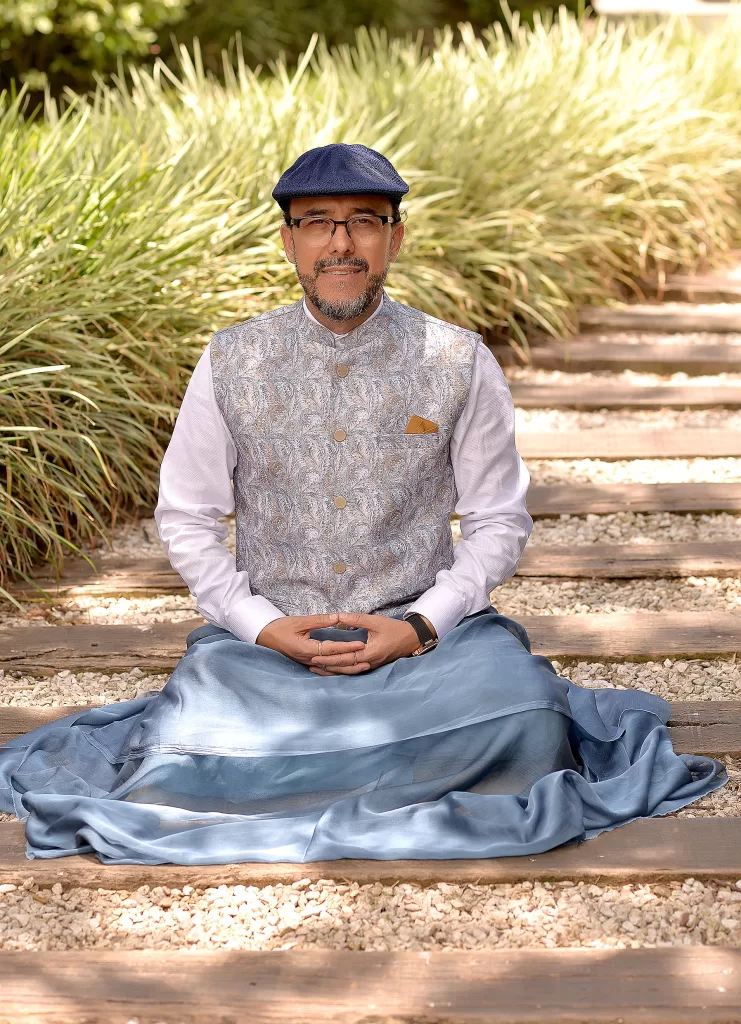
॥ तत्त्व बोध ॥ … Tattva Bodha … By Acharya Tadany
Class 59, Aug 31, 2025
Summary
The Final Topic of Tattva Bodha
Acharya Tadany began by explaining that the class had reached the final topic of Tattva Bodha: the benefits of self-knowledge. After establishing the nature of the self (ātman) and the ultimate reality (Brahman) in previous sessions, this class focused on what one gains from the direct knowledge expressed as Aham Brahmāsmi (“I am Brahman”). The teaching presents these benefits in two distinct ways, representing two stages of liberation.
The Twofold Benefit of Self-Knowledge
The benefits of self-knowledge (ātma-jñāna) are presented in two forms:
- Jīvan Mukti — Liberation while living in the body
- Videha Mukti — Liberation after the death of the physical body
Both forms of liberation stem from the same direct knowledge (aparokṣa jñāna) of one’s true nature, but manifest at different stages of the spiritual journey.
Jīvan Mukti: Liberation While Living
The Nature of Inner Fulfillment
Jīvan Mukti means attaining liberation, freedom, or mokṣa while still alive and interacting in the world. A person who achieves this is called a jīvan mukta (liberated while living) or jñānī (wise person). This liberation manifests as a profound sense of fulfillment born from understanding one’s true nature beyond the physical body.
Acharya Tadany explained that this wisdom involves recognizing that “I am not merely the individual living being” — the temporary, superficial personality identified with the physical body through which we have individual experiences. This individual personality is described as an “incidental reality,” not our true nature. Behind this individual personality lies the ātman (true self), which is not confined or restricted to the physical body. In fact, this ātman is the true nature of every living being, making it the truth of the entire universe, unlimited by time and space.
The Cricket Series Analogy
To illustrate the state of a jīvan mukta, Acharya Tadany used the analogy of a five-match cricket series. In such a series, the first team to win three matches has won the entire series, but all five matches must still be played. Once your favorite team has won the first three matches, you experience deep fulfillment and satisfaction. Even if the team loses the fourth or fifth match, any disappointment is insignificant compared to the overarching fulfillment of having already won the series. The additional matches still matter somewhat, but they cannot diminish the primary achievement.
Similarly, for a spiritual seeker who considers spiritual fulfillment as the primary goal of life, achieving mokṣa brings an unimaginable, indescribable sense of completeness. The scriptures use the term pūrṇatva (fullness) — an infinite sense of fulfillment where nothing else is missing in life. After months, years, or even decades of dedication, persistence, commitment, and effort, the seeker has finally achieved liberation and fulfilled life’s ultimate purpose.
Living in the World After Liberation
Yet even after achieving this inner fulfillment, the jīvan mukta continues to be active in life. The scriptures, including the Bhagavad Gītā, suggest remaining in gṛhastha (householder) life, fulfilling one’s roles, responsibilities, and duties. The liberated person still pursues certain accomplishments depending on their roles—some are responsibilities, some are self-set goals.
However, these temporary, worldly, material achievements have a different quality now. If one achieves them, wonderful! If one doesn’t achieve them, it doesn’t remove the sense of fulfillment. The successes and failures, gains and losses, joys and sorrows of life do not impact this inner fulfillment, which continues as long as the body is alive. The ups and downs of the individual’s life cannot create deep trauma or serious scars in the jīvan mukta.
Future Study: The Mental State of a Jīvan Mukta
Acharya Tadany mentioned that in future discussions of the Bhagavad Gītā, the class will explore the mental state of a liberated person in detail. This description appears in three sections of the Gītā:
- Chapter 2, verses 54–72 — Description of the sthita-prajña (one of steady wisdom)
- Chapter 12, verses 13–20 — Characteristics of a true devotee who has attained the supreme
- Chapter 14, verses 22–27 — One who has transcended the three guṇas
These passages describe what it means to be a liberated person who has accomplished the fundamental spiritual mission of life.
Videha Mukti: Liberation After Death
What Happens at the Moment of Death?
The second benefit of self-knowledge becomes evident at maraṇa kāle (the moment of death). When a jñānī drops the physical body at the time of death, he or she becomes vinirmukta — totally and completely free from all the shackles of karma (karma-bandha). All dependencies, all chains that previously bound the person are completely dissolved.
This is profoundly significant because, as Acharya Tadany emphasized, karma alone is responsible for the cycle of birth and death. For ordinary human beings, this cycle continues perpetually, endlessly, constantly because people are constantly acting, performing activities, running up and down. As long as these actions continue, the cycle of punarapi jananam, punarapi maraṇam (again birth, again death) continues.
We cannot trace back to when this cycle began for any individual, and we cannot speak of when it will end—with one exception: the jñānī. We only know about the end for the wise person, because at the moment of physical death, their karmic account becomes zero, becomes null.
The Flame Analogy
Acharya Tadany offered a revealing example from Indian tradition: the dīpa (oil lamp). In traditional Vaidika households, a flame is maintained 24/7 by continuously adding oil. As long as there is oil feeding and nourishing it, the flame continues. However, when the oil stops, the flame persists for a short while using the oil remaining in the wick (cotton or thread), and then it goes out.
When the flame goes out, the individuality of that flame is gone. But—and this is crucial—the fire itself is not destroyed. The flame that goes out merges into the formless, shapeless sūkṣma agni tattva (subtle fire principle/element), the invisible energy principle that allowed the fire to manifest in the first place. The flame loses its individuality and merges into the totality of the fire element.
The Iceberg Analogy
As a perhaps more perceptible example, Acharya Tadany described the huge icebergs at the North and South Poles—some extending for kilometers. When pieces detach from the main ice columns and melt, the iceberg loses its individuality and merges into the ocean. The iceberg is no longer there as a separate entity; there is only the ocean.
Merging with the Totality
The scriptures teach that the individual jīvātman (individual soul) is like a flame or an iceberg. When a jñānī dies, the individuality is totally lost. There is no more sense of separate existence. Therefore, one merges with paramātman (the supreme Self), merging with the total consciousness.
Why does this happen? Because of knowledge. The jñānī already understands: “This is my true nature.” When the sense of individuality is lost—because one has claimed his or her own higher nature—there is no more karma. The oil that was previously feeding the flame in the form of karma, actions, and activities is completely gone. As explained in the third chapter of the Bhagavad Gītā, when one loses the sense of individuality and the body dies (or the iceberg melts), one merges with the totality, with the consciousness principle, just as the iceberg joins the ocean.
This complete liberation is called Videha Mukti (liberation without body). There is no more cycle of birth and death because the fuel (karma) that perpetuated that cycle has been exhausted through knowledge.
The Two Benefits Summarized
- First benefit (Jīvan Mukti): While living, one is liberated—experiencing unshakable inner fulfillment despite life’s ups and downs
- Second benefit (Videha Mukti): Once the body dies, one merges with the totality—there is no more cycle of birth and death
Both benefits come from self-knowledge (ātma-jñāna), the direct realization of one’s true nature as Brahman.
Preview: The Law of Karma
Acharya Tadany concluded by noting that the text clearly states that karma—and karma alone—is responsible for the cycle of birth and death. Therefore, students need to understand: What is the meaning of karma? What is the outcome of karma? What does karma do to one’s life?
In Tattva Bodha, the author discusses the role of karma from the standpoint of a wise person (jñānī). However, it does not analyze or discuss karma from the standpoint of an ordinary, unwise person (ajñānī)—it assumes this is already known. Since the class has not yet covered this, Acharya Tadany announced that the next session will briefly explore the law of karma.
He emphasized that understanding the law of karma is a very unique, important, revealing, and liberating concept in Hinduism. It is extremely useful and practical—not only for spiritual knowledge and spiritual pursuit, but also for confronting and handling all types of situations in life. The law of karma, he said, is both profoundly philosophical and immediately applicable to daily living.
Acharya Tadany