

 Tadany Um refúgio para a alma e um convite à consciência.

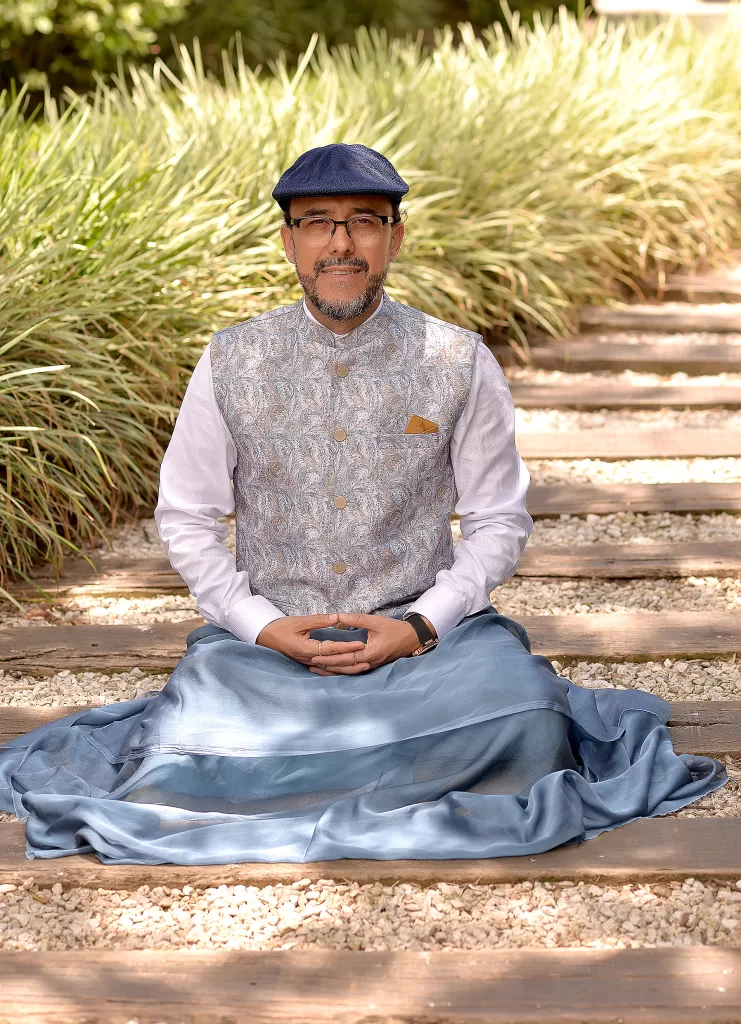
॥ भगवद् गीता ॥ … Bhagavad Gītā … by Acharya Tadany
Chapter 2 – Class 68 – Nov 13, 2026.
Summary
Introduction to Verses 52-53
In this class, Acharya Tadany introduced verses 52 and 53 of the Bhagavad Gita, which mark a crucial transition point in Arjuna’s spiritual journey. These verses describe the progression from Karma Yoga (the yoga of action) to Jñāna Yoga (the yoga of knowledge) and ultimately to Mokṣa (liberation). Acharya Tadany emphasized that understanding this progression is essential for students seeking spiritual maturity and self-realization.
The Role of Karma Yoga
Acharya Tadany explained that Karma Yoga serves as a preparatory discipline that purifies the intellect (buddhi). Through the practice of selfless action performed with the right attitude, Karma Yoga helps overcome mental confusion (moha) and delusion (viparyaya) regarding life’s true priorities.
The practitioner begins to recognize that external achievements, possessions, and relationships—while valuable—are not the ultimate source of lasting fulfillment or security.
This purification process gradually weakens our attachment to external dependencies and helps us discern what truly matters. The intellect becomes clearer, more discerning, and capable of receiving higher knowledge about our true nature.
Dispassion and Detachment (Vairāgya)
As Karma Yoga matures, it naturally leads to a state of dispassion or detachment from external factors. This quality, known as vairāgya, is not indifference or withdrawal from life, but rather an inner freedom from being controlled by external circumstances. The student develops equanimity—remaining centered whether experiencing success or failure, praise or criticism, gain or loss.
Acharya Tadany clarified that this detachment is not about rejecting the world or adopting an austere lifestyle. Rather, it represents an inner maturity where one’s sense of security, peace, and happiness is no longer dependent on constantly changing external situations.
Understanding Mokṣa (Liberation)
Acharya Tadany addressed common misconceptions about Mokṣa, emphasizing that liberation is not about external appearances, renunciation of possessions, or withdrawal from society. Instead, Mokṣa represents the discovery and abiding recognition of one’s true nature (svarūpa) as the eternal source of security, love, and fullness (pūrṇatva).
A liberated person (jīvanmukta) has realized that they are not the limited, incomplete individual they previously believed themselves to be. They recognize their essential nature as ātman—the infinite, complete, unchanging consciousness that was never actually bound or limited. This is not a new achievement but the removal of ignorance (avidyā) about what one has always been.
Two Main Obstacles to Self-Knowledge
Acharya Tadany identified two primary obstacles that prevent us from recognizing our true nature:
- Saṃśaya (Doubt): Intellectual doubts about the teaching that we are already complete and whole. These doubts arise from our habitual identification with the limited body-mind complex. We question whether it’s really possible that our essential nature is limitless consciousness, or whether we need to acquire something we don’t already have.
- Viparyaya (Mistaken Notion): The deeply rooted, habitual notion that external factors—objects, relationships, achievements, experiences—are necessary for our happiness and fulfillment. This is not merely an intellectual belief but an emotional pattern embedded in the unconscious mind through countless repetitions over many lifetimes. Even after intellectually understanding the teaching, this habitual tendency continues to drive our reactions and behaviors.
The goal of spiritual practice is to remove both these obstacles, allowing the knowledge of our true nature to be clearly and permanently recognized.
The Challenge of Unconscious Patterns
Acharya Tadany explained the distinction between conscious and unconscious levels of change. While conscious, intellectual understanding can change relatively quickly through study and reflection, unconscious emotional patterns (saṃskāras and vāsanās) are deeply rooted and require sustained effort to transform.
These unconscious patterns were formed through countless repetitions across many lifetimes. Therefore, purifying them requires patience, consistent discipline, and repeated practice (abhyāsa). The tools for this purification include meditation (dhyāna), self-inquiry (vicāra), and the ongoing practice of Karma Yoga with proper understanding.
Q&A
Question and Answer: Addressing Recurring Patterns
Sandra asked Acharya Tadany for guidance on how to deal with recurring emotional reactions and dependencies, beyond her current practices of studying, practicing, and meditating. She wanted to know if there were additional techniques to accelerate the transformation of these habitual patterns.
Acharya Tadany responded with both practical guidance and compassionate perspective:
- The Nature of Reprogramming: He explained that reprogramming emotional responses is similar to updating deeply embedded software. It requires both discipline (consistent practice) and patience (acceptance of the time required). Patterns accumulated over countless lifetimes cannot be erased instantly, even with sincere effort.
- Measuring Progress: Rather than expecting immediate elimination of reactive patterns, Acharya Tadany suggested tracking three key indicators of progress:
- Intensity: Are your emotional reactions less intense than before?
- Frequency: Are the reactions occurring less often?
- Recovery Period: When reactions do occur, do you return to centeredness more quickly?
- Self-Compassion: He emphasized the critical importance of self-kindness during this process. Self-judgment and self-criticism when old patterns resurface only add additional suffering and can actually impede progress. Instead, one should observe the patterns with understanding, recognize them as conditioned responses from the past, and gently return to the practice without harsh self-evaluation.
- The Long View: Acharya Tadany reminded students that emotional and spiritual maturity is a gradual unfolding. What matters is consistent application of the teaching, not perfection at every moment. Each time we recognize a pattern and choose a wiser response, we weaken that pattern and strengthen our inner clarity.
Sanskrit Glossary
| Sanskrit Term | Devanagari | Meaning |
| Karma Yoga | कर्म योग | The yoga of selfless action; performing one’s duties with the right attitude and without attachment to results |
| Jñāna Yoga | ज्ञान योग | The yoga of knowledge; the direct path of self-inquiry and discrimination between the real and unreal |
| Mokṣa | मोक्ष | Liberation; freedom from the cycle of birth and death; recognition of one’s true nature |
| Buddhi | बुद्धि | Intellect; the discriminating faculty of mind; higher reasoning capacity |
| Moha | मोह | Confusion; delusion; mental bewilderment about what is valuable in life |
| Viparyaya | विपर्यय | Mistaken notion; misapprehension; seeing things contrary to their true nature |
| Vairāgya | वैराग्य | Dispassion; detachment; freedom from dependency on external factors for inner peace |
| Svarūpa | स्वरूप | One’s true nature; essential being; intrinsic form |
| Pūrṇatva | पूर्णत्व | Fullness; completeness; wholeness |
| Jīvanmukta | जीवन्मुक्त | One who is liberated while living; a person who has realized their true nature while still embodied |
| Ātman | आत्मन् | The Self; pure consciousness; one’s true identity beyond body and mind |
| Avidyā | अविद्या | Ignorance; the fundamental misidentification with the limited body-mind complex |
| Saṃśaya | संशय | Doubt; intellectual uncertainty about the teaching or one’s true nature |
| Saṃskāra | संस्कार | Mental impression; unconscious tendency formed by past actions and experiences |
| Vāsanā | वासना | Deep-rooted desire or tendency; habitual inclination driving behavior |
| Abhyāsa | अभ्यास | Practice; repeated effort; sustained discipline |
| Dhyāna | ध्यान | Meditation; sustained contemplation; focused awareness |
| Vicāra | विचार | Self-inquiry; discriminative investigation; contemplation on one’s true nature |
Acharya Tadany