

 Tadany Um refúgio para a alma e um convite à consciência.

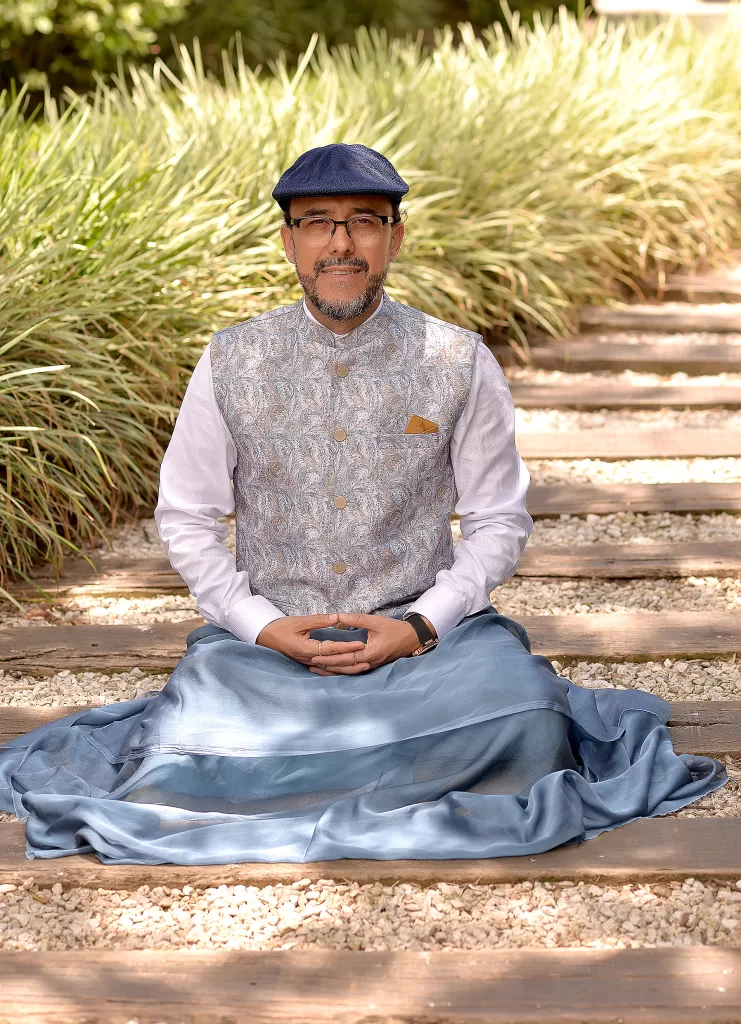
॥ भगवद् गीता ॥ … Bhagavad Gītā … by Acharya Tadany
Chapter 5, Class 205, Nov 12, 2026.
Summary
Grihastha and Sannyasa Equality Teachings
The Two Valid Paths to Liberation
Acharya Tadany presented Krishna’s fundamental teaching from the Bhagavad Gītā about the equality and validity of two distinct lifestyle paths that serve as frameworks for spiritual development: Gṛhastha (the socially active householder life) and Sannyāsa (the reclusive renunciate life). These represent two of the four āśramas in the Vedic life-stage system, each offering a complete and legitimate path to the ultimate spiritual goal.
The Gṛhastha āśrama involves active engagement with society, family responsibilities, professional work, and the fulfillment of social duties (dharma). The householder maintains relationships, raises children, contributes to society, and practices spirituality while remaining embedded in the world. This path requires skillful navigation of worldly responsibilities while maintaining spiritual awareness and ethical conduct.
The Sannyāsa āśrama, by contrast, involves formal renunciation of worldly attachments, social roles, and possessions. The sannyāsī withdraws from active social engagement to focus exclusively on spiritual practice, self-inquiry, and the pursuit of liberation. This path requires intense discipline, self-sufficiency, and the ability to maintain equanimity in solitude.
Krishna’s revolutionary teaching in the Gītā is that both paths are equally valid and can lead to mokṣa (liberation from the cycle of birth and death). Neither path is inherently superior to the other. Both represent authentic spiritual journeys when practiced with sincerity, understanding, and dedication. The tradition recognizes that different temperaments, life circumstances, and karmic backgrounds require different approaches to the same ultimate realization.
Warning Against Comparative Judgments
A central and crucial teaching that Acharya Tadany emphasized from Krishna’s discourse is the warning against comparing these two paths or evaluating their relative merits. This warning addresses a common pitfall that practitioners on any spiritual path tend to fall into: the tendency to judge one’s own path as superior or inferior to others’.
When we compare spiritual paths, Krishna teaches, we inevitably create psychological distortions that obstruct genuine spiritual progress. If we conclude that our path is superior, we develop a superiority complex—a sense of spiritual pride that inflates the ego rather than dissolving it. We may look down upon those following different paths, thinking “I am more spiritually advanced because I have renounced the world” or “I am more mature because I fulfill my worldly duties rather than running away from them.” This attitude directly contradicts the spiritual goal of ego-transcendence.
Conversely, if we conclude that another’s path is superior to our own, we develop an inferiority complex. We may think “I should be a renunciate like them—I’m not truly serious about spirituality” or “I should have a family and contribute to society—I’m being selfish by focusing only on my practice.” This creates self-doubt, guilt, and the false belief that our current path is somehow inadequate or that we are failing spiritually.
Both attitudes—superiority and inferiority—become significant obstacles to genuine spiritual progress. They keep the mind engaged in comparative thinking rather than focused on sincere practice. They strengthen the ego’s identification with external forms rather than facilitating the dissolution of ego-identification. They create mental agitation rather than the peace and clarity necessary for spiritual realization.
Krishna’s teaching is clear: abandon all such comparisons. Each path has its own validity, challenges, and opportunities. The question is not “which path is better?” but rather “which path is appropriate for me, and how can I practice it with complete sincerity and dedication?”
Individual Suitability Based on Svabhāva and Prārabdha Karma
The class explored in depth how the suitability of each path depends on two crucial factors: an individual’s svabhāva (inherent nature or temperament) and their prārabdha karma (the portion of accumulated karma that is actively manifesting in this lifetime and shaping current circumstances).
Svabhāva refers to our natural psychological and spiritual inclinations. Some individuals naturally possess a contemplative, introverted temperament that thrives in solitude and finds worldly engagement draining or distracting. For such people, the renunciate path of Sannyāsa may be more suitable, allowing them to channel their natural inclinations toward intensive spiritual practice without the constant demands of social interaction.
Others possess a more active, extroverted temperament that finds meaning and energy in social engagement, relationships, and contributing to the welfare of others. For such individuals, the householder path of Gṛhastha may be more suitable, allowing them to practice spirituality through the fulfillment of duties, the cultivation of ethical relationships, and the transformation of daily activities into spiritual practice (karma yoga).
Prārabdha karma adds another dimension to this consideration. Our current life circumstances—the family we are born into, our health, our social position, our opportunities and limitations—are shaped by karma from past actions that has now begun to manifest. A person may have family obligations that cannot be ethically abandoned, or they may be free of such obligations. They may have health conditions that require social support, or they may possess the robust health necessary for the austerities of renunciate life. They may have the financial resources that allow for renunciation, or they may have dependents who rely on their support.
The key insight that Acharya Tadany emphasized is that each path has its own advantages and disadvantages, and these manifest differently depending on our unique combination of svabhāva and prārabdha karma. What appears as an advantage for one person may be a disadvantage for another. The renunciate’s freedom from worldly responsibilities is an advantage for someone with a contemplative nature, but it becomes a disadvantage if that person lacks the inner strength to maintain practice without external structure. Similarly, the householder’s engagement with family and society is an advantage for someone who finds spiritual growth through relationships and service, but it becomes a distraction for someone who truly needs solitude for their development.
Therefore, the spiritual task is not to determine which path is objectively better, but to honestly recognize our own natural inclinations and karmic circumstances, and then to pursue the appropriate path with complete sincerity and dedication. Self-knowledge—understanding our own svabhāva and acknowledging our prārabdha karma—becomes the foundation for choosing and following the right path.
Same Goal, Different Journeys
Despite the significant external differences between the Gṛhastha and Sannyāsa lifestyles, both āśramas ultimately lead to the same spiritual transformation and the same realization of truth. The destination—mokṣa, or liberation—is identical. What differs is the journey, the external form of practice, and the specific challenges and opportunities each path presents.
In the Gṛhastha path, spiritual transformation occurs through the practice of dharma (righteous duty) in the midst of worldly engagement. The householder learns to perform actions without attachment to their results (niṣkāma karma), to see all relationships as opportunities for selfless service, to practice contentment with what life provides, and to maintain spiritual awareness while fulfilling family and social responsibilities. The transformation happens through the gradual purification of desires, the cultivation of equanimity in success and failure, and the recognition that one can be in the world without being of the world.
In the Sannyāsa path, spiritual transformation occurs through direct renunciation of worldly attachments and intensive focus on self-inquiry, meditation, and the study of scriptures. The renunciate simplifies external life to its bare essentials to create maximum space for internal work. The transformation happens through the systematic dismantling of identification with body, mind, and ego, and the direct investigation of the nature of consciousness and reality.
Both paths require the same fundamental spiritual qualities: discipline, patience, perseverance, self-honesty, surrender, and the willingness to face and transform one’s limitations. Both paths lead to the same realization: the recognition of one’s true nature beyond all roles and identifications, the experience of peace that transcends circumstances, and freedom from the bondage of ignorance and suffering.
The crucial point that Acharya Tadany emphasized is that true spiritual progress comes from sincere practice (sādhanā) within one’s chosen āśrama, not from the external form of the āśrama itself. A householder practicing with sincerity, self-awareness, and dedication makes genuine spiritual progress. A renunciate who has merely adopted the external form without internal transformation remains spiritually stagnant. The depth of one’s practice matters far more than the external lifestyle one has adopted.
This teaching liberates practitioners from the anxiety that they might have chosen the “wrong” path or that they need to change their external circumstances to progress spiritually. Instead, it directs attention to the quality of practice, the sincerity of effort, and the depth of understanding cultivated within whatever circumstances one finds oneself. The spiritual journey is not about achieving a particular external lifestyle, but about the internal transformation that can occur within any authentic dharmic framework.
The Danger of External Changes Without Internal Transformation
A particularly important teaching that Acharya Tadany emphasized from Krishna’s discourse is the danger of changing one’s external lifestyle—especially moving from the householder to the renunciate life—without genuine internal transformation. This represents one of the most common spiritual pitfalls: the belief that external change alone will bring spiritual progress.
Many practitioners, when they encounter difficulties or frustrations in their current path, imagine that adopting a different lifestyle will solve their spiritual challenges. A householder struggling with family conflicts, financial pressures, or the demands of professional life may romanticize the renunciate’s life, imagining it as peaceful, simple, and conducive to rapid spiritual progress. They may think, “If only I could renounce everything and live in an ashram, then I could really focus on spirituality.”
However, Krishna’s teaching—as explained by Acharya Tadany—is that this is fundamentally a delusion. If we change our external circumstances while maintaining the same internal attitudes, habits, and patterns of mind, we will simply recreate the same problems in a new setting. The householder who was restless, dissatisfied, and unable to focus on spiritual practice at home will carry that same restlessness, dissatisfaction, and inability to focus into renunciate life. The external form changes, but the internal reality remains the same.
The real obstacles to spiritual progress are internal, not external. They include: mental restlessness, attachment to comfort and pleasure, aversion to discomfort and challenge, identification with thoughts and emotions, spiritual pride, laziness, lack of self-awareness, and the fundamental ignorance (avidyā) about our true nature. These internal obstacles accompany us wherever we go. Changing our address or our lifestyle does not eliminate them.
What matters, therefore, is not the external form of one’s life, but the quality of practice, the depth of self-awareness, and the sincerity of engagement with one’s spiritual path—whatever that path may be. A householder who practices with awareness, who treats daily responsibilities as spiritual practice, who cultivates detachment while fulfilling duties, and who maintains regular spiritual disciplines makes far greater progress than a renunciate who has merely adopted the external form of renunciation while remaining internally attached, prideful, or spiritually superficial.
This teaching has profound practical implications. It means that wherever we are right now, whatever our current life circumstances, we have everything we need to make genuine spiritual progress. The key is not to change our external situation, but to transform our relationship to that situation. The practice is to bring awareness, sincerity, and dedication to whatever we are doing, to see every moment as an opportunity for spiritual growth, and to work systematically on our internal obstacles rather than blaming our external circumstances.
Acharya Tadany emphasized that genuine spiritual progress requires honest self-assessment. Before considering any major external change, we must ask ourselves: Are we truly being called to a different path by our deepest spiritual understanding, or are we simply trying to escape the challenges of our current path? Have we exhausted the spiritual potential of our current circumstances, or are we avoiding the difficult internal work that our current situation is asking us to do? Are we seeking external change because we have genuinely outgrown our current framework, or because we lack the discipline and patience to work with what is right in front of us?
The teaching is not that one should never change one’s lifestyle or āśrama—legitimate transitions do occur when circumstances and inner development genuinely call for them. Rather, the teaching is that external change without internal transformation is spiritually useless and often counterproductive. The foundation of spiritual progress is not in adopting the right external form, but in cultivating the right internal qualities: awareness, sincerity, dedication, patience, and the willingness to face and transform oneself exactly where one is.
Sanskrit Glossary
| Transliteration | Devanagari | Meaning |
| Bhagavad Gītā | भगवद्गीता | Sacred Hindu scripture; dialogue between Krishna and Arjuna; literally “Song of God” |
| Āśrama | आश्रम | Stage of life; one of the four phases in the Vedic system of human life |
| Gṛhastha | गृहस्थ | Householder stage; the second āśrama involving family life, social responsibilities, and dharmic duties |
| Sannyāsa | संन्यास | Renunciate stage; the fourth āśrama characterized by renunciation of worldly attachments and focus on spiritual realization |
| Mokṣa | मोक्ष | Liberation; freedom from the cycle of birth and death (saṃsāra); the ultimate goal of Hindu spiritual practice |
| Prārabdha Karma | प्रारब्ध कर्म | The portion of accumulated karma that has begun to bear fruit in the current lifetime; the karma that determines present life circumstances |
| Svabhāva | स्वभाव | One’s own nature; inherent temperament or natural disposition |
| Sādhanā | साधना | Spiritual practice; disciplined effort toward spiritual realization |
| Dharma | धर्म | Righteous duty; cosmic law; the ethical and moral principles that sustain the universe and society |
Acharya Tadany