Tadany Um refúgio para a alma e um convite à consciência.

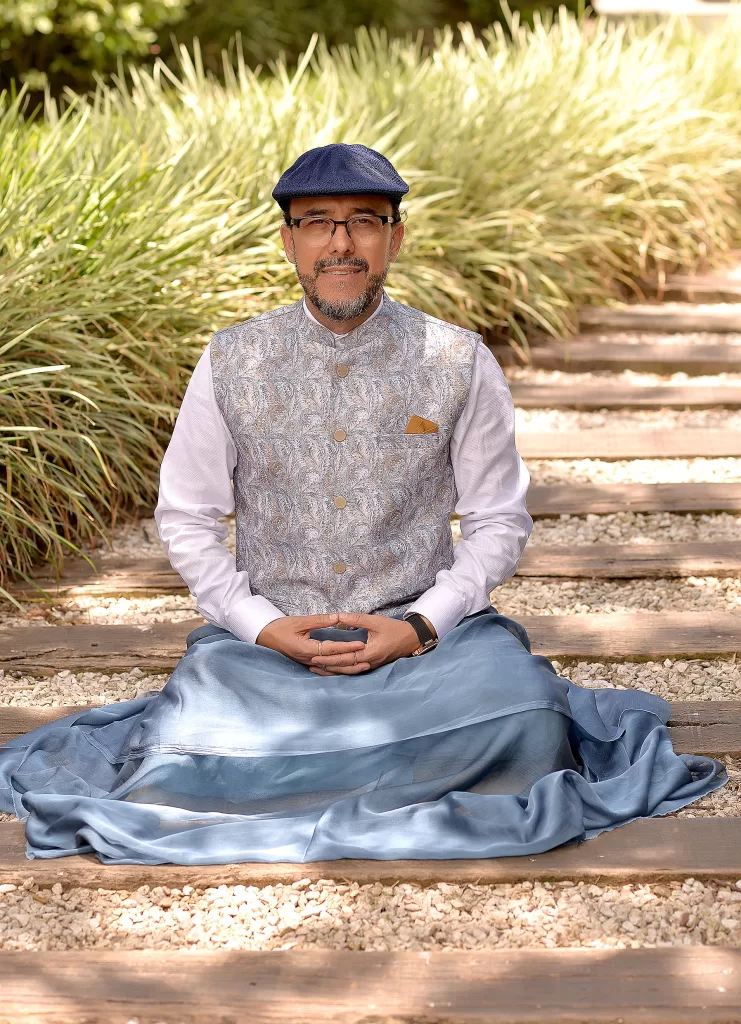
॥ तत्त्व बोध ॥ … Tattva Bodha … By Acharya Tadany
Class 61, Sept 7, 2025
Q&A before class
Ganesh Chaturthi Festival Discussion
The class began with an enriching conversation about Gaṇeśa Caturthī, one of the most beloved festivals celebrated primarily in Maharashtra, India. Preksha and Acharya Tadany provided detailed explanations of the festival’s various dimensions:
- The Core Practice: The festival centers on inviting the deity Gaṇeśa into homes or community paṇḍālas (temporary temples) for a period ranging from 1.5 to 10 days, treating Him as an honored royal guest.
- Daily Rituals: Devotees perform elaborate rituals including feeding the deity, bathing the mūrti (sacred image), changing clothes and decorations, offering incense and sweets (especially modakas, Gaṇeśa’s favorite), and performing āratī (ritual of lights) twice daily—creating a sacred space filled with divine energy, beauty, and devotion.
- Community Dimension: Families visit each other’s homes to view different Gaṇeśa installations, neighborhoods collectively set up elaborate temporary temples (some breathtakingly beautiful, especially in commercial areas), and the entire community comes together in celebration, creating bonds and shared spiritual experience.
- The Festival Atmosphere: The festival transforms the environment with colorful decorations, lights, music, and a palpable sense of joy and festivity. In the evenings, families walk through the city visiting various paṇḍālas, experiencing the creativity and devotion of different communities.
- Visarjana (Immersion): On the final day, devotees carry the Gaṇeśa mūrti in a grand procession to a river or body of water, offering the deity back to nature in a beautiful and emotional ceremony.
The discussion concluded with Acharya Tadany’s decision to begin the class by chanting the Gaṇapati Atharvaśīrṣa Upaniṣad, invoking Gaṇeśa’s blessings on this auspicious day.
Ganapati Upanishad and Self-Knowledge
Following the opening invocation, Acharya Tadany chanted the Gaṇapati Atharvaśīrṣa Upaniṣad in its entirety—a powerful Vedic text dedicated to Lord Gaṇeśa—before beginning the formal Vedānta teaching. The class then focused on completing the final section of Tattva Bodha: the benefits of self-knowledge (Ātma-jñānam).
Summary
Jīvan Mukti and Videha Mukti: Two Dimensions of Liberation
Acharya Tadany explained that the benefits of self-knowledge are twofold:
- Jīvan Mukti (Liberation While Living): The Jñānī (wise person) continues to live in the world like any other person, with the same physical body and daily activities. However, the crucial difference is that the Jñānī gains immunity, protection, and inner strength against the problems of saṃsāra (the cycle of suffering). This is achieved through the transformative power of self-knowledge. In the Bhagavad Gītā, Lord Kṛṣṇa describes this state as samatva—equanimity of mind, a harmonious and balanced mental state that remains undisturbed by life’s ups and downs.
- Videha Mukti (Liberation After Death): Like all physical bodies, the Jñānī’s body also eventually perishes at the appropriate time determined by prārabdha karma. The period up to the death of the body is Jīvan Mukti. After death comes Videha Mukti—the Jñānī’s complete freedom from the cycle of birth and death (punarapi jananaṃ punarapi maraṇam). While ordinary people (ajñānīs/saṃsārīs) must acquire another body based on their accumulated karma and continue the cycle, the Jñānī experiences final death—there are no more births, no more bodies, no more cycles. This is the ultimate liberation.
The Three Types of Karma: Foundation for Understanding Liberation
To explain why the Jñānī achieves Videha Mukti while others do not, Acharya Tadany provided a detailed analysis of the three types of karma. First, he explained these from the perspective of an ordinary person (Ajñānī):
- Sañcita Karma (Accumulated Karma): The total sum of all puṇyam (merit) and pāpam (demerit) accumulated across countless past human births. This storehouse is immeasurably vast—compared to which even the Himalayas would seem tiny. Sañcita karma is responsible for infinite future births.
- Prārabdha Karma (Fructifying Karma): A specific portion or “bunch” of Sañcita karma that has matured and begun to manifest. Prārabdha determines: the type of body one receives, the time and circumstances of birth (even conditions in the womb), the lifespan, physical and mental characteristics, and the mixture of pleasant and painful experiences (sukha-duḥkha) throughout life. All experiences that come to you without your direct effort—both favorable and unfavorable—are manifestations of prārabdha karma. Even diseases, health conditions, and the aging process are determined by prārabdha.
- Āgāmī Karma (Future Karma): New karma being generated in the present life through mental, verbal, and physical actions. For an Ajñānī, Āgāmī karma begins accumulating from birth (or whenever the person becomes capable of volitional action). While exhausting prārabdha karma, the person continuously generates new Āgāmī karma through daily activities.
What Happens at Death for an Ajñānī
Acharya Tadany explained the mechanics at the time of death for an ordinary person: Death occurs when prārabdha karma is completely exhausted. At that moment, part of the Āgāmī karma generated in that lifetime is also exhausted, but the remaining portion of Āgāmī karma joins the Sañcita karma storehouse. From this enlarged Sañcita karma, a new “bunch” of prārabdha is selected, which determines the next birth. Thus the cycle continues perpetually.
The Critical Difference for a Jñānī
Acharya Tadany then explained the crucial distinctions for a wise person:
- Āgāmī Karma for Jñānī: The key difference is the “cut-off point.” For a Jñānī, Āgāmī karma begins only after the attainment of self-knowledge (jñāna-utpatti). Whatever actions the Jñānī performs after enlightenment—whether meritorious or not—constitute Āgāmī karma. Importantly, the text uses the phrase “jñānī-deha-kṛtam” (performed by the body of the Jñānī), highlighting that the Jñānī no longer identifies with the body-mind-sense complex, having realized the ātmā as distinct from all three bodies (sthūla-śarīra, sūkṣma-śarīra, kāraṇa-śarīra).
- Sañcita Karma for Jñānī: For the Jñānī, Sañcita karma includes not only all past human births but also all karma accumulated in the current life up to the moment of enlightenment. If enlightenment occurs at age 40, for example, then all 40 years of accumulated karma becomes Sañcita. This is different from the Ajñānī, for whom current-life karma is classified as Āgāmī. The qualifying phrase “pūrva-arjitam” (acquired in the past) must be understood as “up to the rise of knowledge.”
- Prārabdha Karma for Jñānī: The definition remains the same—prārabdha is the karma that has begun to fructify and is responsible for the current body and life circumstances. This is identical for both Jñānī and Ajñānī.
Acharya Tadany indicated that in the next class, he would explain what happens to each of these three types of karma for the Jñānī, revealing how the Jñānī becomes completely free from all three, resulting in Videha Mukti—no further births.
Karma Concepts and Spiritual Progress
Textual Study: Definitions of the Three Karmas from Tattva Bodha
Acharya Tadany led a detailed study of the Sanskrit verses from Tattva Bodha, providing word-by-word translation and explanation:
- Āgāmī Karma Definition: “jñāna-utpatti-anantaram jñānī-deha-kṛtam puṇya-pāpa-rūpam karma yad asti tad āgāmī iti abhidhīyate” (Whatever meritorious or sinful actions are performed by the body of the Jñānī after the rise of knowledge—that is called Āgāmī karma). The emphasis on “deha-kṛtam” (done by the body) rather than “done by the Jñānī” is philosophically significant, showing non-identification with the body.
- Sañcita Karma Definition: “ananta-koṭi-janma-nām bhāvi-janma-nām sat yat karma jātam pūrva-arjitam dṛśyate tat sañcitam ity ucyate” (That karma which was acquired in the past and is responsible for infinite crores of future births—that is called Sañcita karma). The term “ananta-koṭi” emphasizes the incomprehensibly vast accumulation.
- Prārabdha Karma Definition: “idam śarīram utpādya iha-loke sukha-duḥkha-ādi-pradam yat karma tat prārabdham bhogena eva naṣṭa bhavati prārabdha-karmaṇām bhoga-eva kṣaya iti” (That karma which, having produced this body, gives experiences of pleasure, pain, and so forth in this world—that is prārabdha. Prārabdha karma can be exhausted only through experience). The phrase “bhogena eva kṣayaḥ” (exhausted only through experience) is crucial—prārabdha cannot be avoided or burned through knowledge; it must be lived through.
Important Clarifications on Prārabdha Karma
Acharya Tadany provided several important clarifications about prārabdha karma:
- Prārabdha determines the body type, features, lifespan, health conditions, diseases, aging process, and the entire spectrum of experiences from birth to death.
- Modern medical technology can detect genetic conditions and diseases even in the fetus in the womb, confirming the śāstric teaching that prārabdha operates from conception itself.
- Some people remain healthy and active even at 90 years old (Acharya Tadany shared an example of a 91-year-old skateboarder who started skating at 65), while others face multiple health issues at 40—all determined by prārabdha.
- Even lifespan varies dramatically—some die in infancy, others live very long lives—all according to prārabdha.
- The mixture of sukha (pleasure) and duḥkha (pain) in life, and all circumstances that come without direct effort, are manifestations of prārabdha.
- Medical dilemmas such as abortion for genetic diseases represent what the śāstra calls “dharma-saṅkaṭa” (ethical/moral crisis)—complex situations without clear right or wrong answers.
Q&A after class
Personal Question: Handling Family Conflicts on the Spiritual Path
Preksha shared a vulnerable personal experience: After feeling good about her spiritual progress, she had a very heated argument with her father regarding his behavior toward her child. The intensity of her reaction troubled her—she felt it wasn’t graceful, even though she believed her defensive stance was justified. She wondered how an enlightened person would handle such situations.
Acharya Tadany’s response covered multiple dimensions of this universal challenge:
Understanding the Nature of Family Dynamics
- The Emotional Minefield: Family relationships are uniquely challenging because they contain layers of suppressed emotions, unaddressed issues, and deeply ingrained patterns. Even a look from a family member can trigger intense reactions that wouldn’t occur with strangers.
- Generational Differences: Parents and children often have fundamentally different values and worldviews shaped by different eras, backgrounds, and experiences. What you and your spouse agree on regarding child-rearing may directly oppose your parents’ or in-laws’ approaches. These differences often cannot be reconciled—they simply exist.
- The Validation Trap: Children, no matter how old or spiritually advanced, still unconsciously seek parental validation. We want our parents to acknowledge and accept our way of life, which creates a subtle emotional dependency that fuels reactions.
- The Circumstance as Excuse: Often, the specific situation (like a parenting disagreement) becomes an excuse for releasing accumulated emotional residue. With a stranger doing the same thing, the reaction would be completely different—more assertive perhaps, but not emotionally charged.
The Distinction Between Reaction and Response
Acharya Tadany emphasized a crucial distinction:
- Reaction: When buddhi (discriminative faculty) is overpowered and emotions take control, leading to saying or doing things one later regrets. Reaction is uncontrollable and unpredictable by definition—you cannot control it in the moment.
- Response: A conscious, deliberate action based on viveka (discrimination), where one can defend their position assertively without emotional avalanche.
Even a Jñānī may react emotionally—personality traits remain. Some teachers are fiery, while others embody gentleness (like Pūjya Swami Dayānanda). When someone complained to Swami Dayānanda about Swami Chinmayānanda’s harsh language, he simply said, “We all need a little fire now and then.” The difference is that the Jñānī applies viveka immediately after the reaction: “So what?”
The Spiritual Response to Family Challenges
Acharya Tadany offered profound guidance:
- Acceptance Without Conditions: The śāstra teaches that the faster we accept our parents exactly as they are—without trying to change them—the faster we free ourselves from these conflicts. This doesn’t mean allowing boundary violations, but responding from a place of expansion rather than contraction.
- Expanding the “I”: The purpose of all sādhanas (spiritual practices) is to expand the sense of self. The more you expand, the more you can accommodate. Parents typically trigger the most explosive reactions, and often reactions toward others have roots in the parent-child dynamic.
- Setting Boundaries Gracefully: Accommodation doesn’t mean being a doormat. You can still set healthy boundaries, but do so gracefully, without emotional violence.
- The Journey of Reduction: Spiritual practice (especially study of Vedānta) substantially reduces anger and violence from one’s life. The intensity and frequency of reactions decrease over time, though the process is gradual.
- Don’t Judge Yourself: The difference between an ordinary person and a spiritual seeker: the ordinary person justifies their behavior, while the seeker judges themselves (“I shouldn’t have done that—I’m on the spiritual path”). Acharya Tadany counseled strongly against self-judgment. Reactions happen—they’re part of being human with emotions and personality. What matters is learning and growing.
- The Value of Apology: If you recognize you reacted poorly, it’s always valuable to apologize to your parents. Parents are parents—the relationship is unique and worth honoring.
What Does It Mean to Attain Knowledge?
Preksha asked a profound question: “When you say ‘attaining knowledge,’ what exactly do you mean? Cognitive understanding seems easier, but living in that knowledge is a journey. When do you say a person is a Jñānī?”
Acharya Tadany’s answer was clear and practical:
- The Core Criterion: There is no longer identification with the body-mind-sense complex. The Jñānī knows, “Whatever happens to the body-mind-sense complex has nothing to do with me fundamentally.”
- Still Cognitive: This knowing remains at the cognitive level—it’s a paradigm shift in understanding, not a mystical state. That’s why nididhyāsana (profound meditation/contemplation) is necessary—to convert intellectual knowledge into lived wisdom in daily life.
- Understanding the Connection: Ordinarily, we are intrinsically and intimately identified with the body-mind-sense complex. Whatever happens to them, we say happens to “me”: insult the body → “you insulted me”; disrespect my words → “you disrespected me.” The Jñānī understands this connection clearly and knows the truth beyond it.
- Life Continues Normally: As explained in Bhagavad Gītā Chapter 2, the Jñānī lives like everyone else—eating, working, relating to people, changing clothes. If a gṛhastha (householder), still raising children, attending family gatherings, fulfilling social obligations. The difference: the Jñānī plays the role without identifying with it, like an actor who plays a villain but knows, “I am not this character.”
- Not Chosen Roles: Most of our life roles aren’t even chosen—they’re given by prārabdha karma. Birth circumstances, family, natural talents, life situations—all prārabdha. The Jñānī plays these roles while identifying with the total (Brahman/ātmā), not with the limited individual.
- The Paradigm Shift: Instead of identifying with “I, me, myself—man/woman, this age, this profession, this background, born here”—the Jñānī identifies with the limitless consciousness that is the substratum of all existence.
The Bhagavad Gītā Connection
Acharya Tadany mentioned that these topics—especially the nature of the Jñānī, karma, and how to live in the world—will be covered in much greater detail in the Bhagavad Gītā classes. The Gītā extensively discusses cittaśuddhi (purification of the unconscious mind), which is essential because the unconscious is what reacts. Lord Kṛṣṇa’s teaching provides a complete roadmap for spiritual life in the world.
Acharya Tadany