Tadany Um refúgio para a alma e um convite à consciência.

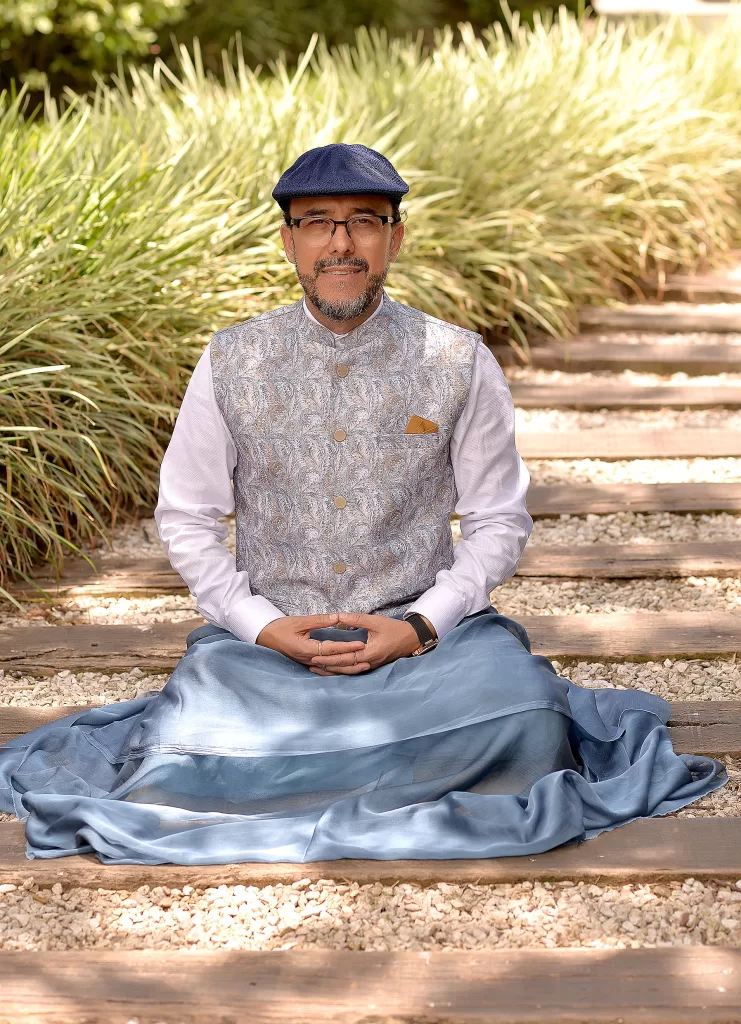
॥ भगवद् गीता ॥ … Bhagavad Gītā … by Acharya Tadany
Chapter 2 – Class 61 – Sept 25, 2025.
Summary
Understanding Yoga-Kṣema
Acharya Tadany explained the Sanskrit term yoga-kṣema, which refers to both acquiring (yoga) and preserving (kṣema) the basic necessities for survival.
While these practical concerns are natural and necessary, the teaching emphasized that they represent only the foundational level of human life—the basic platform upon which we build our existence. The discussion explored in depth how focusing solely on material security—no matter how much wealth or posclasss one accumulates—cannot eliminate inner insecurity.
This is a crucial understanding for spiritual seekers: even when all our material needs are met and exceeded, the mind continues to generate worry about potential loss, fear of the future, and anxiety about adequacy. The teacher emphasized that yoga-kṣema, while important for basic survival, should not become the primary focus of a human life, as doing so keeps us trapped at the most elementary level of existence.
The Paradox of Material Security
A central theme of the class was understanding that inner insecurity persists regardless of external wealth. Even those with abundant resources experience worry, fear, and anxiety about losing what they have or not having enough.
Acharya Tadany taught that true security cannot be found in the external world, as the material realm is inherently subject to change, loss, and impermanence. This creates a fundamental paradox in human life: we instinctively seek security through accumulation and preservation, yet the very nature of the material world—constant flux, inevitable decay, and ultimate impermanence—makes lasting security impossible to achieve externally.
The wealthy worry about market crashes, theft, or family disputes over inheritance. The powerful fear of losing their position. The healthy fear illness. This persistent anxiety reveals a deeper truth: the root cause of insecurity is not lack of resources, but our misplaced expectation that external circumstances can provide the peace and stability we fundamentally seek.
The Path to Inner Peace
The teaching outlined that genuine peace and security arise through one of two primary approaches: cultivating devotion to Bhagavān (the Lord) or developing inner strength through self-knowledge (ātma-jñāna).
Both paths lead beyond the limitations of material concerns to a state of inner fulfillment that does not depend on external circumstances. In the path of devotion, the seeker places complete trust in the Divine, surrendering their anxieties and recognizing that ultimate security comes from that relationship rather than from achievements.
In the path of self-knowledge, the seeker comes to understand their true nature as the eternal Self (ātman), which is never threatened, never diminished, and never dependent on changing circumstances.
Through either approach—or a combination of both—a person discovers a foundation of peace that remains stable regardless of what happens in the external world. This inner security transforms how one engages with life, allowing for both practical effectiveness and spiritual freedom.
Karma-Yoga and Spiritual Alertness
Acharya Tadany introduced the practice of karma-yoga and explained the importance of maintaining spiritual awareness while handling daily responsibilities. He used the analogy of a long journey with multiple stops: just as a traveler must remain alert to their final destination even while attending to needs at intermediate stops—eating a meal, resting, refueling—a spiritual seeker should keep awareness of their ultimate goal (self-knowledge or union with the Divine) while fulfilling worldly duties.
This balance prevents one from becoming lost in material pursuits while still functioning effectively in the world. The key point of karma-yoga is that we can engage fully in our daily activities—work, family responsibilities, social obligations—without losing sight of what truly matters. Just as the traveler doesn’t forget their destination simply because they stop for lunch, the spiritual practitioner doesn’t abandon their higher purpose simply because they must attend to practical necessities.
This teaching offers a middle path between worldly entanglement and impractical renunciation, showing how ordinary life can become a vehicle for spiritual growth when approached with the right understanding and awareness.
Q&A after class
Questions and Practical Guidance
The class concluded with Acharya Tadany addressing questions from student Preksha about two important practical matters that many spiritual seekers face:
First, how to determine what level of security is appropriate for one’s needs—where is the line between reasonable preparation and anxiety-driven accumulation?—and second, how to maintain awareness of Brahman during regular daily activities when the mind is occupied with practical tasks and responsibilities.
Through the example of a wealthy businessman who learned to cook for himself—thereby reducing his dependency and sense of vulnerability—Acharya Tadany illustrated how understanding our actual needs, as opposed to imagined needs, can significantly reduce unnecessary worry and insecurity. The businessman’s story demonstrated that even simple self-sufficiency skills can transform our psychological relationship with security. When we know we can take care of our basic needs with our own hands, we become less dependent on complex systems and other people, which naturally reduces anxiety.
Regarding the second question about maintaining spiritual awareness, the teacher emphasized that clarity about our true nature or connection with the Divine creates an inner stability that doesn’t require constant mental effort to maintain—it becomes a background awareness that supports all our activities.
Acharya Tadany