Tadany Um refúgio para a alma e um convite à consciência.

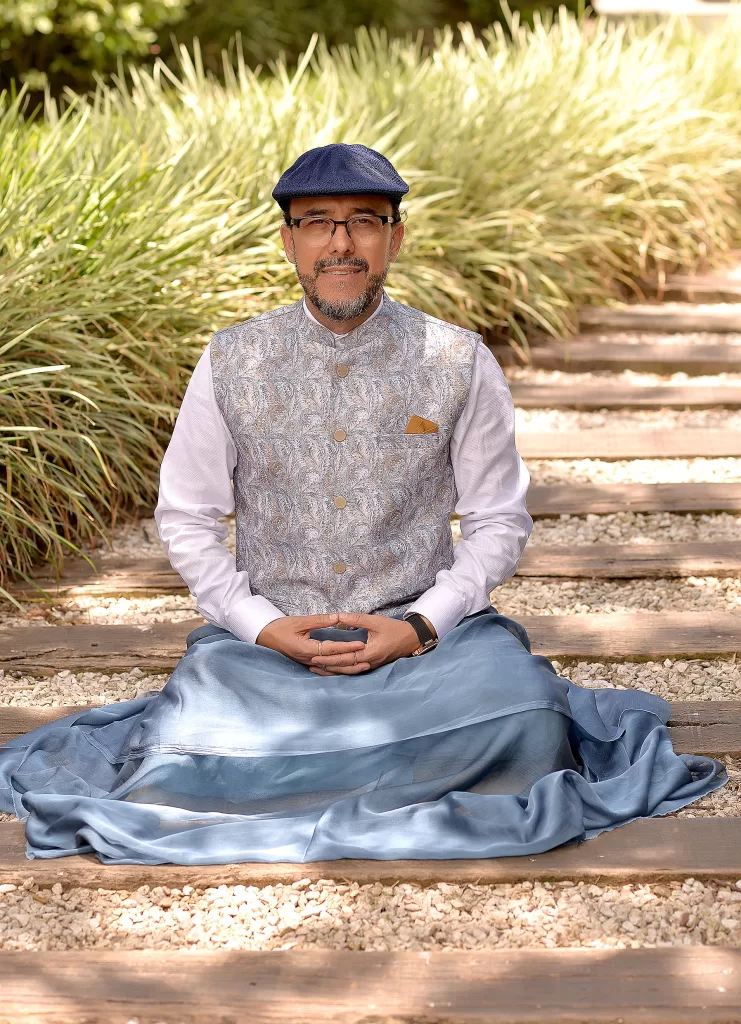
॥ भगवद् गीता ॥ … Bhagavad Gītā … by Acharya Tadany
Chapter 4, Class 199, Oct 1, 2026.
Summary
Chapter 4 Class Summary
Acharya Tadany led a class focused on summarizing the fourth chapter, with the goal of concluding it during the Class.
The chapter, titled Jñāna Karma Sannyāsa Yoga, addresses the relationship between knowledge, action, and renunciation. The teaching included reciting and analyzing specific verses from the Gītā, with Acharya Tadany explaining that the transformation brought about by self-knowledge creates objective observation in all interactions. When one gains Jñāna (self-knowledge), they no longer react from personal attachment or ego identification but observe actions and their results with equanimity.
Chapter 4: Jñāna Karma Sannyāsa Yoga
Acharya Tadany began by focusing on concluding the fourth chapter summary of the Bhagavad Gītā, titled Jñāna Karma Sannyāsa Yoga (The Yoga of Knowledge and Renunciation of Action).
This chapter is pivotal in the Gītā’s teaching structure because it establishes the supremacy of self-knowledge (Jñāna) as the ultimate means to liberation. The chapter centers on the transformative power of self-knowledge and how it leads to objectivity in all actions and experiences. Unlike other forms of renunciation that focus on giving up external activities or objects, Jñāna Karma Sannyāsa Yoga teaches that true renunciation happens through knowledge—when one realizes the true nature of the Self (ātman), the sense of personal doership (kartṛtva) and enjoyership (bhoktṛtva) naturally falls away.
This knowledge-based renunciation allows one to continue acting in the world while remaining free from the binding effects of action. The chapter synthesizes the teachings on action (karma) and knowledge (jñāna), showing they are not contradictory but complementary paths, with knowledge being the direct means to liberation.
The Concept of Objectivity in a Wise Person
Acharya Tadany explained that once a person gains self-knowledge, they develop objectivity in dealing with all situations. This objectivity means the person no longer reacts emotionally or identifies personally with outcomes—neither claiming credit for success nor feeling devastated by failure.
The wise person (jñānī) recognizes that all actions happen through the combination of the body-mind instrument and the natural laws (prakṛti), while the true Self remains the unchanging witness. Acharya Tadany used a vivid analogy: like a parachute in a racing car that reduces impact during a crash, knowledge acts as a buffer that reduces the impact of life’s challenges. Without this buffer, every event—praise or criticism, gain or loss, pleasure or pain—crashes into us with full force, creating emotional turbulence.
With the buffer of self-knowledge, these same events are observed with equanimity. The wise person observes actions and results without attachment, recognizing them as part of the natural order (dharma) rather than personal victories or defeats.
This doesn’t mean the jñānī becomes passive or indifferent; rather, they act appropriately and skillfully, but without the anxiety, craving, or aversion that bind others. They see the bigger picture and understand that outcomes are determined by countless factors beyond any individual’s control, and this understanding brings freedom and peace.
The Supremacy of Knowledge (Jñāna) Over All Paths
A key teaching of Chapter 4 is that knowledge (Jñāna) is superior to all other spiritual disciplines. Acharya Tadany emphasized that without knowledge, any āśrama (stage of life) or spiritual path can be risky and lead to further bondage.
For example, one might perform rituals with ego, practice austerities with pride, or even meditate to gain power rather than wisdom—all of which reinforce the sense of separate selfhood rather than dissolving it. However, with knowledge, every āśrama becomes beneficial and liberating. Whether one is a student, householder, forest dweller, or renunciant, self-knowledge transforms how one lives that role—from a binding identification to a freely chosen expression. Knowledge directly removes ignorance (avidyā), which is the root cause of all suffering and bondage.
Ignorance is not mere lack of information but a fundamental misunderstanding about who we are—mistaking the limited body-mind for our true nature, which is limitless awareness (Brahman).
Other practices such as rituals, charity, sense control, and meditation are supportive disciplines that purify the mind and prepare it for knowledge, but they do not directly remove ignorance—only Jñāna does. This is why the Gītā calls Jñāna the ultimate yajña (sacrifice) and the direct means to mokṣa (liberation). Without knowledge, all other practices remain preparatory; with knowledge, all practices become expressions of freedom.
The Twelve Disciplines (Yajñas)
Acharya Tadany outlined the twelve spiritual disciplines (yajñas) mentioned in the Gītā that prepare the mind for self-knowledge. The word yajña literally means sacrifice, but in the Gītā’s context, it refers to any disciplined practice undertaken with the attitude of offering—giving up immediate gratification for a higher purpose.
These twelve disciplines work together to purify the mind (citta śuddhi) and develop the inner qualities (sādhana catuṣṭaya) necessary for the rise of self-knowledge. They are not ends in themselves but means to create the receptivity and clarity required to understand and assimilate the teachings of Vedānta.
Each discipline addresses a different aspect of human life and consciousness:
- Deva Yajña: Worship and rituals dedicated to the deities
- Brahma Yajña: Study and teaching of the scriptures (Vedas)
- Dravya Yajña: Charity and giving of material resources and offerings
- Tapo Yajña: Austerities and self-discipline
- Yoga Yajña: Practice of yoga and meditation
- Svādhyāya Yajña: Self-study and recitation of sacred texts
- Jñāna Yajña: Offering of knowledge and pursuit of wisdom
- Prāṇāyāma Yajña: Breath control practices and regulation of life force
- Indriya Saṃyama Yajña: Mastery over the senses and sense restraint
- Viṣaya Saṃyama Yajña: Control and restraint of sense objects
- Āhāra Niyama Yajña: Regulation of food intake and dietary discipline
- Śabda Brahma Yajña: Study and contemplation of the Vedic sounds and scriptures
These disciplines purify the mind and create the necessary conditions for the rise of self-knowledge, but they are not ends in themselves. They are sādhanas (means) that support the main path of Jñāna Yoga. Each practice helps reduce the obstacles—desires, aversions, distractions, misconceptions—that prevent the mind from recognizing its own true nature. Together, they cultivate what Vedānta calls sādhana catuṣṭaya—the fourfold qualification of a student: discrimination (viveka), dispassion (vairāgya), the six virtues (ṣaṭ sampatti), and intense longing for liberation (mumukṣutva).
When the mind is thus prepared, the teaching of the scriptures, properly expounded by a qualified teacher (guru), directly reveals the truth: “You are That” (tat tvam asi)—the individual self and the supreme reality are one and the same. Without these preparatory disciplines, the mind remains too agitated, too attached, or too clouded to grasp this profound truth. With them, the ground is fertile, and the seed of knowledge can take root and blossom into liberation.
Jñāna Yoga: The Direct Means to Liberation
Acharya Tadany stressed that Jñāna Yoga (the path of self-knowledge) is the direct and primary means to liberation (mokṣa). All other practices are indirect and preparatory. This is a crucial distinction: practices like karma yoga (selfless action), bhakti yoga (devotion), and dhyāna yoga (meditation) purify and prepare the mind, but they do not by themselves remove the fundamental ignorance that causes bondage.
Only knowledge—specifically, the knowledge of one’s true nature as taught in the Upaniṣads and revealed through Vedāntic inquiry—directly destroys ignorance. Self-knowledge reveals the true nature of the self (ātman) as identical with Brahman (ultimate reality). This is not a mystical union or an achievement but a recognition of what has always been true: the individual consciousness that says “I am” is not different from the infinite consciousness that is the ground of all existence.
This knowledge removes the fundamental ignorance that causes one to identify with the body, mind, and ego, thereby liberating the individual from the cycle of birth and death (saṃsāra).
Acharya Tadany explained that liberation is not something to be produced, attained, modified, or purified—it is our very nature, obscured only by ignorance. When ignorance is removed through knowledge, liberation stands revealed. This is why the Gītā declares that even a boat of knowledge (jñāna-naukā) can carry one across the ocean of saṃsāra, and why Śaṅkara calls knowledge the only direct means (sākṣāt mokṣa kāraṇam) to liberation.
The Four Benefits of Self-Knowledge
Acharya Tadany described the four primary benefits (phalas) that arise from gaining self-knowledge. These are not separate rewards added from outside but natural consequences that follow when ignorance is removed, much as light naturally dispels darkness. Understanding these benefits helps students appreciate the transformative power of Jñāna and motivates them to pursue the path with dedication and sincerity:
- Elimination of Inner Conflicts (Saṃśaya Nivṛtti): All doubts and conflicts about one’s true nature are resolved permanently. Before self-knowledge, the mind is filled with questions: Who am I? What is my purpose? Why do I suffer? Is there a God? What happens after death? These questions create inner turmoil and insecurity. When self-knowledge dawns, these doubts are completely resolved—not through belief but through direct understanding. The person gains unshakable clarity about their essential nature and their relationship with the world. This clarity brings profound peace and confidence, as one is no longer confused about fundamental existential questions. The conflicts between duty and desire, between self-interest and universal good, between the material and the spiritual—all these dissolve in the light of self-knowledge.
- Destruction of Past Karma (Karma Kṣaya): The accumulated effects of past actions (prārabdha karma, the karma that has already begun to fructify as this current life) are exhausted, and no new karma is created because the person no longer identifies as the doer. This is one of the most liberating aspects of self-knowledge. The jñānī understands that the true Self (ātman) never acts—action belongs only to the body-mind complex operating under natural laws. With this understanding, even though actions continue through the body, they no longer bind the person. It’s like how a burnt rope retains the shape of rope but has lost its binding power. Past karmas continue to produce their effects until the body falls away, but they no longer cause psychological suffering because there is no identification with them. And since there is no more sense of personal doership, no new binding karma is generated. The jñānī is thus free from the entire mechanism of karmic bondage while still living and acting in the world.
- Elimination of All Actions (Sarva Karma Sannyāsa): The wise person is free from the binding effects of action. Though they may continue to act in the world—teaching, working, helping others—they are not bound by their actions. This is what the Gītā means by “action in inaction and inaction in action.” Externally, the jñānī may be very active, perhaps even more effective than others, but internally there is no sense of doership, no craving for results, no anxiety about outcomes. Actions happen through them, not by them. This is true renunciation (sannyāsa)—not the external giving up of activities but the internal giving up of the sense of being the doer and enjoyer. The jñānī has renounced all actions not by stopping action but by understanding that the Self never acts. This is the secret of karma yoga perfected in jñāna—acting freely and spontaneously without creating bondage.
- Recognition of the Oneness of Jīva and Īśvara: The individual soul (jīva) and the supreme reality (Īśvara) are realized as essentially one and the same. This is the culmination of Advaita (non-dual) understanding and the highest teaching of the Upaniṣads. The apparent difference between the individual and the cosmic, between the soul and God, between the wave and the ocean, is seen to be only apparent—a product of ignorance, not ultimate reality. In truth, there is only one consciousness, one existence, one reality called Brahman or ātman. What appears as many individuals and one God are both manifestations of that one reality, seen from different perspectives. When this is realized, the sense of separation—which is the root of fear, loneliness, and inadequacy—completely vanishes. The jñānī sees the same Self everywhere: in themselves, in all beings, in the entire universe. This is expressed in the Upaniṣadic statement “sarvam khalvidam brahma”—all this is indeed Brahman. This recognition brings complete fulfillment (pūrṇatva), as one realizes oneself to be the whole, not a limited part. This is the ultimate fruit of Vedāntic knowledge: the recognition of one’s own infinite, immortal, blissful nature.
Conclusion and Reflection
The class concluded with reflections on the importance of patience and steady practice in spiritual life. Acharya Tadany reminded students that the path of knowledge requires preparation, discipline, and a sincere commitment to self-inquiry (ātma vicāra). This is not a quick fix or a shortcut—it is a systematic, step-by-step process of purification and inquiry that unfolds over time. Just as one cannot skip grades in school or rush the growth of a plant, one cannot rush spiritual maturity. Each stage of practice prepares the ground for the next. The karma yoga of selfless action purifies the mind; bhakti develops devotion and surrender; meditation brings concentration and inner silence; study of scriptures provides the intellectual framework; and finally, with the help of a qualified teacher, self-inquiry removes ignorance and reveals the truth.
Acharya Tadany emphasized that the wisdom of the Bhagavad Gītā is not merely intellectual—it must be lived and embodied through consistent practice and reflection. It is not enough to understand the teaching conceptually; one must allow it to transform how one thinks, speaks, and acts. This requires regular study (svādhyāya), contemplation (manana), and meditation (nididhyāsana). Students were encouraged to be patient with themselves, to maintain consistency in their practice even when progress seems slow, and to trust the process. The transformation may be gradual, but it is sure. As the Gītā itself promises, “To those who are constantly devoted and who worship Me with love, I give the understanding (buddhi yoga) by which they can come to Me.”
The class ended with gratitude for the opportunity to study these timeless teachings together and with a renewed commitment to continue the journey with sincerity, humility, and dedication.
Acharya Tadany