

 Tadany Um refúgio para a alma e um convite à consciência.

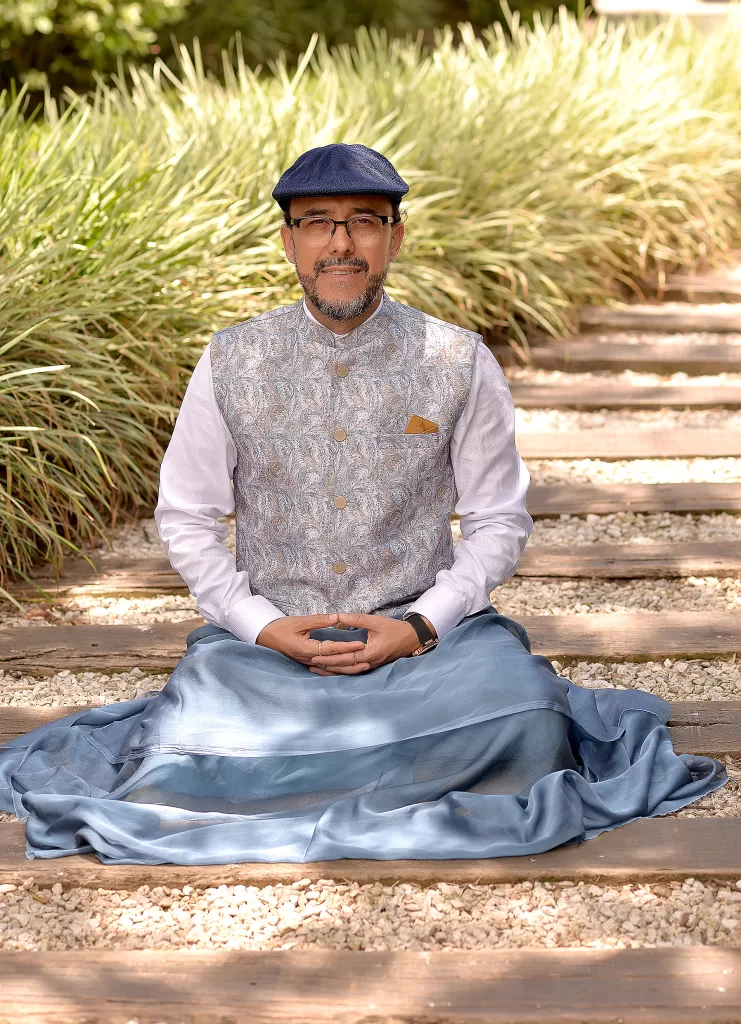
॥ भगवद् गीता ॥ … Bhagavad Gītā … by Acharya Tadany
Chapter 7, Class 241, Nov 3, 2026.
Summary
Structure of the Bhagavad Gītā
Acharya Tadany explained the overall architecture of the Bhagavad Gītā, which consists of 18 chapters organized into three main sections:
- Ṣaṭkam (Group of Six): The term Ṣaṭkam means a group of six parts or sections. Each section contains six chapters.
- Three Sections:
- Prathama Ṣaṭkam (First Section): Chapters 1–6
- Madhyama Ṣaṭkam (Middle Section): Chapters 7–12
- Carama Ṣaṭkam (Final Section): Chapters 13–18
Each section addresses distinct themes and progressively guides the student through different aspects of spiritual knowledge and practice.
Three Themes of Prathama Ṣaṭkam (Chapters 1–6)
Acharya Tadany reviewed the three main topics covered in the first six chapters:
1. Jīva Svarūpam (Nature of the Individual Self)
The first major theme examines the essential nature of the individual (jīva). Acharya Tadany explained that:
- The individual’s true nature is distinct from the body-mind-sense complex, which serves only as a temporary container.
- The real individual is of the nature of Sat-Cit-Ānanda (Existence-Consciousness-Bliss).
- The soul is neither the doer (kartā) nor the experiencer (bhoktā) of actions.
- This teaching is presented in detail in Chapter 2, verses 12–25.
- The concept of Pañcakośa Viveka (discrimination of the five sheaths) is introduced in Chapter 3, helping students understand the layers covering the true self.
2. Karma Yoga (proper attitude + proper action)
The second theme focuses on Karma Yoga as the first stage of spiritual practice (sādhanā). Key points include:
- Proper action combined with the right attitude allows one to perform actions as offerings to Bhagavān without accumulating karmic reactions.
- The practice emphasizes detachment from the fruits of action and not anticipating results.
- Through correct understanding and attitude, one can perform duties without being impacted by demerits (pāpa).
3. Puruṣa Prayatna (Importance of Individual Effort)
The third theme addresses the crucial role of personal initiative and free will:
- Karma is Not Fatalistic: Acharya Tadany emphasized that the theory of karma presented in the Vedas is not a fatalistic approach, as many people mistakenly believe.
- Understanding Karma: Karma refers to past actions—both known and unknown—that influence the present moment. However, individuals are fully responsible for their present actions, which will determine their future.
- Four Life Goals: Acharya Tadany outlined four possible destinations (puruṣārtha) in life:
- Artha (material prosperity)
- Kāma (legitimate desires and pleasures)
- Dharma (righteousness and duty)
- Mokṣa (liberation)
- Free Will: According to the Śāstra, God does not predetermine one’s future. Individuals must choose their own goals and work towards them. People have free will and must take charge of their lives.
- Role of Action: While actions play a significant role in achieving results, individuals do not completely determine outcomes; they contribute substantially to them, but other factors also play a role.
- Character and Destiny: Acharya Tadany discussed how destiny is determined by character, which is shaped by habits, words, and actions. He cited a Sanskrit saying about watching thoughts and reprogramming them to influence one’s future.
Three Themes of Madhyama Ṣaṭkam (Chapters 7–12)
Having completed the Prathama Ṣaṭkam, the class now moves into the Madhyama Ṣaṭkam. Acharya Tadany introduced the three main themes of this middle section:
1. Īśvara Svarūpam (Nature of God)
The first theme shifts focus from the microcosm (jīva) to the macrocosm (Īśvara):
- The seventh chapter will focus predominantly on God, contrasting with the first sixth chapter where God’s presence was less prominent.
- Īśvara Svarūpam has two main aspects, similar to the jīva:
- The superficial container (the manifest universe)
- The essential inner nature (similar to how jīva consists of anātma and ātma)
2. Upāsana (Meditation on God)
The second theme introduces a subtler spiritual practice:
- While the first section emphasized Karma Yoga as an active, physical practice, this section will highlight Upāsana Sādhanā (the practice of meditation).
- Upāsana involves mental meditation on God rather than physical activity.
- Acharya Tadany explained the progression from grosser to subtler spiritual practices: Karma Yoga is active service in the world, while Upāsana involves withdrawal and contemplation.
- Subtler topics such as Saguṇa Īśvara Dhyānam (meditation on God with form and qualities) will be explored.
3. Īśvara Kṛpā (Divine Grace)
The third theme addresses the role of divine grace in spiritual life:
- Acharya Tadany emphasized the importance of balance in spiritual effort.
- While individual effort should never be abandoned, overconfidence must also be avoided, as it often leads to disappointment when life doesn’t meet expectations.
- The Madhyama Ṣaṭkam teaches the “middle path” from the Bhagavad Gītā, which involves balancing personal effort (Puruṣa Prayatna) with divine grace (Īśvara Kṛpā).
- Neither complete self-reliance nor complete dependence on fate is the correct approach; rather, one must combine sincere effort with surrender to the divine will.
Sanskrit Glossary
Transliteration
| Devanagari | Meaning | |
| Anātma | अनात्मा | That which is not the Self; the non-essential aspects of the individual |
| Artha | अर्थ | Material prosperity; wealth; one of the four goals of life |
| Ātma | आत्मा | The Self; the essential nature; the soul |
| Bhagavān | भगवान् | The Lord; God; one who possesses all six divine qualities |
| Bhagavad Gītā | भगवद्गीता | The Song of God; sacred Hindu scripture |
| Bhoktā | भोक्ता | The experiencer; one who enjoys or suffers the fruits of action |
| Carama Ṣaṭkam | चरम षट्कम् | The final group of six chapters (Chapters 13–18 of the Bhagavad Gītā) |
| Dharma | धर्म | Righteousness; duty; moral law; one of the four goals of life |
| Īśvara | ईश्वर | God; the Supreme Lord; the macrocosmic reality |
| Īśvara Kṛpā | ईश्वर कृपा | Divine grace; the grace of God |
| Īśvara Svarūpam | ईश्वर स्वरूपम् | The nature of God; the essential form of the Lord |
| Jīva | जीव | The individual soul; the living being |
| Jīva Svarūpam | जीव स्वरूपम् | The nature of the individual self; the essential nature of the soul |
| Jñāna Vijñāna Yoga | ज्ञान विज्ञान योग | The Topic of Knowledge and Assimilation. Title of Chapter 7 |
| Kāma | काम | Desire; legitimate pleasures; one of the four goals of life |
| Karma | कर्म | Action; work; the law of cause and effect |
| Karma Yoga | कर्म योग | The Yoga of Action; selfless action performed as spiritual practice |
| Kartā | कर्ता | The doer; the agent of action |
| Madhyama Ṣaṭkam | मध्यम षट्कम् | The middle group of six chapters (Chapters 7–12 of the Bhagavad Gītā) |
| Mokṣa | मोक्ष | Liberation; spiritual freedom; the highest goal of life |
| Pañcakośa Viveka | पञ्चकोश विवेक | Discrimination of the five sheaths covering the Self |
| Pāpa | पाप | Sin; demerit; negative karmic consequences |
| Prathama Ṣaṭkam | प्रथम षट्कम् | The first group of six chapters (Chapters 1–6 of the Bhagavad Gītā) |
| Puruṣa Prayatna | पुरुष प्रयत्न | Individual effort; personal initiative; human endeavor |
| Puruṣārtha | पुरुषार्थ | Goals of human life; the four aims: Artha, Kāma, Dharma, Mokṣa |
| Sādhanā | साधना | Spiritual practice; disciplined effort toward spiritual growth |
| Saguṇa Īśvara Dhyānam | सगुण ईश्वर ध्यानम् | Meditation on God with form and qualities |
| Sat-Cit-Ānanda | सत्-चित्-आनन्द | Existence-Consciousness-Bliss; the nature of ultimate reality |
| Ṣaṭkam | षट्कम् | A group of six; a section containing six chapters |
| Śānti | शान्ति | Peace; tranquility |
| Śāstra | शास्त्र | Scripture; authoritative text; sacred teaching |
| Upāsana | उपासना | Meditation; worship; contemplation on the divine |
| Upāsana Sādhanā | उपासना साधना | The practice of meditation as spiritual discipline |
Acharya Tadany