

 Tadany Um refúgio para a alma e um convite à consciência.

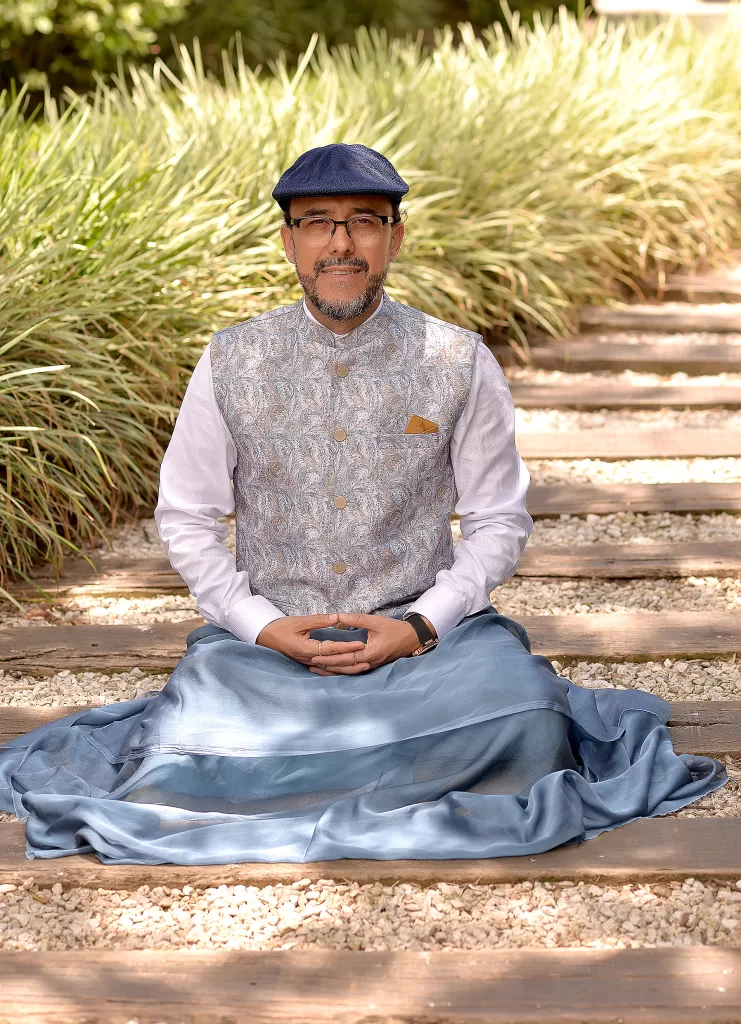
॥ भगवद् गीता ॥ … Bhagavad Gītā … by Acharya Tadany
Chapter 5, Class 204, Nov 5, 2026.
Summary
Classification of Yoga Disciplines and Spiritual Practices
Acharya Tadany taught the fundamental classification of spiritual practices (sādhanas) as presented in the Bhagavad Gītā. This teaching represents one of the most important organizational frameworks in Vedantic thought, providing clarity on the entire spiritual journey.
The teaching clarified that all spiritual disciplines, regardless of their external form or tradition, ultimately fall into two essential categories that work together as complementary aspects of the same path:
- Karma Yoga — Activities and disciplines designed to prepare and purify the mind, making it fit for higher knowledge. This includes all forms of spiritual practice that involve doing: rituals, meditation, prayer, selfless service, ethical conduct, and even professional work when done with the right attitude. The purpose of Karma Yoga is not the action itself, but the transformation it brings to the mind — reducing self-centeredness, developing emotional maturity, and cultivating the inner readiness necessary for self-knowledge. Without this preparation, the mind remains too agitated, distracted, or egocentric to receive the subtle teachings of Vedanta.
- Jñāna Yoga — The direct pursuit of self-knowledge (ātma-jñāna) through systematic study, contemplation, and meditation on the nature of reality and the Self. This is the yoga of inquiry and understanding, where one studies the scriptures under a qualified teacher, reflects deeply on their meaning, and meditates on the truths revealed. Jñāna Yoga is not merely intellectual knowledge, but a profound recognition of one’s true nature as limitless consciousness. This knowledge alone brings liberation, but it can only arise in a mind that has been adequately prepared through Karma Yoga. The two yogas are thus inseparable partners on the spiritual path.
Three Lifestyle Paths (Āśrama Choices)
According to Acharya Tadany, based on Krishna’s teaching in the Bhagavad Gītā, there are three legitimate lifestyle options (āśrama choices) for spiritual seekers. This teaching is revolutionary because it demonstrates that liberation is not confined to one particular lifestyle — rather, different temperaments and life circumstances call for different approaches. What matters is not the external form of one’s life, but the internal transformation that occurs. Each path has its own advantages and challenges:
- Active Life in Society (Gṛhastha Āśrama with Both Yogas) — Remaining engaged in worldly life while practicing both Karma Yoga and Jñāna Yoga simultaneously. This path allows one to fulfill social and family responsibilities while progressing spiritually. The gṛhastha lives in the world, maintains a career, raises a family, and participates in society, but does so with spiritual awareness and discipline. This is the path Krishna ultimately recommends to Arjuna, and it represents the most challenging yet most complete approach because one must integrate spiritual practice into the midst of all life’s demands. The householder must learn to see every action as an opportunity for growth, every relationship as a teacher, and every challenge as a chance to practice equanimity. This path requires exceptional discipline and clarity because the temptations and distractions are constant.
- Direct Renunciation (Brahmacārya to Sannyāsa) — Moving directly from the student stage (brahmacārya āśrama) to the renunciate stage (sannyāsa āśrama) without entering household life. This is the path for those rare individuals who possess intense dispassion (vairāgya) and are ready for total dedication to the spiritual pursuit from an early age. Such a person has little interest in worldly pursuits, family life, or social engagement, and feels a burning desire for liberation above all else. By bypassing the householder stage, they can devote their entire life to study, contemplation, and meditation without the responsibilities and entanglements that come with family and career. However, this path requires exceptional maturity and genuine dispassion — if undertaken prematurely or without true inner readiness, it can lead to suppression rather than transcendence of desires.
- Sequential Path (Gṛhastha then Sannyāsa) — First entering household life (gṛhastha āśrama) and then later taking sannyāsa after fulfilling family duties and responsibilities. This gradual approach allows for maturation through life experience, giving the seeker time to develop the emotional stability, practical wisdom, and genuine dispassion that come from engaging fully with life’s challenges. Many spiritual teachers, including traditional Indian sannyāsīs, have followed this path — they married, raised children, pursued careers, and only after their children were settled and their social obligations fulfilled did they take up the life of renunciation. This approach has the advantage of ensuring that the decision to renounce is based on mature understanding rather than escapism or immaturity. It also allows one to develop the qualities of mind needed for intense spiritual practice through the discipline of managing a household and fulfilling one’s dharma.
Krishna’s Recommended Path: Gṛhastha Āśrama
The class emphasized that Krishna presents the gṛhastha āśrama (householder life) as the most practical and effective path for most seekers, and this is a radical departure from the commonly held belief that renunciation is superior to worldly life. The key insight that makes this teaching so profound is that one can achieve complete liberation (mokṣa) while remaining active in society, raising a family, pursuing a career, and fulfilling all social obligations — provided one masters the fundamental challenge of managing likes and dislikes. This democratizes spirituality, making it accessible to everyone regardless of their life circumstances. The householder path is not a compromise or a lesser option; rather, it is presented as a complete and sufficient means to the highest goal. What distinguishes the spiritual householder from the ordinary person is not what they do externally, but the inner attitude and awareness they bring to all activities. They work, but without being driven by personal ambition; they enjoy life’s pleasures, but without becoming dependent on them; they face life’s pains, but without losing their inner peace. This requires tremendous inner work and continuous self-awareness.
The Challenge of Rāga and Dveṣa (Likes and Dislikes)
A central teaching of the class focused on the concept of rāga (attachment, likes) and dveṣa (aversion, dislikes), which represent the fundamental psychological mechanism that keeps us in bondage. These are not just preferences or opinions, but deep-seated emotional patterns that control our behavior and steal our peace of mind. Acharya Tadany explained that understanding and managing rāga-dveṣa is the heart of spiritual practice, regardless of one’s chosen lifestyle:
- These mental tendencies are the root cause of bondage and suffering. Every action we take, every decision we make, every emotional reaction we experience can be traced back to rāga-dveṣa. We are constantly pulled toward what we like and pushed away from what we dislike, creating an endless cycle of seeking and avoiding. This constant reactivity prevents us from experiencing our true nature as limitless, peaceful awareness. Even our pursuit of spiritual goals can become tainted by rāga-dveṣa if we develop attachment to spiritual experiences or aversion to worldly life.
- The spiritual challenge is not to eliminate rāga-dveṣa entirely (which is impossible while living in a body), but to master them — to recognize them without being controlled by them. This is a crucial distinction that prevents spiritual seekers from falling into the trap of self-denial or suppression. We cannot and need not eliminate our natural human preferences and tendencies. What we must do is develop the awareness to see them clearly and the wisdom to not let them dictate our actions and emotions. A liberated person still has preferences — they may prefer sweet food over bitter, comfort over discomfort — but these preferences no longer control them. They can act against their preferences when necessary without inner conflict, and they can enjoy their preferences when available without becoming dependent on them.
- Mastery means recognizing these patterns without being controlled by them. It involves developing the witness consciousness that can observe one’s own likes and dislikes arising in the mind without immediately identifying with them or acting on them. This creates a space between stimulus and response — a gap in which freedom resides. In this space, we can choose our actions based on wisdom and dharma rather than being slaves to our conditioning. This mastery is developed gradually through consistent practice of self-observation, meditation, and deliberate cultivation of opposite tendencies when needed. For example, deliberately doing something we dislike (when it is harmless and beneficial) or deliberately abstaining from something we like helps weaken the grip of rāga-dveṣa.
- A gṛhastha who successfully manages rāga-dveṣa achieves the same spiritual benefit as a sannyāsī — and perhaps even more, because they have faced and mastered these tendencies in the midst of countless opportunities to indulge them. The householder lives surrounded by sense objects, relationships, ambitions, and all the triggers that activate rāga-dveṣa, yet maintains inner freedom. This is like developing muscle strength by lifting heavy weights rather than by avoiding all physical challenges. The sannyāsī removes many external triggers by living a simple, controlled life, which can be helpful for intensive practice but does not necessarily develop the same robust inner strength. A truly mature householder who has mastered rāga-dveṣa demonstrates that liberation is an inner state, not dependent on external circumstances. This is the glory of the gṛhastha path and why Krishna emphasizes it so strongly.
True Detachment vs. Physical Renunciation
The class concluded with a profound teaching that synthesizes the entire discussion: true detachment (vairāgya) comes from managing attachments rather than physically eliminating them. This is the essence of Krishna’s message to Arjuna and to all spiritual seekers. One can live in the world, engage fully with family and society, enjoy life’s pleasures, pursue meaningful work, and still achieve complete freedom — if the mind is no longer enslaved by likes and dislikes. This makes the householder path both the most challenging and the most spiritually complete option available. It is challenging because one must develop mastery while remaining in the midst of all temptations and provocations; one must face attachments directly rather than avoiding them through physical renunciation. But it is also complete because it develops a robust, tested freedom that can withstand any circumstance. The detachment cultivated by a successful householder is not cold indifference or emotional numbness, but rather a warm engagement with life combined with inner freedom. Such a person loves their family but is not destroyed by their loss; enjoys success but is not crushed by failure; seeks pleasure but is not dependent on it; avoids pain but is not broken by it. This is the ideal that Krishna presents — not the renunciation of life, but the renunciation of psychological bondage while fully engaged in life.
Sanskrit Glossary
| Sanskrit Term | Devanagari | Meaning |
| Vedanta | वेदान्त | Literally “end of the Vedas”; the philosophical teachings found in the Upaniṣads |
| Bhagavad Gītā | भगवद्गीता | The Song of the Lord; sacred text dialogue between Krishna and Arjuna |
| Sādhana | साधन | Spiritual practice or discipline |
| Karma Yoga | कर्मयोग | The yoga of action; spiritual discipline through selfless action |
| Jñāna Yoga | ज्ञानयोग | The yoga of knowledge; spiritual discipline through self-inquiry and study |
| Āśrama | आश्रम | Stage of life; the four traditional life stages in Vedic culture |
| Brahmacārya | ब्रह्मचर्य | Student stage; first stage of life dedicated to learning |
| Gṛhastha | गृहस्थ | Householder stage; second stage of life with family and social responsibilities |
| Sannyāsa | सन्न्यास | Renunciation stage; fourth stage of life dedicated to spiritual pursuit |
| Sannyāsī | सन्न्यासी | A renunciate; one who has taken sannyāsa |
| Rāga | राग | Attachment; likes; attraction toward pleasant experiences |
| Dveṣa | द्वेष | Aversion; dislikes; repulsion from unpleasant experiences |
| Mokṣa | मोक्ष | Liberation; freedom from the cycle of birth and death |
| Ātma-jñāna | आत्मज्ञान | Self-knowledge; knowledge of one’s true nature |
| Vairāgya | वैराग्य | Dispassion; detachment; freedom from rāga-dveṣa |
| Pujya | पूज्य | Venerable; worthy of worship; respectful title for a revered teacher |
Acharya Tadany