

 Tadany Um refúgio para a alma e um convite à consciência.

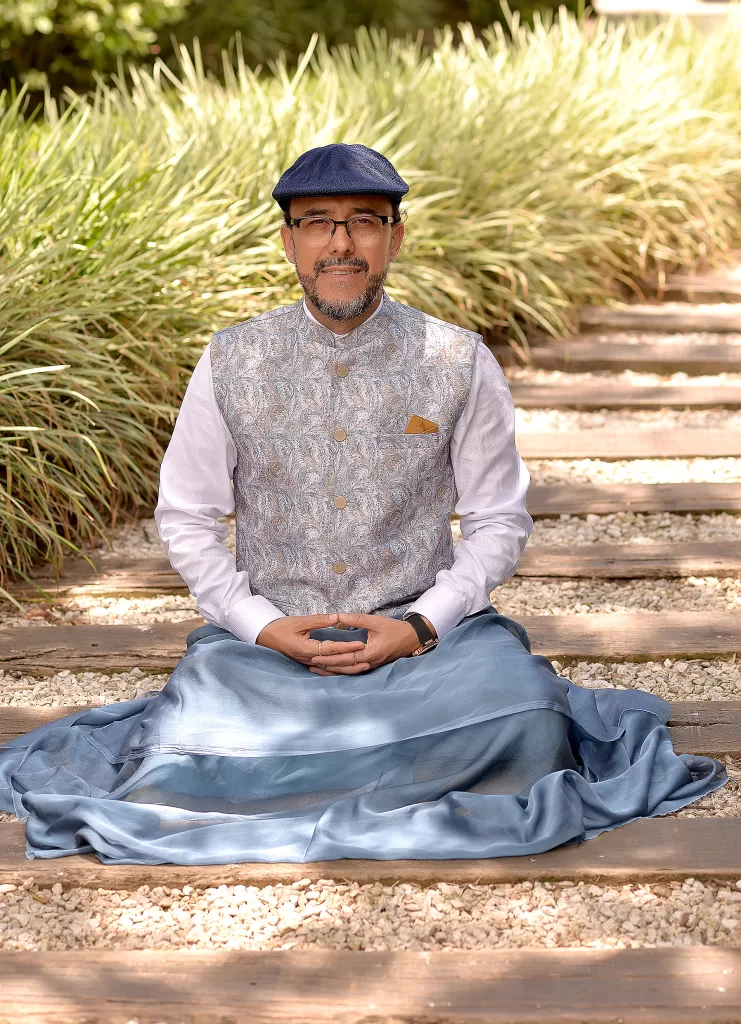
॥ भगवद् गीता ॥ … Bhagavad Gītā … by Acharya Tadany
Chapter 7, Class 242, Nov 10, 2026.
Summary
Introduction to Chapter 7 of Bhagavad Gita
Acharya Tadany conducted a detailed class on the Bhagavad Gita’s seventh chapter, which focuses on the complete knowledge of God and the path to spiritual realization. The chapter begins with Krishna’s promise to teach Arjuna the most profound spiritual wisdom.
The Two Natures of God
The class explored the fundamental concept of God’s dual nature:
- Saguṇa Svarūpam (The Lower Nature): This represents God’s physical, visible manifestations and forms. These aspects are limited by time, space, and causation. The saguṇa aspect includes all material creation, forms of deities, and any perceivable attributes of the divine.
- Nirguṇa Svarūpam (The Higher Nature): This represents God’s eternal, infinite, and attributeless nature. It is all-pervading, intangible, and beyond the limitations of the physical world. This aspect transcends all descriptions and conceptualizations.
Acharya Tadany emphasized that complete knowledge of God (pūrṇa jñāna) requires understanding both these aspects. One cannot claim to know God fully by understanding only one nature while ignoring the other.
Three Essential Conditions for Spiritual Seekers
Acharya Tadany outlined three key conditions that spiritual aspirants must fulfill:
- God as the Ultimate Destination: The seeker must keep God as their supreme goal (param lakṣya). All spiritual practices should be directed toward this ultimate aim of divine realization.
- Individual Effort through Sādhanā: The practitioner must engage in relevant spiritual practices (sādhanās) with sincere personal effort. This includes meditation, prayer, study, and other disciplines appropriate to one’s path.
- Seeking Divine Grace: While personal effort is crucial, the seeker must also invoke and surrender to God’s grace (īśvara kṛpā). Spiritual progress requires both human endeavor and divine blessing.
The Relationship Between Mokṣa and Knowing God
A significant point clarified in the class was the synonymous relationship between mokṣa (liberation) and knowing God completely. Acharya Tadany explained that:
- Liberation is not separate from the knowledge of God’s true nature
- When one achieves complete knowledge of both the saguṇa and nirguṇa aspects of divinity, mokṣa is attained
- This knowledge is also self-knowledge (ātma-jñāna), as knowing the true nature of the Self is equivalent to knowing God
The Metaphor of the Train
To illustrate the necessity of both personal effort and divine grace, Acharya Tadany used the metaphor of a train requiring engines at both the front and back. Just as both engines are needed for the train to reach its destination efficiently, spiritual seekers need both their own sincere effort (puruṣārtha) and God’s grace (prasāda) to progress on the spiritual path and reach the ultimate goal.
Sanskrit Glossary
| Sanskrit Term | Devanagari | Meaning |
| Saguṇa Svarūpam | सगुण स्वरूपम् | The form/nature of God with attributes and qualities; the lower, manifest nature |
| Nirguṇa Svarūpam | निर्गुण स्वरूपम् | The form/nature of God without attributes; the higher, unmanifest nature |
| Sādhanā | साधना | Spiritual practice or discipline; means to achieve a spiritual goal |
| Mokṣa | मोक्ष | Liberation; freedom from the cycle of birth and death |
| Pūrṇa Jñāna | पूर्ण ज्ञान | Complete knowledge; total understanding of divine reality |
| Param Lakṣya | परम लक्ष्य | Supreme goal; ultimate destination |
| Īśvara Kṛpā | ईश्वर कृपा | God’s grace; divine blessing |
| Ātma-jñāna | आत्म-ज्ञान | Self-knowledge; knowledge of one’s true nature |
| Puruṣārtha | पुरुषार्थ | Human effort; self-exertion in spiritual practice |
| Prasāda | प्रसाद | Grace; divine blessing; sanctified offering |