

 Tadany Um refúgio para a alma e um convite à consciência.

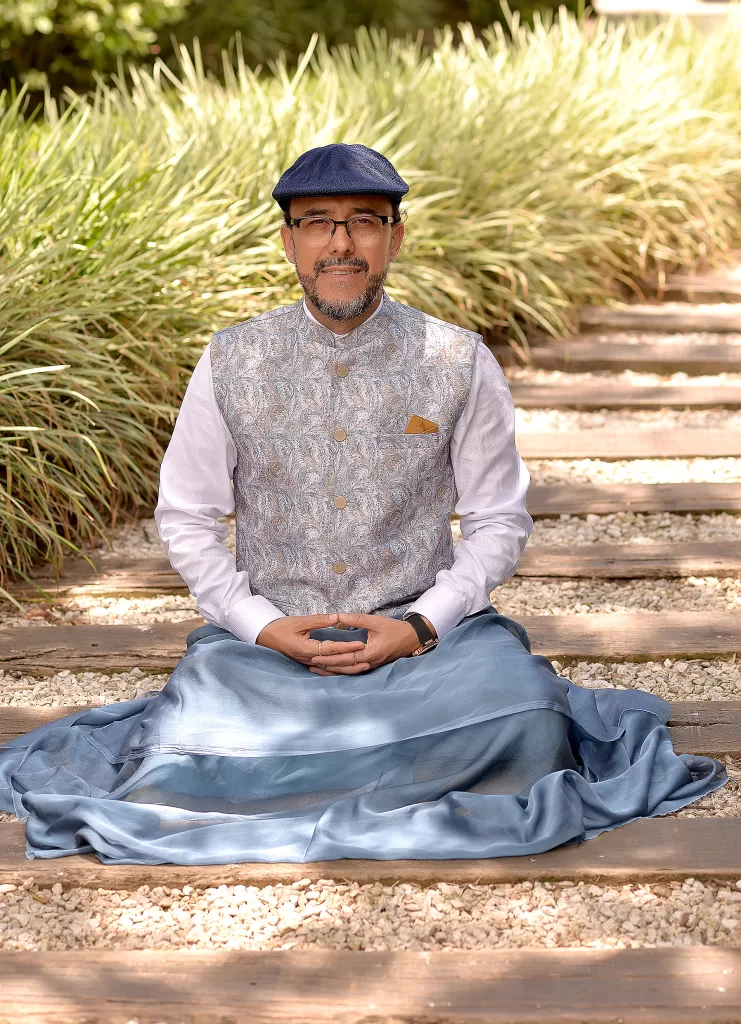
॥ विवेकचूडामणि ॥ … Vivekacūḍāmaṇi … By Acharya Tadany
Class 6, Nov 16, 2026.
Summary
Overview
This class is part of an ongoing Vedānta study course led by Ācārya Tadany, focusing on Śaṅkarācārya’s classical text Vivekacūḍāmaṇi (The Crest-Jewel of Discrimination). The lecture systematically examined Śloka 3 and Śloka 4, both of which address the extraordinary rarity and supreme significance of human birth (mānuṣa janma), the specific inner conditions and external associations necessary for spiritual liberation (mokṣa), and the profound consequences of failing to pursue that liberation despite having acquired all the necessary prerequisites.
The class builds upon the foundational themes established in the previous Ślokas, progressively narrowing the focus from the general glory of human birth to the specific stages a spiritual aspirant must traverse in order to attain freedom from suffering and ignorance. Ācārya Tadany’s teaching approach combines precise textual analysis with practical examples, analogies drawn from daily life, and responses to students’ personal questions, making the ancient wisdom directly applicable to contemporary spiritual practice.
Key Concepts
- Mānuṣa Janma (Human Birth): Considered an exceptionally rare attainment, made possible only through accumulated merit (puṇyam) from previous lives. Human birth is not a random event but the fruit of innumerable noble actions performed across countless lifetimes.
- Deva anugraha / Īśvara anugraha (God’s Grace): Not a whimsical divine favor, but the result of pūrva janma puṇya — merits accumulated through noble actions across previous lifetimes. Grace and puṇyam are understood as identical, viewed from two perspectives: individual effort and humble acknowledgment of all contributing factors.
- Three Rare Stages (Durlabha Trayam): Manuṣyatva (human birth), mumukṣutva (intense desire for mokṣa), and mahāpuruṣa saṃśraya (association with a liberated teacher). Each stage is progressively rarer and more difficult to attain.
- Puruṣārthas (Four Human Goals): Dharma (righteousness), artha (wealth), kāma (pleasure), and mokṣa (liberation). For a spiritual seeker, mokṣa is the highest priority, with the others serving as stepping stones (sādhana).
- Mumukṣu: One who has recognized mokṣa as the supreme goal and consciously reorganized life’s priorities accordingly, converting dharma, artha, and kāma into means rather than ends.
- Mahāpuruṣaḥ / Śrotriya Brahmaniṣṭhā Guru: A fully liberated teacher, deeply competent in śāstra (scripture) and firmly abiding in the direct experience of Brahman. Association with such a teacher, when combined with a qualified student, makes mokṣa inevitable.
- Śruti Paradarśana: Knowledge of Vedānta — the clear understanding that ignorance of one’s true nature is the root problem underlying all suffering, and that Vedāntic knowledge (jñāna) is the only effective remedy.
- Mind as Instrument: The mind (manas) is a tool; the individual (ātman) is the master. The goal is not to suppress or stop the mind, but to re-educate the quality and content of thoughts, gradually transforming habitual patterns through alertness and deliberate intervention.
- Prāṇāyāma: Breathing practices that calm the mind by interrupting habitual thought patterns and harmonizing the prāṇamaya kośa (vital energy sheath) and manomaya kośa (mental sheath). Recommended as a fast, accessible tool for managing mental agitation.
Important Questions Raised
- Why does Śaṅkarācārya use two different words — puṇyam and deva anugraha — if they mean the same thing?
- What happens when a mumukṣu meets a mahāpuruṣaḥ? Is mokṣa truly guaranteed?
- Why is mukti (liberation) not explicitly mentioned in Śloka 3, even though it is the ultimate goal?
- How should one respond to people close to them who are skeptical of spirituality or define God through a purely scientific or materialistic lens?
- How should a spiritual student handle feelings of dissatisfaction with their own discipline and practice?
- How can one manage an overactive, chattering mind that does not quiet down despite understanding Vedāntic teachings?
Key Takeaways and Summary of Learning Objectives
- Human birth is an extraordinarily rare event, the result of accumulated merit (puṇyam) from previous lifetimes. Śaṅkarācārya equates this with īśvara anugraha (God’s grace), emphasizing that grace is not arbitrary but is identical to the law of karma — the fruit of one’s own noble actions combined with all the unknown and uncontrollable factors that also contributed to this achievement.
- The three rare stages — manuṣyatva (human birth), mumukṣutva (desire for mokṣa), and mahāpuruṣa saṃśraya (association with a liberated teacher) — form a progressive ladder toward liberation, each more difficult to attain than the last. This progression represents a systematic refinement of readiness and qualification.
- When a qualified student (mumukṣu) meets a competent, liberated teacher (mahāpuruṣaḥ), mokṣa is inevitable and certain — it is implied rather than explicitly stated in the Śloka because, under these ideal conditions, liberation cannot fail to occur. This is compared to the natural formation of water when hydrogen and oxygen combine under proper conditions.
- Śloka 4 serves as a strong, uncompromising warning: one who possesses human birth, emotional and intellectual maturity (puṃstva), and knowledge of Vedānta (śruti paradarśana), yet fails to pursue mokṣa, is engaging in a form of spiritual self-destruction. This is likened to a mountain climber who reaches 8,800 meters on Mount Everest — with the summit visible to the naked eye — yet turns back without completing the ascent.
- Vedānta does not advocate proselytism or forced conversion. Knowledge is shared only with those who seek it sincerely, as liberation is an individual process that cannot be imposed from outside. This principle respects the natural diversity of human readiness and the law of karma governing each person’s spiritual journey.
- The mind is an instrument; the practitioner is the master. The goal is not to stop thinking (which is the mind’s natural function) but to re-educate the quality and content of thoughts. One should not criticize the mind for thinking any more than one would criticize the eyes for seeing — instead, the practice is to deliberately intervene in the gap between thoughts and introduce more constructive mental content.
- Prāṇāyāma (breath control) is a practical, fast, and highly effective tool for calming the mind and interrupting habitual, mechanical thought patterns. By harmonizing the prāṇamaya kośa and manomaya kośa, even 1–2 minutes of focused breathing can substantially reduce the volume and intensity of mental chatter.
Śloka 3 — The Three Rare Stages and the Role of Divine Grace
Śaṅkarācārya’s third Śloka, Durlabha Trayam Evaitad, condenses the many stages discussed in the previous Śloka into three essential and progressively rarer stages. These three stages — manuṣyatva (human birth), mumukṣutva (desire for mokṣa), and mahāpuruṣa saṃśraya (association with a holy, liberated teacher) — are collectively described as durlabha, meaning extremely difficult to attain. Each stage represents a higher level of spiritual maturity and readiness.
Ācārya Tadany emphasized that Śaṅkarācārya attributes the attainment of these three stages to deva anugraha (God’s grace), which is not to be understood as a capricious, whimsical, or random divine favor.
Rather, it is synonymous with pūrva janma puṇya — the accumulated merits of noble actions (dharma) performed across countless previous lifetimes. The use of two distinct terms (puṇyam and deva anugraha) serves a specific pedagogical and spiritual purpose: while “puṇyam” acknowledges the individual’s own effort, discipline, and righteous action, “deva anugraha” introduces the essential quality of humility by recognizing all the unknown, unpredictable, and uncontrollable factors — including natural laws, cosmic order, and countless hidden conditions — that also contributed to the achievement. Both terms point to the same reality, but viewed from complementary angles: personal responsibility and humble gratitude.
The analogy of planting a tree was used to illustrate this principle: one’s effort alone does not make a tree grow. Sunlight, soil quality, water, favorable weather, absence of pests, and countless other factors must also align favorably. While the planter’s action is necessary, it is not sufficient. Acknowledging all those contributing factors — many of which are beyond one’s control or even awareness — is an act of wisdom, gratitude, and humility. This is the spirit behind calling one’s puṇyam also the grace of īśvara. It prevents spiritual pride and cultivates the recognition that individual achievement is always embedded within a larger web of causes and conditions.
Regarding the third stage, Ācārya Tadany clarified that mahāpuruṣaḥ does not refer to physical greatness, height, strength, or social prominence, but to spiritual stature — specifically, a śrotriya brahmaniṣṭhā guru, a teacher who is both deeply versed in the śāstras (scriptures) and firmly established in the direct, non-dual experience of Brahman. Such a teacher is the rarest of all, because true liberation (jīvanmukti) is itself extraordinarily rare, and the combination of liberation with the competence and willingness to teach is rarer still.
Finally, Ācārya Tadany explained a subtle but important point: why is mukti (liberation) not explicitly mentioned in this Śloka, even though it is the ultimate goal? The answer is that when a mumukṣu (qualified, sincere seeker) meets a mahāpuruṣaḥ (competent, liberated teacher), liberation is as inevitable and certain as water forming when two hydrogen atoms combine with one oxygen atom under ideal conditions. It is implied, not stated, because under these conditions it simply cannot fail to occur. The combination of a prepared student and a competent teacher creates the necessary and sufficient conditions for the transmission of liberating knowledge. Mokṣa becomes not a distant possibility but an inevitable result.
Śloka 4 — The Critique of Wasted Human Birth
The fourth Śloka shifts in tone from the celebratory and encouraging to the cautionary and sobering. Śaṅkarācārya now criticizes — in strong, uncompromising language — those who, despite having attained all the necessary prerequisites for mokṣa, fail to pursue it with sincerity and commitment. Ācārya Tadany described this as one of the most strongly worded passages in the entire text, reflecting the gravity of the spiritual opportunity that is being squandered.
The Śloka describes a person who has, kathaṃcit (somehow — through proper, righteous means, not through wrongdoing), attained human birth; who has also attained puṃstva (emotional and intellectual maturity — which includes freedom from debilitating inferiority complexes, capacity for independent thinking, and reasonable mental stability and sanity); and who has further attained śruti paradarśana — knowledge of Vedānta, the clear understanding that ignorance of one’s true nature is the root cause of all suffering and that Vedāntic knowledge (ātma-jñāna) is the only effective remedy. Yet such a person, despite possessing all three qualifications, does not dedicate themselves to the pursuit of mokṣa.
Śaṅkarācārya calls this a form of spiritual self-destruction — comparable to a mountain climber who has invested weeks of preparation, days of grueling ascent, and has successfully reached 8,800 meters on Mount Everest (out of 8,850 meters total), can see the summit with the naked eye, is within striking distance of the peak, yet turns back or remains idle due to lack of will, distraction, or misplaced priorities. Ācārya Tadany noted that this critique is not meant to belittle, shame, or condemn anyone, but rather to serve as a powerful wake-up call — much as Śrī Kṛṣṇa uses strong, challenging words to rouse Arjuna from his despondency and confusion in the Bhagavad Gītā. The full word-by-word analysis and implications of this Śloka will be explored in greater depth in the next class.
Q&A
Responding to Skeptics of Spirituality
Sandra raised a personal and practically important question about how to respond skillfully to someone close to her who approaches spirituality through a purely scientific, rationalistic, or materialistic lens and struggles to accept — or outright rejects — conventional concepts of God.
Ācārya Tadany responded by first addressing the concept of God itself, noting that the naive, anthropomorphic conception of God prevalent in many Abrahamic religious traditions (Christianity, Judaism, Islam) — a personal deity, often depicted as male, seated somewhere, omniscient yet localized, omnipotent yet intervening capriciously — is understandably difficult, if not impossible, for thinking, rational individuals to accept.
He referenced Bertrand Russell’s famous essay Why Am I Not a Christian as an example of clear, penetrating, rational critique of such conceptions. He suggested that rather than attempting to convince, persuade, or argue with such a person, one should first establish clearly and non-defensively what they mean by “God.”
If their rejection is primarily of the naive, literalistic, anthropomorphic conception, then that rejection itself reflects sound, independent thinking and intellectual honesty — and should be acknowledged and even congratulated rather than criticized.
Ācārya Tadany further explained that Vedānta does not engage in proselytism, missionary activity, or forced conversion. Knowledge is shared freely and generously only when it is sought sincerely. He noted that Pūjya Svāmī Dayānandajī had attempted to establish an international agreement at the United Nations against religious imposition and forced conversion, describing such practices as one of the subtlest yet most psychologically and culturally harmful forms of violence.
The most effective approach, Ācārya Tadany concluded, is not to argue, preach, or impose, but rather to embody the teachings authentically through one’s own behavior, emotional maturity, clarity of thinking, and inner transformation. When others observe genuine change in someone they know and respect, they naturally become curious about the path that person is following. Behavioral change is often the most powerful and credible invitation.
Question: What should be our reaction when someone close to us is very materialistic or tries to evaluate spirituality purely through science and logic?
Answer: First, establish what the person means by “God.” If they reject a naive, anthropomorphic conception, that is a sign of sound thinking — congratulate rather than argue. Do not attempt to convince or convert. If they ask, share freely; if they do not ask, do not impose. Pray for them if you wish, as prayer is a noble action. Focus on your own transformation, as behavioral change is often the most powerful invitation for others to become curious about the path.
Managing Dissatisfaction with Spiritual Discipline
Preksha S expressed a common and honest struggle faced by many spiritual practitioners: knowing intellectually what spiritual practices she should be doing — such as meditation, study, reflection, prayer — but frequently not doing them consistently, which then leads to a pervasive sense of dissatisfaction, guilt, and self-judgment.
Ācārya Tadany immediately identified this as a non-constructive, self-defeating pattern of inner criticism that is to be recognized and avoided. He explained that many people are naturally prone to severe, harsh, and unforgiving self-judgment in various areas of life, and when spirituality is added to that list, it becomes yet another arena for the same destructive framework. This is counterproductive and should be consciously set aside.
Ācārya Tadany encouraged Preksha S to look honestly at the full context of her life — managing a young daughter who requires constant attention, navigating family relationships, supporting in-laws, maintaining extended family connections, and running her own business. Given this demanding, multifaceted reality, the fact that she still finds time to attend Vedānta classes twice a week already represents significant discipline, commitment, and prioritization. That itself should be acknowledged and appreciated rather than dismissed.
He advised setting aside a small, realistic, manageable amount of time daily — even just 5 to 10 minutes — for a simple spiritual practice such as japam (mantra repetition), meditation, reviewing class notes, or listening to recorded teachings. After completing that brief practice, one should consciously relax and release any residual guilt or sense of inadequacy.
He also noted an important, often overlooked dimension of spiritual growth: as Vedāntic knowledge deepens and matures within the mind, it naturally and organically begins to permeate one’s attitudes, emotional responses, habitual thought patterns, and the way one views and interprets daily situations and challenges.
This subtle, pervasive integration is itself a profound form of practice and transformation, even when it is not formal or structured.
Question: I feel dissatisfied with my discipline toward spiritual practice. I know what I should be doing but often don’t do it. Should I try harder or reframe the dissatisfaction?
Answer: Avoid self-judgment — it is a non-constructive framework that spirituality should not become another arena for. Look at the context of your life; attending class twice a week is already meaningful discipline. Set aside 5–10 minutes daily for a simple practice and then relax. Over time, Vedantic knowledge will naturally integrate into your attitudes and behavior, which is itself a form of practice.
Managing the Chattering Mind
Sophie Leal raised the challenge of an overactive, chattering, restless mind — deeply ingrained habitual thought patterns that persist relentlessly even when one intellectually understands Vedāntic teachings and has been introduced to various tools and techniques for calming the mind.
Ācārya Tadany began by clarifying a fundamental point that is often misunderstood: the intrinsic nature of the mind (manas) is to think. The mind’s natural activity is: thought, space, thought, space, thought, space — a continuous flow of mental content alternating with brief gaps.
Attempting to completely stop the mind’s natural function would not lead to enlightenment but would instead render a person mentally incapacitated — what is colloquially called “a vegetable.”
The goal of Vedāntic practice, therefore, is not to stop thinking altogether, but rather to consciously and deliberately re-educate the quality, direction, and content of thoughts. Just as one does not criticize the eyes for seeing (since seeing is their inherent function), one should not criticize or condemn the mind for thinking, since thinking is its essential nature.
The practical approach Ācārya Tadany recommended involves cultivating alertness and recognizing the brief gap or space between thoughts. In that gap, one has the opportunity to deliberately intervene and consciously choose or introduce a different, more constructive, more spiritually aligned thought — gradually reprogramming and reshaping habitual mental patterns through sustained alertness, vigilance, and intentional redirection. This is the essence of what is called “right thinking” or “discriminative thinking” in Vedānta.
Ācārya Tadany also strongly recommended prāṇāyāma (controlled, conscious breathing practices) as the fastest, most accessible, and most universally effective tool for calming mental agitation. Focused, deliberate breathing interrupts the momentum and avalanche of habitual thoughts, harmonizes and calms both the prāṇamaya kośa (vital energy sheath) and the manomaya kośa (mental sheath) simultaneously, and measurably reduces both the volume (quantity) and the intensity (emotional charge) of mental chatter. He suggested a highly practical regimen: doing just 1 to 2 minutes of prāṇāyāma every 30 to 60 minutes throughout the day as a regular, sustainable practice.
Finally, Ācārya Tadany emphasized what he described as the fundamental Vedāntic understanding that transforms one’s entire relationship with the mind: the mind is an instrument, a tool — and the individual (the ātman, the true Self) is the master, the witness, the conscious agent. Identifying with the master rather than mistakenly identifying with the instrument is the essential, transformative shift. He referenced the famous chariot analogy from the Bhagavad Gītā (and also found in the Kaṭhopaniṣad), and mentioned an AI-generated visual drawing created by Sandra that vividly illustrates this crucial distinction between the Self (the chariot’s passenger), the intellect (the charioteer), the mind (the reins), the senses (the horses), and the body (the chariot itself).
Question: Even though I understand what we are studying, I struggle with the chattering mind. The deeply rooted patterns don’t stop. What is the best approach?
Answer: The mind’s nature is to think — do not criticize it for doing so. The goal is to re-educate the type of thoughts, not to stop thinking. In the gap between thoughts, deliberately intervene and introduce a more constructive thought. Use pranayama regularly (1–2 minutes every 30–60 minutes) to calm the mind quickly and interrupt habitual patterns. Most importantly, remember: the mind is an instrument, and you are the master. Identifying with the master rather than the instrument is the core transformation.
Sanskrit Glossary
| Sanskrit Term | Devanagari | Meaning |
| Vivekacūḍāmaṇi | विवेकचूडामणि | The Crest-Jewel of Discrimination (title of the text) |
| Śaṅkarācārya | शङ्कराचार्य | The revered teacher Śaṅkara (Adi Śaṅkara) |
| Śloka | श्लोक | Verse (of a Sanskrit text) |
| Mānuṣa Janma | मानुष जन्म | Human birth |
| Mokṣa | मोक्ष | Liberation, freedom from suffering and ignorance |
| Puṇyam | पुण्यम् | Merit, virtue, the result of noble actions |
| Deva anugraha | देव अनुग्रह | God’s grace, divine favor |
| Īśvara anugraha | ईश्वर अनुग्रह | God’s grace (another term) |
| Pūrva Janma Puṇya | पूर्व जन्म पुण्य | Merit accumulated in previous births |
| Durlabha Trayam | दुर्लभ त्रयम् | The three rare attainments |
| Manuṣyatva | मनुष्यत्व | Human birth, the state of being human |
| Mumukṣutva | मुमुक्षुत्व | Intense desire for liberation |
| Mumukṣu | मुमुक्षु | One who intensely desires liberation |
| Mahāpuruṣa Saṃśraya | महापुरुष संश्रय | Association with a great liberated being |
| Mahāpuruṣaḥ | महापुरुषः | Great being, liberated teacher |
| Śrotriya Brahmaniṣṭhā Guru | श्रोत्रिय ब्रह्मनिष्ठ गुरु | A teacher well-versed in scripture and established in Brahman |
| Śāstra | शास्त्र | Scripture, authoritative teaching |
| Brahman | ब्रह्मन् | The ultimate, non-dual reality |
| Mukti | मुक्ति | Liberation, freedom |
| Śruti Paradarśana | श्रुति परदर्शन | Knowledge of Vedānta, insight into the highest truth |
| Puṃstva | पुंस्त्व | Emotional and intellectual maturity |
| Kathaṃcit | कथंचित् | Somehow, by some means |
| Puruṣārthas | पुरुषार्थ | The four human goals (Dharma, Artha, Kāma, Mokṣa) |
| Dharma | धर्म | Righteousness, duty, moral law |
| Artha | अर्थ | Wealth, material prosperity |
| Kāma | काम | Desire, pleasure, enjoyment |
| Sādhana | साधन | Means, spiritual practice |
| Prāṇāyāma | प्राणायाम | Breath control, yogic breathing practice |
| Prāṇamaya Kośa | प्राणमय कोश | The vital energy sheath |
| Manomaya Kośa | मनोमय कोश | The mental sheath |
| Japam | जपम् | Repetition of a mantra or sacred name |
| Ātman | आत्मन् | The true Self, the individual soul |
| Vedānta | वेदान्त | The end or culmination of the Vedas; the philosophy of non-duality |
Acharya Tadany