

 Tadany Um refúgio para a alma e um convite à consciência.

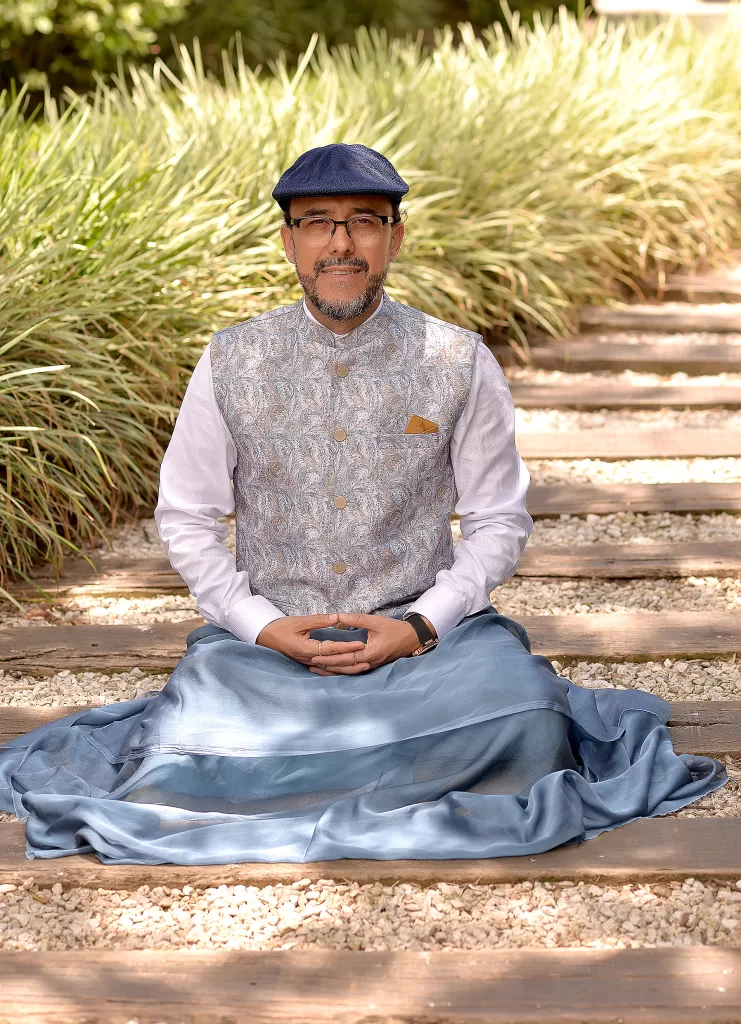
॥ भगवद् गीता ॥ … Bhagavad Gītā … by Acharya Tadany
Chapter 7, Class 243, Nov 17, 2026.
Summary
Īśvara Svarūpam
Acharya Tadany discussed the concept of Īśvara Svarūpam (the nature or form of God), focusing on understanding the divine nature from both empirical and transcendental perspectives. He introduced two key technical terms: jñānam and vijñānam.
In this context, jñānam refers to knowledge of the lower nature of God, represented by Saguṇa Svarūpam (God with attributes, qualities, and forms — the God we can worship, pray to, and conceptualize). Vijñānam, on the other hand, refers to the higher, more refined knowledge of God’s ultimate nature, represented by Nirguṇa Svarūpam (the formless, attributeless, absolute reality beyond all conceptualization).
Acharya Tadany noted that any discussion about God’s form, qualities, or attributes inherently involves duality (dvaita) and limitations, as we are using finite concepts to point toward the infinite. The Saguṇa aspect allows for devotional practice and relationship with the divine, while the Nirguṇa aspect represents the ultimate non-dual truth.
The class explored why both levels of understanding are necessary for a complete spiritual education. The distinction between jñānam and vijñānam is not merely academic — it represents two valid and complementary ways of relating to the ultimate reality.
Jñānam addresses the natural human need for a personal relationship with the divine, allowing for prayer, worship, devotion (bhakti), and emotional connection. This knowledge satisfies the heart and provides practical guidance for ethical living and spiritual growth within the world of duality.
Vijñānam, however, addresses the deepest philosophical questions and leads to liberation (mokṣa) by revealing the non-dual nature of reality where the individual soul (jīva) and the supreme reality (Brahman) are ultimately one.
Both forms of knowledge are authentic and valuable; neither contradicts the other. Instead, they represent different levels of truth appropriate to different stages of spiritual maturity and different temperaments of seekers.
Saguna and Nirguna Svarūpam
Acharya Tadany explained the concepts of Saguṇa Svarūpam and Nirguṇa Svarūpam in greater depth.
Saguṇa Svarūpam represents the lower nature of God with forms, attributes, and qualities — this is the God of devotion, who can be worshipped as Viṣṇu, Śiva, Devī, or any other form. This aspect of God operates within the realm of duality (dvaita) and plurality, where there are distinctions between worshipper and worshipped, creator and creation.
In contrast, Nirguṇa Svarūpam represents the higher nature of God without any forms, attributes, or limitations — the formless, attributeless Brahman that represents pure Advaita (non-duality). In this state, there are no divisions, distinctions, or separations — all is one undifferentiated consciousness.
Acharya Tadany noted that the higher nature of God (Nirguṇa Brahman) can be quite abstract and difficult to grasp for beginners in spiritual practice. Therefore, it is natural and appropriate for most people to start their religious and spiritual journey with the concrete and tangible concept of Saguṇa Īśvara — a personal God with form and qualities whom they can love, worship, and relate to.
The class examined how these two aspects of divinity are not contradictory but complementary perspectives on the same ultimate reality. Saguṇa Brahman is Brahman as perceived through the lens of māyā (the creative power that produces the appearance of multiplicity), while Nirguṇa Brahman is that same reality recognized in its absolute, unmodified state.
The analogy of water was offered: the same water can appear as ice (solid, with definite shape — like Saguṇa Brahman), as liquid (flowing, adaptable — like Īśvara with qualities), or as vapor (formless, all-pervading — like Nirguṇa Brahman). The essential substance never changes; only its appearance and our perception of it changes.
Understanding this helps students avoid the common mistake of thinking that belief in a personal God and realization of impersonal Brahman are opposing paths. Rather, devotion to Saguṇa Brahman naturally matures into knowledge of Nirguṇa Brahman when the devotee’s heart becomes sufficiently purified (citta śuddhi) and the mind becomes adequately prepared through spiritual disciplines.
Spiritual Journey from Sagunam to Nirguṇam
Acharya Tadany explained the spiritual journey from Saguṇa to Nirguṇa, describing how practitioners progress from concrete and tangible concepts of God to increasingly abstract and subtle understandings. This journey represents a maturation of spiritual understanding and practice.
He outlined how the human journey toward Advaita (non-duality) involves moving from Dvaita (duality — the sense of separation between self and God, self and others) to Advaita (non-duality — the recognition of fundamental oneness).
Similarly, the knowledge progresses from jñānam (knowledge of God’s lower nature with forms and attributes) to vijñānam (the higher, experiential knowledge of God’s formless, attributeless reality).
In the Bhagavad Gītā, Kṛṣṇa promises to teach Arjuna both aspects — both the lower nature (prakṛti) and the higher nature (para-prakṛti) of the divine.
Acharya Tadany emphasized that this comprehensive knowledge would address the natural human curiosity about three fundamental questions: “Who is God?”, “What is this world?”, and “Who am I?” This complete teaching provides thorough answers to these deep intellectual and existential questions, satisfying both the heart (through devotion to Saguṇa Brahman) and the intellect (through understanding of Nirguṇa Brahman).
The class explored the progressive nature of spiritual unfoldment in detail. Just as a child naturally progresses from concrete operational thinking to abstract reasoning, spiritual understanding matures through stages. Initially, most seekers need the support of forms, rituals, stories, and personal relationships with chosen deities (iṣṭa devatā). This stage is not inferior or childish — it is appropriate and necessary for developing emotional maturity, ethical behavior, and mental purity. Through consistent devotional practice (upāsana), prayer, and worship, the mind becomes calm, focused, and prepared for subtler teachings. As spiritual practice deepens, the seeker begins to recognize the essential unity underlying the diversity of divine forms. The devotee realizes that Viṣṇu, Śiva, Devī, and all other forms are different expressions of the same supreme reality.
This recognition marks the transition from exclusive devotion to one form toward inclusive understanding of all forms as valid. Eventually, through study of Vedānta texts under a qualified teacher, the mature seeker gains the intellectual preparation and discrimination (viveka) necessary to inquire into the formless reality beyond all forms.
This final stage of vijñānam is not achieved by abandoning earlier practices but by integrating them into a more comprehensive understanding. The journey is thus cumulative rather than eliminative — earlier understandings are not rejected but transcended and included in a higher synthesis.
Path to Spiritual Understanding
Acharya Tadany discussed the fundamental questions about existence and the extreme rarity of spiritual knowledge. He explained that among countless human beings, very few even raise the question “What is the purpose of life?” or “Who am I?” Most people remain occupied pursuing the four traditional life goals (puruṣārthas): dharma (righteous living), artha (wealth and security), kāma (pleasure and enjoyment), and finally mokṣa (liberation).
However, the vast majority focus only on artha and kāma, rarely progressing to serious pursuit of mokṣa. Among the rare few who do seek inner freedom and liberation, even fewer know the correct methodology to achieve it. The proper path requires Guru Śāstra Upadeśa Śravaṇam — systematic learning from competent teachers (Guru) and authentic scriptures (Śāstra), followed by deep reflection (manana) and meditation (nididhyāsana).
Acharya Tadany described how the spiritual path involves progressing from knowledge of Saguṇa Brahman (God with attributes) to Nirguṇa Brahman (the attributeless absolute reality).
This progression requires a structured methodology because spiritual knowledge is extremely subtle and complex — it cannot be grasped through casual reading or intellectual speculation alone.
The class examined why spiritual knowledge is so rare, analyzing the obstacles that prevent most people from pursuing mokṣa.
First, there is the obstacle of distraction — modern life offers endless entertainment and engagement that keeps the mind perpetually occupied with external pursuits.
Second, there is the obstacle of misidentification — people identify themselves with their bodies, roles, possessions, and achievements, never questioning the deeper nature of the “I” who experiences all of this.
Third, there is the obstacle of satisfaction with preliminary goals — accumulating wealth and enjoying pleasures can seem sufficient for happiness until suffering forces deeper questions.
Fourth, even among those who become interested in spirituality, there is often confusion about the goal (mistaking psychic experiences, emotional states, or moral perfection for liberation) and about the means (believing that liberation comes through practices, efforts, or divine grace alone, rather than through knowledge of one’s true nature).
Acharya Tadany emphasized that liberation is not something to be achieved, created, or attained in the future — it is the recognition of what one already is and has always been. The apparent bondage is due to ignorance (avidyā) alone, and liberation is the removal of that ignorance through knowledge (vidyā).
This is why the methodology of systematic study is crucial: spiritual knowledge is not information to be collected but a transformation of understanding that dispels the fundamental error of self-misidentification.
The three-fold process of śravaṇam (listening to teachings), manana (reflecting to resolve doubts and contradictions), and nididhyāsana (meditating to assimilate the truth) ensures that this knowledge becomes firm, clear, and unshakeable.
Without this systematic approach, seekers may accumulate spiritual concepts without genuine transformation, or they may have temporary insights that fade without proper integration.
Q&A
Consciousness in Vedānta
Acharya Tadany taught the concept of consciousness in Vedānta, particularly focusing on the attributes of Sat-Cit-Ānanda (Existence-Consciousness-Bliss).
Acharya Tadany explained that consciousness (Cit) is all-pervading like space or light, but not a doer of actions. He emphasized the crucial distinction that consciousness is not a kartā (doer) — it does not perform actions, nor does it experience the results of actions. Instead, consciousness enlivens everything in the world without being directly involved in actions or results.
The class explored how consciousness manifests in different forms and combinations with matter, creating the appearance of individual beings and objects. Acharya Tadany emphasized the importance of understanding both what consciousness is (its positive attributes) and what it is not (its negation from the material realm, or anātmā).
This discrimination between ātmā (consciousness/Self) and anātmā (non-Self) is fundamental to Vedāntic inquiry. The teaching clarified that while consciousness appears to be limited and individualized in different bodies and minds, its essential nature remains unlimited and unchanging. Just as space appears divided by walls and containers but remains fundamentally one and indivisible, consciousness too appears divided but is actually one universal reality.
This understanding forms the foundation for deeper Vedāntic study, as students must first grasp that the consciousness within them is not created, not destroyed, and not subject to change — it is the eternal witness of all experiences, thoughts, and actions, yet remains untouched by any of them.
Children’s saṃskāras vs Instincts
Acharya Tadany explained the distinction between instinct and saṃskāras in children, clarifying that while animals operate primarily through instincts for survival, fear, and procreation, children possess saṃskāras and vāsanās based on their karmic inheritance rather than mere instincts.
Saṃskāras are impressions or mental conditioning from past actions and experiences (including from previous lives according to Vedāntic philosophy), while vāsanās are the subtle desires and tendencies that arise from these impressions.
Acharya Tadany described how these predispositions manifest differently in children regardless of their environment, citing examples of how children placed in similar settings display varied behaviors, interests, and temperaments. This variation cannot be explained by instinct alone but points to each child’s unique karmic inheritance.
The class emphasized that while children share basic survival instincts with animals, their more developed and diverse saṃskāras represent their unique karmic inheritance and explain the rich diversity of human personalities and inclinations even from early childhood.
The teaching explored how saṃskāras function as the bridge between past actions (karma) and present tendencies, explaining why siblings raised in identical environments can have completely different personalities, interests, and life paths.
These mental impressions are not merely genetic or environmental — they represent the accumulated wisdom, experiences, and tendencies from countless previous existences.
Understanding saṃskāras helps students recognize that their current preferences, fears, talents, and challenges are not random or purely biological, but reflect a deeper karmic pattern. This knowledge is liberating because it explains human diversity and individual differences while also pointing toward the possibility of transformation through conscious spiritual practice.
By recognizing our saṃskāras, we can work to strengthen beneficial ones and gradually weaken harmful patterns through discriminative awareness (viveka) and consistent spiritual discipline (sādhana).
Concept of God
Antonina asked for a simple definition of God, Acharya Tadany explained that God is Saccidānanda (Sat-Cit-Ānanda: Existence-Consciousness-Bliss), but he noted that providing a single simple definition is challenging.
The concept of God is among the most complex topics in all of philosophy and spirituality. True understanding requires first learning what God is not (neti neti — “not this, not this”), clearing away misconceptions, before one can grasp what God truly is.
This is not a matter of blind belief or faith, but of systematic inquiry, study, and direct realization through proper guidance.
Sanskrit Glossary
| Sanskrit Term | Devanagari | Meaning |
| ātmā | आत्मा | The Self; consciousness; the eternal subject |
| Anātmā | अनात्मा | Non-Self; everything that is not consciousness (matter, body, mind, etc.) |
| Sat-Cit-Ānanda (Saccidānanda) | सच्चिदानन्द | Existence-Consciousness-Bliss; the three fundamental attributes of Brahman |
| Sat | सत् | Existence; being; reality |
| Cit | चित् | Consciousness; awareness; the knowing principle |
| Ānanda | आनन्द | Bliss; limitless happiness; fullness |
| Saṃskāra | संस्कार | Mental impressions; conditioning from past actions and experiences |
| Vāsanā | वासना | Subtle desires and tendencies arising from saṃskāras |
| Kartā | कर्ता | The doer; agent of action |
| Īśvara | ईश्वर | God; the Lord; the supreme controller |
| Īśvara Svarūpam | ईश्वर स्वरूपम् | The nature or essential form of God |
| Brahman | ब्रह्मन् | The absolute reality; the ultimate truth; the infinite |
| Saguṇa Brahman | सगुण ब्रह्मन् | Brahman with attributes, qualities, and forms; the personal God |
| Nirguṇa Brahman | निर्गुण ब्रह्मन् | Brahman without attributes or forms; the impersonal absolute |
| Saguṇa Svarūpam | सगुण स्वरूपम् | The form/nature of God with attributes and qualities |
| Nirguṇa Svarūpam | निर्गुण स्वरूपम् | The formless, attributeless nature of God |
| Jñānam | ज्ञानम् | Knowledge; in this context, knowledge of the lower nature of God |
| Vijñānam | विज्ञानम् | Higher knowledge; discriminative knowledge; direct realization |
| Dvaita | द्वैत | Duality; the philosophy of separation between God and individual souls |
| Advaita | अद्वैत | Non-duality; the philosophy that all is one; no fundamental separation |
| Mokṣa | मोक्ष | Liberation; freedom from the cycle of birth and death; spiritual emancipation |
| Dharma | धर्म | Righteousness; duty; ethical living; universal law |
| Artha | अर्थ | Wealth; material prosperity; security |
| Kāma | काम | Desire; pleasure; enjoyment |
| Guru | गुरु | Spiritual teacher; one who removes darkness (ignorance) |
| Śāstra | शास्त्र | Scripture; authoritative spiritual text |
| Upadeśa | उपदेश | Teaching; instruction; spiritual guidance |
| Śravaṇam | श्रवणम् | Listening; the first step of Vedāntic study — systematic listening to teachings |
| Guru Śāstra Upadeśa Śravaṇam | गुरु शास्त्र उपदेश श्रवणम् | Systematic learning from competent teachers and authentic scriptures |
| Manana | मननम् | Reflection; contemplation; the second step of study |
| Nididhyāsana | निदिध्यासन | Meditation; profound contemplation; the third step of study |
| Neti Neti | नेति नेति | “Not this, not this”; the method of negation to arrive at truth |
| Bhagavad Gītā | भगवद्गीता | The Song of the Lord; sacred Hindu scripture |
| Kṛṣṇa | कृष्ण | Lord Krishna; eighth avatar of Viṣṇu |
| Prakṛti | प्रकृति | Nature; the material energy; the lower nature of God |
| Para-prakṛti | परा प्रकृति | The higher nature; the spiritual energy; consciousness |
| Viṣṇu | विष्णु | One of the principal deities; the preserver |
| Śiva | शिव | One of the principal deities; the transformer/destroyer |
| Devī | देवी | The Goddess; divine feminine energy |
Acharya Tadany