Tadany Um refúgio para a alma e um convite à consciência.

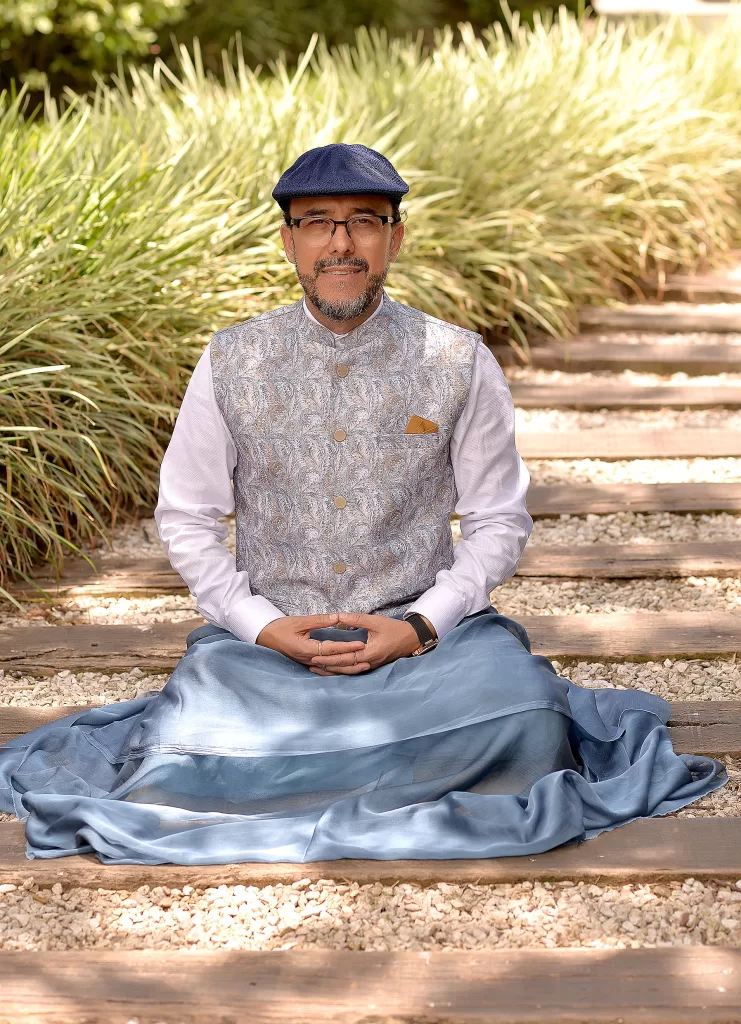
॥ विवेकचूडामणि ॥ … Vivekacūḍāmaṇi … By Acharya Tadany
Class 138, Sept 30, 2026.
Q&A before class
Contemporary Social Discussion
Women’s Emotional Fulfillment and Duties
Dipti raised a fundamental question about why women who perform their duties at home—caring for children, maintaining the household, and supporting their families—often experience unhappiness and unfulfillment despite doing their best. This question opened a broader discussion about the complex factors affecting women’s well-being in traditional and modern contexts.
Multiple Dimensions of Women’s Challenges
Acharya Tadany provided a comprehensive analysis identifying several interconnected factors:
- Social Factors: Women often question why they should remain at home when they could pursue successful professional careers. The perception of being confined to domestic roles creates internal conflict about potential versus actual life paths.
- Economic Factors: The lack of financial independence creates a dependency that affects women’s autonomy. Even for small purchases like clothing, women must rely on others’ moods and decisions rather than having their own economic freedom.
- Emotional Factors: A critical issue is the lack of recognition and appreciation. When family members take women’s work for granted without acknowledgment, it creates an emotional void. The problem is not the giving itself, but the absence of appreciation in return.
- Psychological and Spiritual Factors: From the Vedāntic perspective, the root cause of dissatisfaction lies in ignorance (avidyā) of one’s true nature, leading to feelings of smallness, insignificance, and insecurity.
Cultural and Regional Variations in India
Acharya Tadany explained that women’s experiences vary significantly across different communities, ethnic backgrounds, and family structures in India. The shift from joint families to nuclear families has changed the dynamics of responsibilities. Additionally, women in India face the burden of maintaining both household duties and family spiritual rituals (pūjās), responsibilities that men typically do not share equally.
Disproportionate Effort for Recognition
A significant point raised was that women must work two to five times harder than men to achieve the same level of recognition and success. This burden exists alongside their roles as mothers, educators, emotional supporters, and ritual maintainers within families.
Changing Patterns in Urban India
Acharya Tadany observed positive changes occurring in larger Indian cities, particularly in the IT sector. Women are increasingly taking leadership positions, with companies like IBM implementing aggressive hiring strategies for women. Around a decade ago, IBM even created internal advertisements encouraging employees to recommend female relatives and friends for positions. The IT industry in India is experiencing significant female representation and leadership.
The Marriage-Career Discontinuity
Despite professional opportunities, many women face pressure to leave their careers after marriage, particularly those from certain economic backgrounds. This forced transition is especially difficult for women who have experienced financial and professional independence, as they must suddenly surrender that freedom and become confined to household roles. This creates profound dissatisfaction.
Motherhood and the Need for Appreciation
Acharya Tadany explained that motherhood itself is inherently fulfilling—it is part of the natural maternal instinct and software of motherhood. Mothers naturally give without expectation, sometimes even risking their lives to protect their children. The dissatisfaction arises not from giving, but from the lack of appreciation, recognition, and gratitude from family members.
The Role of Couple Communication
Healthy partnerships require open communication where both spouses can express their feelings without fear of judgment or having their words used against them later. When couples regularly share their experiences—with wives expressing the challenges of managing home responsibilities and husbands acknowledging both their partner’s work and their own professional struggles—mutual recognition and support develops. However, Acharya Tadany noted that such healthy dynamics are not easy to find.
The Thankless Nature of Domestic Work
The discussion concluded that the housewife’s role is often the most thankless job. While parenthood, especially motherhood, can eventually receive appreciation when children mature and recognize their parents’ efforts, the daily domestic work often remains unacknowledged.
Vedānta’s Practical Solution
From the Vedāntic perspective, the practice of emotional independence becomes crucial. Typically, people perform actions expecting something in return—even employment depends on payment. However, reducing expectations and understanding one’s true nature helps mitigate dissatisfaction, though Acharya Tadany acknowledged the challenge of completely eliminating expectations.
Summary
Fundamental Definition of Ātmā
Acharya Tadany presented Śaṅkarācārya’s core definition: Ātmā is of the nature of consciousness (caitanya svarūpa). It is an independent entity (sat) that pervades the body. In whose mere presence the body and all organs function. Critically, this functioning cannot be considered an action performed by ātmā itself.
Ātmā as Illuminator, Not Doer
Consciousness illumines and pervades the body, enabling all organs to function. However, ātmā cannot be termed the doer (kartā) or performer of actions. The organs function in the mere presence of consciousness, but consciousness itself does not act willfully.
Verse 132 Analysis
The verse describes consciousness with these key characteristics:
- Nyātā mano’haṁkṛti vṛtti-kriyāṇām: Consciousness is the witness (sākṣī) and illuminator of all the functions of the mind and ego
- Ayoagni-vat anu-vartamānaḥ: Just as fire seemingly assumes the shape of iron when heating it, consciousness appears to take the shape and form of the body, but this is only an appearance (ānuvartana = imitation)
- Na ceṣṭate no vikaroti kiñcana: Consciousness neither performs any action nor causes any transformation in objects
The Sun Analogy
Acharya Tadany explained that the sun illuminating the earth is not a willful action—it is the sun’s nature (svabhāva) to illuminate. The sun doesn’t decide each morning whether to send light. Similarly, ātmā illumines not through willful action but because illumination is its very nature.
The Fire and Iron Analogy
When iron is heated in fire until it becomes red-hot, two elements are present: the iron piece (with shape and form) and the fire principle (shapeless). As a blacksmith hammers and reshapes the hot iron, the fire pervading it seems to change shape along with the iron. However, the fire principle itself undergoes no change—only the iron changes.
Similarly, consciousness is like the fire principle, and the body is like the iron piece. When the body is small (baby), consciousness appears small. When the body grows tall or wide, consciousness seems to expand or change. But this is only appearance (pratīti). Consciousness has no shape, size, or form of its own, therefore it cannot actually undergo transformation.
Verse 134: Six Modifications and Eternal Nature
Acharya Tadany taught the Sanskrit verse:
na jāyate no mriyate na vardhate
na kṣīyate no vikaroti nityaḥ |
vilīyamāne’pi vapuṣy amuṣmin
na līyate kumbha ivāmbaraṁ svayam || 134 ||
This verse declares that consciousness:
- Na jāyate: Is not born
- Na mriyate: Does not die
- Na vardhate: Does not grow
- Na kṣīyate: Does not decay or decline
- No vikaroti: Does not undergo transformation or modification
- Nityaḥ: Is eternal
The Six Modifications (Ṣaḍ-bhāva-vikāras)
Acharya Tadany referenced the teaching from Tattvabodha regarding the six modifications that the physical body undergoes:
- Asti: Potential existence
- Jāyate: Birth
- Vardhate: Growth
- Vipariṇamate: Change/transformation
- Apakṣīyate: Decay/decline
- Vinaśyati: Death/destruction
These modifications apply to the body-mind-sense complex, but consciousness (ātmā) remains completely free from all six modifications (nirvikāra).
Consciousness Not a Property of the Body
This teaching directly challenges the materialist view. If consciousness were a property, product, or part of the body—such as a neurological phenomenon or cellular process—then consciousness would undergo all the transformations that the body undergoes. When cells multiply, consciousness would multiply. When the body grows, consciousness would grow. When the body dies, consciousness would die.
But this is not what happens. Consciousness does not perish when the body perishes, proving that consciousness is an independent entity (svatantra tattva) that pervades and enlivens the body but remains separate from it.
Vedānta’s Unique Contribution
Acharya Tadany emphasized that this clear distinction between consciousness and matter represents Vedānta’s most unique and profound contribution to human knowledge. Vedānta alone declares that:
- Consciousness is not bound by time (kāla-atīta)
- Consciousness is not bound by space (deśa-atīta)
- Consciousness is the ultimate reality (paramārtha satya)
- Consciousness is the ultimate substance (upādāna-kāraṇa) of the entire universe
Dṛg-Dṛśya Viveka: Seer-Seen Discrimination
Vedānta employs the methodology called dṛg-dṛśya viveka (discrimination between seer and seen) to establish this truth. Everything in the physical universe can be observed, measured, and objectified—including the body, emotions, thoughts, and even space and time itself. All of this is dṛśya (the seen, the object).
Consciousness is dṛk (the seer, the subject)—the constant, unmoving witness awareness (sākṣī caitanya) that observes all objects and modifications without becoming one of them or causing them.
Contemporary Science vs. Vedānta
Acharya Tadany shared his experience receiving inquiries from scientists and doctors who view consciousness as a chemical spark or secretion of the brain’s gray matter—an accidental byproduct of matter. This empirical scientific view treats consciousness as dependent on and produced by matter.
When he explains Vedānta’s view that consciousness is independent of matter and is actually the substratum of all existence, many scientists lose interest because it doesn’t fit their materialist framework or publishable articles. However, Acharya Tadany expressed hope that advances in artificial intelligence and quantum computing might eventually lead science to reconsider these questions.
Beyond Dualism
Most philosophical and religious systems stop at dualism (dvaita): the soul trapped in a material world created by a distant God. Vedānta goes far beyond this. It asserts that consciousness is not merely a private, personal soul (jīvātmā) but is the ultimate substratum (adhiṣṭhāna) of everything—the very “stuff” of the entire universe.
Timeless and Spaceless Nature
Space appears within awareness. Consciousness has no location—location appears in consciousness. Time itself is timeless from consciousness’s perspective. Past and future are merely memories and expectations arising in the present moment of awareness. Even the present moment exists only because awareness illumines it.
The Pot-Space Analogy
The verse concludes with a powerful analogy: kumbha ivāmbaram (like space in a pot).
When there is a pot (kumbha), the space inside it appears to be limited, enclosed, and functional. This pot-space is useful—you can store water because of it. Similarly, the space inside a room (created by four walls) is functional and useful.
However, we understand that the space inside the pot is not the pot itself. The utility comes from the space, not from the clay walls. The space inside is the same as the space outside—limitless space appears limited only due to the pot’s boundaries.
When the pot breaks and disintegrates, the pot-space doesn’t disintegrate. The boundaries disappear, but the space remains exactly as it was. The “enclosed space” merges with the “unenclosed space,” which were never actually different.
Application to Body and Consciousness
Similarly, the body-mind-sense complex is like an enclosed pot, and consciousness appears to be limited, individualized, and functional within it. This is the jīva (individual being). The body provides a functional medium for consciousness to express itself.
When the body disintegrates (death), consciousness does not disintegrate. The body-form vanishes, but consciousness—like space—remains unchanged. The non-functional consciousness (in a dead body) is mistaken by observers as non-existent consciousness, but in reality, consciousness is simply no longer expressing through that particular medium.
Common Misconception Addressed
Non-expressive consciousness is not non-existent consciousness. This is the crucial point. Just as unenclosed space is not non-existent (it’s simply not functional for our purposes), consciousness without a body-medium is not destroyed—it’s simply not manifest or expressive through that form.
Reconciling Jīva’s Death with Ātmā’s Eternality
A natural question arises: If ātmā is eternal (nitya), how can we speak of the jīva’s death, birth, travels, and rituals like śrāddha and tarpaṇa?
Śaṅkarācārya’s answer: All these apparent births, deaths, and transformations of the jīva are superimpositions (adhyāropa) born out of ignorance (avidyā). From the absolute standpoint (pāramārthika), consciousness never undergoes any modification whatsoever.
Meditation Implications
Acharya Tadany emphasized that this teaching becomes especially important for meditation practice. One must clearly understand: All modifications apply to the body-mind-sense complex. Ātmā—consciousness—undergoes no modifications whatsoever. This discrimination forms the foundation of Vedāntic contemplation.
Acharya Tadany