Tadany Um refúgio para a alma e um convite à consciência.

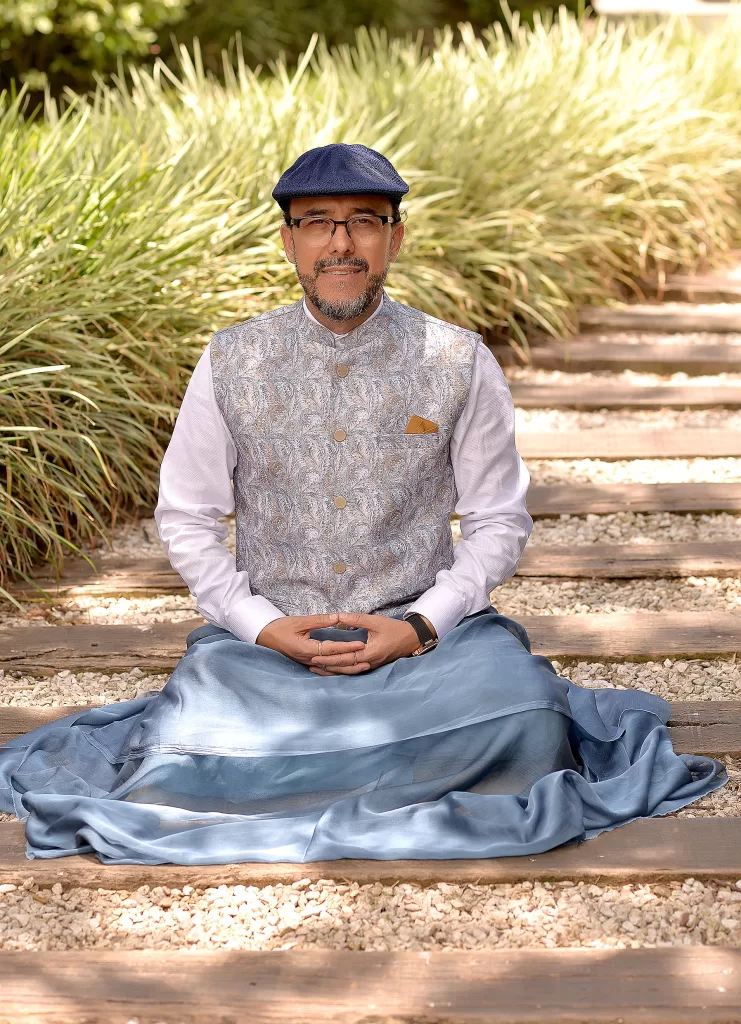
॥ विवेकचूडामणि ॥ – … Vivekacūḍāmaṇi … by Acharya Tadany, Aug 19, 2026.
Summary
The All-Pervading Ātmā
Acharya Tadany explained the key verse: “Yasya sannidhimātreṇa dehendriyamanodhiyaḥ vartante prīritā iva” — meaning that because of the mere presence (sannidhi) of the all-pervading Ātmā, all the inert organs (body, sense organs, mind, and intellect) function as though activated by it.
Organs and Their Restricted Fields of Operation
Each organ functions within a circumscribed sphere of activity — it is limited, restricted, and bound to its own field:
- Eyes — function only in the field of forms and colors (rūpa)
- Ears — function only in the field of sound (śabda)
- Mind — functions in the field of emotions and thoughts
- Intellect — functions in the field of reasoning and decision-making
Acharya Tadany emphasized that while each organ has its specific capacity, Ātmā itself is the all-pervading principle that has no such limitations.
The Electricity Analogy
Acharya Tadany used the analogy of electricity to illustrate how Ātmā works. Just as the same electricity powers different gadgets in a house — the radio for audio, the TV for video and audio, the AC for cooling, the washing machine for cleaning — each gadget has its own limited functionality. Yet the electricity itself is uniform and all-pervading. The limitations belong to the gadgets, not to the electricity.
Similarly, Ātmā uniformly pervades all organs, but the limitations belong to the organs themselves based on their intrinsic nature (svabhāva), not to Ātmā.
Ātmā as Activating Presence (Not Willful Actor)
Acharya Tadany stressed the crucial phrase “prīritā iva” — “as though” activated. This means Ātmā does not willfully or deliberately force organs into activity. If Ātmā were actively forcing actions, then people could blame Ātmā for every mistake, crime, or wrong action. This would make Ātmā a kartā (doer) and thus subject to puṇya (merit) and pāpa (demerit).
The reality is that Ātmā simply is — it exists as pure presence. In its presence, inert objects become activated according to their own capacity and design.
The Sun Analogy
Acharya Tadany explained that Ātmā is like the sun. The sun does not wake people up or push them into activity — it simply exists. As the Earth rotates, the part exposed to the sun experiences daytime and people become active; the part in shadow experiences nighttime and people rest. The sun remains constant, neither commanding people to wake nor to sleep.
Similarly, Ātmā just is. In its presence, the body-mind-sense complex and the world interact and function, but Ātmā itself does neither compels nor participates in these actions.
Ātmā as Akartā and Abhoktā
Referencing the Bhagavad Gītā (Chapter 5), Acharya Tadany quoted: “Na kartṛtvaṁ na karmāṇi… na ca karmaphalaṁ vibhuḥ” — the all-pervading Ātmā does not create agency (kartṛtva), does not create actions (karma), and does not create results of actions (karmaphala).
Actions and their results arise due to the nature of the mind and the presence of avidyā (ignorance), not because of Ātmā. Therefore, Ātmā is akartā (non-doer) and abhoktā (non-experiencer).
The Camera Analogy for Consciousness
Acharya Tadany introduced the analogy of a camera to address the question: “If I am Ātmā, why can’t I see myself?”
Just as a camera captures pictures of everything but never appears in its own photographs, consciousness (Ātmā) illuminates everything but can never be objectified or witnessed as an object. Yet we never doubt the existence of the camera because every picture proves its presence.
Similarly, we are aware of the body, aware of the mind, aware of thoughts, and aware of the absence of thoughts. This awareness itself is Ātmā — like the camera, it can never be “pictured” or objectified, but its existence is never in doubt.
The Three Types of Anātmā
Acharya Tadany explained that consciousness illuminates three categories of anātmā:
- Anātmā #1: The Body-Mind-Sense Complex — This includes the five kośas from vijñānamaya kośa to annamaya kośa (excluding ānandamaya kośa, where everything resolves). The verse states: “ahaṅkārādi dehāntaḥ” — from ego-sense to the physical body.
- Anātmā #2: The External World — All external objects (viṣayāḥ) including sparśa (touch), rūpa (form), rasa (taste), gandha (smell), and śabda (sound).
- Anātmā #3: Experiences and Emotions — The interaction between anātmā #1 and anātmā #2 gives rise to sukha-duḥkha-miśra (pleasure, pain, and mixed experiences), as well as emotions like rāga (attraction), dveṣa (aversion), kāma (desire), and krodha (anger).
All three categories of anātmā are inert (jaḍa) and are illuminated by consciousness. The meaning of life, Acharya Tadany humorously noted, is simply the interaction between anātmā #1 and anātmā #2, witnessed by consciousness.
Nitya Bodha Svarūpiṇ — Eternal Awareness
Acharya Tadany emphasized that Ātmā is nitya bodha svarūpiṇ — consciousness whose very nature is eternal awareness. The word nitya here means “that which can never be switched off.”
In the waking state (jāgrat avasthā), there is interaction between anātmā #1 and anātmā #2, resulting in experiences. In the dream state (svapna avasthā), the same interaction occurs within the mind. In deep sleep (suṣupti avasthā), the entire drama of life is switched off — but consciousness itself never switches off.
Consciousness does not sleep and does not wake up. Only the mind “folds” during deep sleep and “opens up” during the waking state. Consciousness remains constant, eternal, and ever-present.
Even Bhagavān (God) cannot switch off consciousness, because that is the very nature (svabhāva) of consciousness.
Key Teaching: “I Am That Ātmā”
Throughout the discourse, Acharya Tadany insisted on a paradigm shift: wherever the word “Ātmā” appears, the student should practice immediate translation to “I, me, myself.”
Instead of searching for Ātmā as an object inside or outside the body, one should own up to the fact: I am that Ātmā in whose presence the body acts, the mind thinks, and the intellect reasons.
The verse concludes: “Yena vedyante saha ātmā” (implied) — that through which everything is known, witnessed, and experienced is Ātmā — and that Ātmā is I.