

 Tadany Um refúgio para a alma e um convite à consciência.

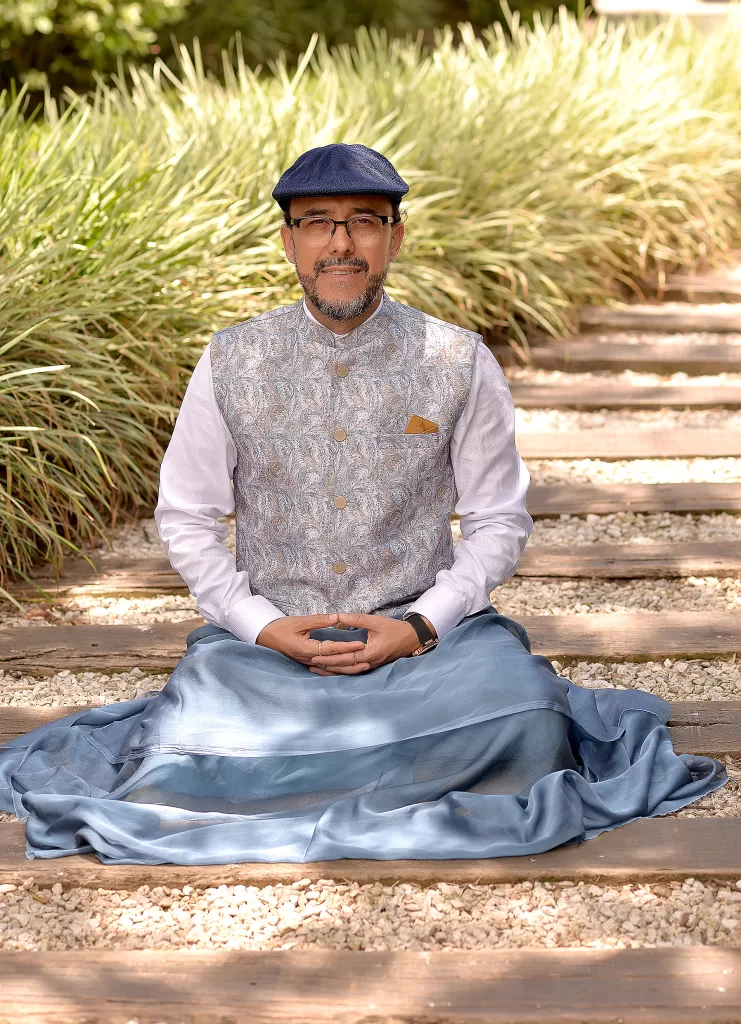
॥भगवद्गीता॥ … Bhagavad Gītā …by Acharya Tadany
Chapter 5, Class 202, Oct 22, 2026.
Summary
Krishna’s Teaching on Spiritual Paths
Acharya Tadany conducted a detailed teaching class on the Bhagavad Gītā, focusing on Krishna’s teachings about the relative merits of different āśramas (life stages) and the practice of Karma Yoga. The central theme was understanding that both Gṛhastha (householder) and Sannyāsa (renunciate) āśramas can lead to liberation (mokṣa), but each path has distinct characteristics and requirements.
Two Valid Paths to Liberation
Karma Yoga: The Path of Action
Karma Yoga is the spiritual path practiced within the Gṛhastha āśrama (householder life). In this approach, one continues to engage in worldly duties, family responsibilities, and social obligations while maintaining a yogic attitude. The practitioner performs all actions without attachment to their results and offers every action to the Divine. This path does not require physical renunciation of the world but rather a transformation of one’s relationship with action and its fruits.
Sannyāsa: The Path of Renunciation
Sannyāsa represents the path of complete renunciation. In this āśrama, one formally renounces all worldly duties, social obligations, and family responsibilities to focus entirely on spiritual practice and self-realization. This path involves physical withdrawal from societal roles and requires an advanced level of spiritual maturity and psychological preparation.
Equality and Validity of Both Paths
Krishna teaches that both Karma Yoga and Sannyāsa are equally valid spiritual paths leading to the same ultimate goal of liberation. Each āśrama has its own advantages and disadvantages, and neither is inherently superior to the other in absolute terms. The apparent superiority of one path over another is relative and depends entirely on the individual practitioner’s mental and emotional framework, natural inclinations (svabhāva), and state of spiritual maturity.1
Gṛhastha Āśrama and Karma Yoga: The Safer Path for Most
Acharya Tadany explained that Gṛhastha āśrama with the practice of Karma Yoga is generally better suited and safer for the majority of spiritual seekers. This recommendation is based on several important considerations:
- Alignment with natural tendencies: Most people’s mental framework and psychological makeup are naturally oriented toward engagement with the world rather than complete withdrawal.
- Practical considerations: The householder path allows individuals to fulfill their social, familial, and economic responsibilities while pursuing spiritual growth.
- Gradual spiritual development: This path provides a stable foundation for spiritual practice without the risks associated with premature renunciation.
- Integration of spirituality and life: Rather than seeing worldly life as an obstacle, Karma Yoga transforms everyday activities into spiritual practice.
Sannyāsa Āśrama: Requirements and Cautions
While Sannyāsa can be an ideal path for properly qualified individuals, Acharya Tadany emphasized several important cautions:
- Specific mental makeup required: Sannyāsa demands a particular psychological and spiritual foundation that not everyone possesses, regardless of their sincere spiritual aspirations.
- Potential risks for the unqualified: For individuals who lack the necessary preparation, Sannyāsa can be potentially harmful, leading to psychological difficulties, spiritual regression, or disillusionment.
- Need for spiritual maturity: The renunciate path requires advanced spiritual maturity, emotional stability, and a deep understanding of Vedāntic principles before one can successfully navigate its challenges.
- Complete renunciation: This path involves not just physical withdrawal but also mental and emotional detachment from all worldly concerns, which requires extensive preparation.
Personalized Spiritual Practice and Decision-Making
A key teaching emphasized in the class was the importance of personalizing spiritual practice according to individual readiness and circumstances:
- Individual assessment: Spiritual practices and life-stage decisions should be carefully tailored to match an individual’s current mental and emotional preparation, not based on theoretical ideals.
- Role of self-knowledge: Understanding one’s own nature (svabhāva), including strengths, weaknesses, and tendencies, is essential for making appropriate spiritual choices.
- Guru’s guidance: Such significant spiritual decisions require the guidance of a qualified guru who can assess the student’s readiness and provide appropriate direction.
- Irreversibility of commitment: Once formal spiritual commitments—especially entry into Sannyāsa—are made, they are considered irreversible and should not be taken lightly or made impulsively.
- Careful consideration: The decision to choose a particular spiritual path requires deep reflection, honest self-assessment, and consultation with one’s teacher before making such a life-transforming commitment.
The Bhagavad Gītā’s Approach for General Teaching
Acharya Tadany concluded the class by explaining why the Bhagavad Gītā is uniquely suited for teaching the general public, in contrast to other Vedāntic texts:
- Gṛhastha-oriented approach: Unlike texts designed primarily for renunciates, the Bhagavad Gītā addresses the concerns and circumstances of householders living active lives in the world.
- Accessibility: The Gītā’s teachings are presented in a way that makes them accessible and applicable to people at various levels of spiritual development.
- Practical wisdom: The text provides practical guidance on how to integrate spiritual principles into daily life, work, relationships, and social responsibilities.
- Contrast with Upaniṣads: While the Upaniṣads contain advanced teachings reserved for spiritually mature practitioners who have already developed considerable discrimination and detachment, the Bhagavad Gītā meets people where they are.
- Universal applicability: The Gītā’s emphasis on Karma Yoga makes it relevant to the majority of spiritual seekers who cannot or should not adopt the renunciate lifestyle.
This Gṛhastha-centered approach makes the Bhagavad Gītā an ideal foundational text for most students beginning their study of Vedānta, as it provides a safe and practical framework for spiritual growth while living in the world.
Acharya Tadany