

 Tadany Um refúgio para a alma e um convite à consciência.

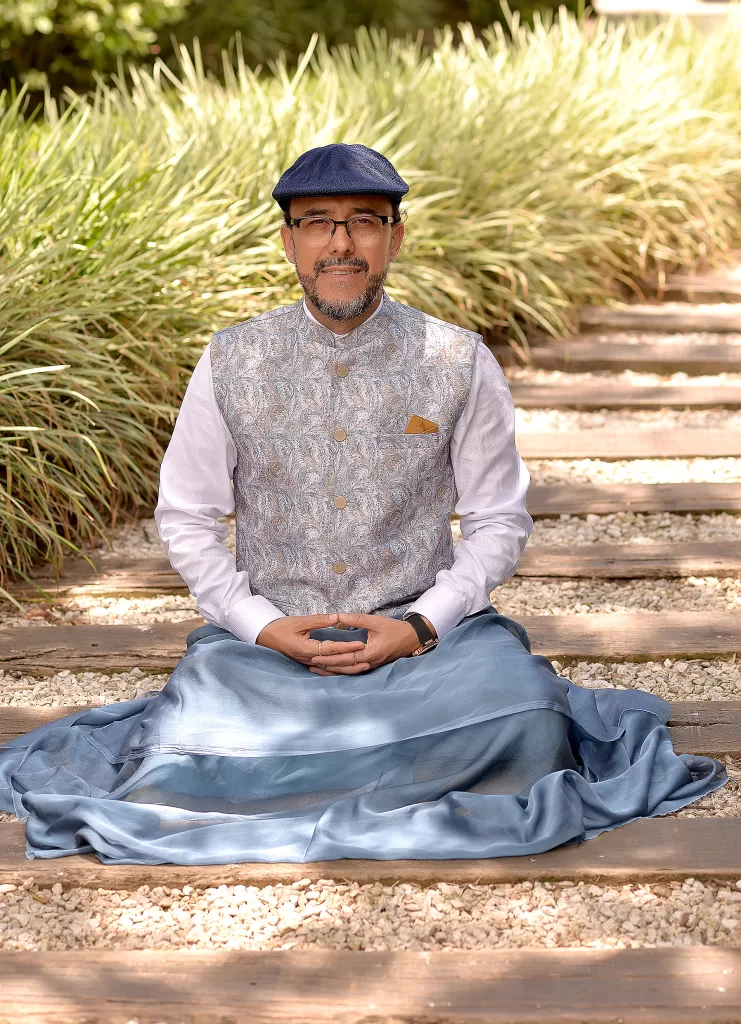
॥भगवद्गीता॥ … Bhagavad Gītā … by Acharya Tadany
Chapter 2 – Class 65 – Oct 23, 2026.
Summary
Understanding the Higher Self vs. Lower Self
Acharya Tadany explained the fundamental distinction between identification with the lower self (our ego, mind, body, and conditioned personality) and the higher self (our true spiritual nature). When we identify with our lower self, we become completely vulnerable to emotional breakdowns and intense suffering from past traumas because we have no distance or perspective from these experiences. We are absorbed in them, drowning in the pain. However, by shifting our focus and identification to the higher self—the witness consciousness that observes but is not affected by these experiences—we create the necessary space and inner strength to properly address and heal these past wounds. This shift in perspective is not about denying or suppressing difficult emotions, but rather about establishing ourselves in a place of stability from which we can safely process and integrate these experiences. This distinction is essential for spiritual growth and emotional resilience, as it provides the foundation for all deeper spiritual work.
The Role of Action in Spiritual Growth
A key teaching from the class emphasized that inaction is actually a disadvantage on the spiritual path—a point that often surprises students who associate spirituality with withdrawal and passivity. Inner and spiritual growth do not occur in isolation or through complete withdrawal from life and its challenges. Instead, they emerge through action and interaction with the world, through engagement with people, situations, and responsibilities. It is precisely through these interactions that we discover our patterns, face our limitations, and have opportunities to practice equanimity and self-awareness. This understanding challenges the common misconception that spirituality requires complete renunciation of activity or escape from worldly life. Acharya Tadany stressed that the spiritual path is walked in the midst of life, not in avoidance of it. Our daily activities, relationships, and responsibilities become the very field in which we cultivate spiritual qualities and discover our true nature.
Pravṛtti and Nivṛtti: Two Essential Life Phases
Acharya Tadany explained two important Sanskrit concepts from the Bhagavad Gita:
- Pravṛtti (प्रवृत्ति) — an active life of engagement in worldly activities and responsibilities
- Nivṛtti (निवृत्ति) — a life of withdrawal focused on spiritual contemplation and inner development
Both phases are important and necessary at different stages of life. The spiritual path is not about choosing one over the other permanently, but understanding when each is appropriate and beneficial for one’s growth. In the earlier stages of life, pravṛtti—active engagement in worldly duties, building a career, raising a family, contributing to society—is typically the appropriate focus. This active phase allows us to fulfill our responsibilities, develop our capacities, and engage with the world in meaningful ways. Later in life, or when one has fulfilled one’s primary worldly obligations, nivṛtti becomes more appropriate—turning inward, deepening contemplation, and focusing more exclusively on spiritual realization. However, even within the active phase of life, moments of withdrawal and reflection are necessary. The Bhagavad Gita teaches that both paths have their place and neither is inherently superior to the other; what matters is engaging in the right practice at the right time with the right understanding.
Karma Yoga: Skill in Action
The class focused extensively on the concept of karma yoga, which Acharya Tadany described as “skill in action.” This yoga is fundamentally about cultivating the right attitude toward our actions and their results. The key principles include:
- Mental balance and equanimity — maintaining inner stability regardless of success or failure
- External gains serving inner growth — using worldly activities as opportunities for spiritual development
- Steady mindset in all circumstances — remaining equanimous through life’s ups and downs
Acharya Tadany compared this practice to physical fitness training, where consistent practice builds strength over time—you don’t become physically strong overnight, but through regular, sustained effort, the body gradually develops greater capacity and resilience. Similarly, karma yoga practice gradually builds emotional strength and spiritual maturity through the consistent application of equanimity in daily life. Each time we face a success without becoming inflated with pride, or encounter a failure without collapsing into despair, we strengthen our inner stability. Each time we perform our duties with dedication while remaining unattached to specific outcomes, we deepen our spiritual practice. Over time, this practice transforms our entire relationship with action and results. We become less reactive, more centered, and increasingly capable of maintaining our inner peace regardless of external circumstances. This gradual transformation is the fruit of sustained karma yoga practice.
From Karma Yoga to Jñāna Yoga
Acharya Tadany explained the progression of spiritual practice and how different yogas connect and build upon each other. Karma yoga, when practiced correctly with equanimity and the right attitude toward action and its results, naturally leads to jñāna yoga (the yoga of knowledge and self-realization). This is not an arbitrary sequence but a natural unfolding—as the mind becomes purified and stabilized through karma yoga, it becomes capable of receiving and sustaining higher knowledge. Through this progression, a practitioner develops true self-knowledge (ātma-jñāna) that allows them to transcend the cycle of good and bad deeds, moving beyond the binding effects of karma altogether. This understanding represents a fundamental shift from being bound by the results of actions—oscillating between pleasure and pain, success and failure—to being established in one’s true nature beyond all dualities. The person who has reached jñāna yoga sees the same Self in all beings, remains unshaken by praise or criticism, and acts in the world without generating new karmic bondage. This is the ultimate goal of the spiritual path as taught in the Bhagavad Gita.
Acharya Tadany