Tadany Um refúgio para a alma e um convite à consciência.

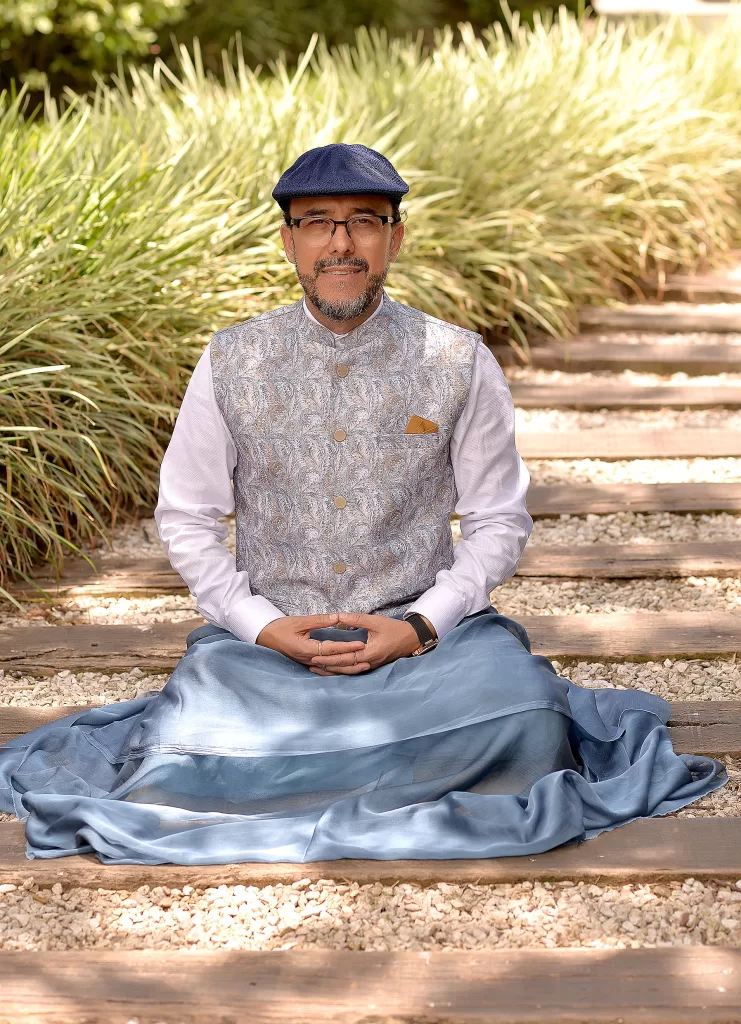
॥ विवेकचूडामणि ॥ … Vivekacūḍāmaṇi … By Acharya Tadany
Class 135, Sept 9, 2026.
Summary
Introduction to Śloka 131 and the Nature of Ātmā
Acharya Tadany began the class by introducing Śloka 131 from Vivekacūḍāmaṇi, which continues Śaṅkarācārya’s discussion on the nature of Ātmā (Ātma Svarūpam) that spans from verse 124 to verse 136.
In this particular verse, Śaṅkarācārya beautifully presents the essential characteristics of Ātmā using words directly from the Upaniṣads themselves.
Ātmā as Puruṣa and Purāṇaḥ
The verse describes Ātmā as the inner essence (antarātmā) of everyone, known in the scriptures as Puruṣa. Acharya Tadany explained that Puruṣa means that which is never the subject or object of anything—it is the ultimate witness, never objectified.
Additionally, Ātmā is described as Purāṇaḥ, meaning ancient, eternal, and primordial.
Pūrṇa Ānanda and Pūrṇa Caitanya: The Nature of Ātmā
The verse uses four key descriptive terms that Acharya Tadany unpacked systematically:
- Nirantara Sukham — Uninterrupted, perpetual happiness/Ānanda
- Akhaṇḍa Sukham — Undivided, whole happiness/Ānanda
- Nirantara Anubhūtiḥ — Permanent consciousness (Caitanya), free from temporal gaps
- Akhaṇḍa Anubhūtiḥ — Undivided consciousness, not limited by space
These four expressions can be summarized as Pūrṇa Ānanda Svarūpaḥ (of the nature of infinite bliss) and Pūrṇa Caitanya Svarūpaḥ (of the nature of infinite consciousness). Acharya Tadany emphasized that nirantara indicates freedom from time-based limitations, while akhaṇḍa indicates freedom from space-based limitations.
Permanent Ānanda vs. Experiential Pleasures
Acharya Tadany devoted significant time to clarifying a critical distinction: No experiential pleasure, however extraordinary, mystical, or ecstatic, can be called Brahma Ānanda. This is because all experiential pleasures—whether sensory, emotional, or even yogic states like Nirvikalpa Samādhi—are subject to time, space, and circumstances. They are temporary and therefore impermanent.
He explained that the phrase “permanent experiential pleasure” is a contradiction in terms, like saying “hot ice cream” or “square circle.” Experience, by definition, implies temporality. When the scriptures speak of Nitya Ānanda (eternal bliss), the word Ānanda should not be translated as an experiential word like “pleasure,” “happiness,” “ecstasy,” or “euphoria.” Instead, it should be understood as Pūrṇatvam—fullness, completeness, wholeness—which is one’s true nature and is therefore permanent and non-experiential.
Sadā Ekarūpaḥ: Ātmā is Ever Unchanging
The verse states that Ātmā is sadā ekarūpaḥ—ever of the same nature, not subject to change, modification, or alteration (nirvikāra). Acharya Tadany addressed a common misconception regarding the Upaniṣadic statement that Brahman “thought” to become many (bahu syām prajāyeya).
He clarified that Brahman never actually divides or becomes many. The apparent duality is seeming, not real. Brahman was Advaita (non-dual), is Advaita, and will always remain Advaita. The duality appears as though it exists, just as in a dream the waker remains one even when experiencing multiplicity in the dream world. Upon waking, the dream duality disappears, revealing that the waker was always non-dual. This principle is discussed extensively in the third chapter of Māṇḍūkya Kārikā called “Advaita Prakaraṇa,” which uses 48 verses to elaborate this single idea.
Pratibodha Mātrā: Two Meanings
The term Pratibodha Mātrā has two important meanings, both of which Acharya Tadany explained in detail:
First Meaning: Ātmā is Evident in Every Experience
Pratibodha means “every experience” (external perceptions like sound, form, taste, smell, and internal emotions like pleasure and pain), and mātrā means “evident” or “recognizable.” Therefore, Ātmā is known, evident, and recognizable in every single experience. This echoes the Kena Upaniṣad statement: pratibodhaṁ viditam matam—Brahman is known in every state of perception.
Acharya Tadany used the analogy of light in a room. To see any object, one must focus attention, turn in the right direction, open the eyes, and possibly use aids like glasses. However, to experience light itself, no special focus on any particular object is needed—light is already present and experienced along with every object seen. Similarly, Ātmā does not require a particular or specific experience; it is available in every particular experience.
Second Meaning: Ātmā is Known Through Guru Śāstra Upadeśa
The second meaning of Pratibodha Mātrā is that Ātmā is known or recognizable through the teachings of the Guru and Śāstra (Guru Śāstra Upadeśa).
This raises an apparent contradiction: If Ātmā is already evident in every experience (first meaning), why is teaching required (second meaning)? Acharya Tadany clarified this beautifully:
Guru Śāstra Upadeśa does NOT reveal Ātmā, because Ātmā is already revealed in every experience. The teaching exists to turn the student’s attention toward the ever-present, ever-evident, ever-experienced Ātmā.
Just as one does not need to be taught to reveal the light in a room (because light is already self-evident), the Guru’s role is to direct the student’s attention to what is already there but has been taken for granted. The greatest thing we take for granted is Ātmā.
Knowledge First vs. Experience First
Acharya Tadany emphasized a crucial principle that distinguishes Brahma Jñāna (Self-knowledge) from all objective knowledge:
- In objective knowledge: Knowledge comes first, experience comes later. (Example: First you hear about Gangotri, then you visit and experience it.)
- In Brahma Jñāna: Experience comes first (anubhava), knowledge comes later (jñāna). Ātmā is already experienced; teaching helps recognize that experience.
A common mistake spiritual seekers make is saying, “I have the knowledge of Ātmā, but I don’t have the experience.” This is like attending a one-hour class on light and then saying, “I understand what light is, but I have not experienced light”—even though light was present throughout the class. This indicates a lack of true understanding.
Pujya Swami Dayananda Saraswati repeatedly taught that the job of the Guru is “the revelation of the ever-revealed”—to reveal to you that which is already revealed, to turn your attention to that which is ever-evident and ever-present.
How All Organs Function Through the Blessing of Ātmā
The verse concludes with yena īśitā vāk ca prāṇāś ca—all organs of speech (vāk) and the five vital forces (prāṇāḥ) function only when “blessed by” or “enlivened by” Ātmā. Acharya Tadany explained that īśita means “propelled by” or “blessed by.”
This principle is elaborated in the Kena Upaniṣad: śrotrasya śrotram, manaso mano, yad vāco ha vācam, sa u prāṇasya prāṇaḥ—Ātmā is the ear of the ear, the mind of the mind, the speech of speech, the life of life. Just as a light bulb is light because of electricity, a fan is a fan because of electricity, and a computer works because of electricity, all sense organs and vital functions operate because they are enlivened by Ātmā. Electricity is “the light of the light, the fan of the fan”—similarly, Ātmā is the consciousness that powers all faculties.
Closing Prayer for Universal Well-Being
Acharya Tadany concluded the class with the traditional śānti mantra and added a closing prayer for the well-being of all mankind:
Sarve bhavantu sukhinaḥ,
sarve santu nirāmayāḥ,
sarve bhadrāṇi paśyantu,
mā kaścit duḥkha bhāg bhavet.
May all beings be happy,
May all be free from disease,
May all see auspiciousness,
May none suffer.
He mentioned that he would begin adding this final prayer for mankind at the end of each class going forward.
Acharya Tadany