Tadany Um refúgio para a alma e um convite à consciência.

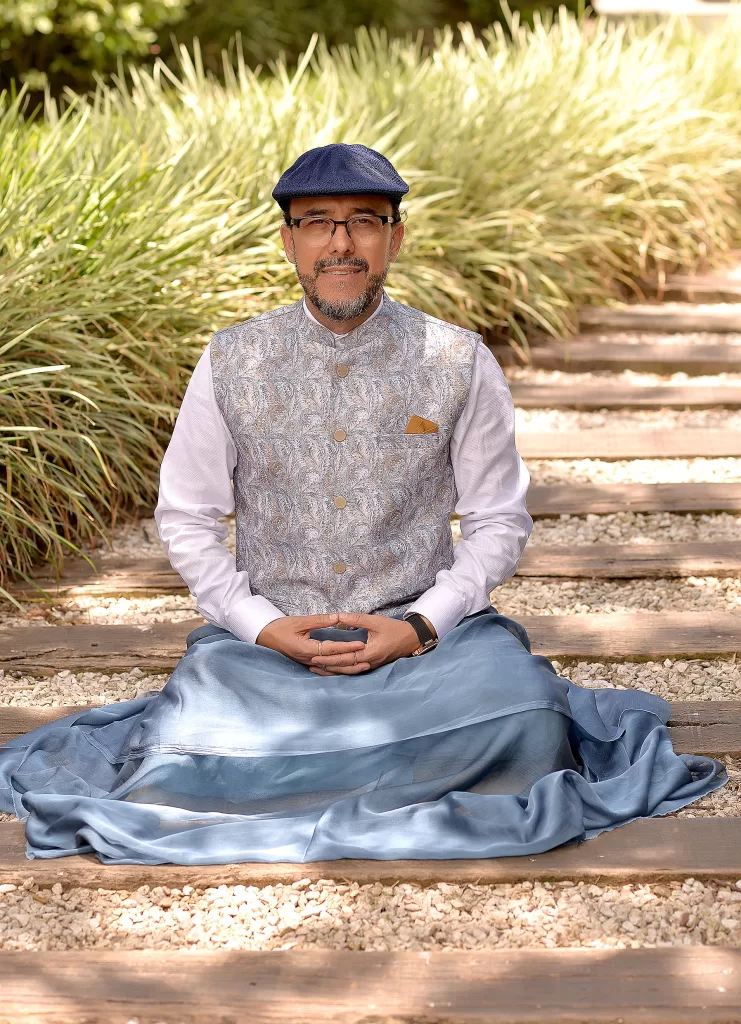
॥ भगवद् गीता ॥ … Bhagavad Gītā … by Acharya Tadany
Chapter 6, Class 234, September 15, 2026.
Before Class
Ganapati Upanishad and Self-Knowledge
Following the opening invocation, Acharya Tadany chanted the Gaṇapati Atharvaśīrṣa Upaniṣad in its entirety—a powerful Vedic text dedicated to Lord Gaṇeśa—before beginning the formal Vedānta teaching.
These prayers invoked various deities and cosmic principles related to creation and universal consciousness, emphasizing themes of peace, divine protection, and the true nature of reality. The chanting created a sacred atmosphere conducive to spiritual learning and contemplation.
Summary
Understanding Spiritual Inclination (yōga bhraṣṭa)
Acharya Tadany introduced the fundamental concept of spiritual inclination, explaining how it manifests in people’s current lives. The key insights include:
- Natural Attraction: When a person encounters a spiritual environment — such as spiritual teachings, lectures, or satsaṅga (spiritual gatherings) — those with spiritual vāsanās are naturally and powerfully attracted to it, even without conscious understanding of why.
- Unconscious Binding: This attraction operates at a deep subconscious level. A person may not intellectually know why they feel drawn to spiritual teachings, but the pull is irresistible due to past life spiritual work.
- Observable Phenomenon: This natural attraction can be clearly observed in spiritual contexts — some individuals are immediately captivated by spiritual discourse while others remain indifferent.
Societal Resistance to Young Spiritual Seekers
Acharya Tadany addressed the common societal discouragement faced by young people who are drawn to spiritual teachings:
- Cultural Misconceptions: Parents and society often question why young people would be attracted to spirituality, viewing it as appropriate only for the elderly or those who have experienced life tragedies and suffering.
- Expected Life Pattern: Society expects people to first pursue worldly education, career, family, and material success, relegating spirituality to old age or post-retirement.
- Personal Experience: Acharya Tadany shared his own journey of being naturally drawn to spiritual study from a young age, which contrasted sharply with societal expectations.
- Unconventional Choice: His decision to transition to a gurukula (traditional spiritual school) to study Vedānta was met with questioning and discouragement from others who viewed it as an impractical and unconventional life choice.
This resistance highlights society’s limited understanding of spiritual calling and the power of past life saṁskāras (impressions).
Krishna’s Teaching on Natural Spiritual Attraction
Acharya Tadany elaborated on Lord Krishna’s teachings from the Bhagavad Gītā regarding spiritual attraction:
- Causeless Attraction: People can be naturally drawn to spiritual practices without specific external reasons, life tragedies, or dramatic turning points.
- Pūrva Abhyāsa (Past Practice): This attraction is influenced and empowered by pūrva abhyāsināṁ — previous spiritual efforts and practices from past lifetimes that create strong spiritual impressions.
- Avaśaḥ Api Sah (Involuntary Compulsion): The spiritual pull can be so strong that it operates without deliberate intention or conscious choice — one is drawn almost involuntarily to the spiritual path.
- Temporary Distractions: While some may temporarily return to materialistic pursuits due to family expectations and societal pressure, the fundamental attraction to spirituality remains dormant within, waiting to re-emerge.
This teaching validates the experience of those who feel an unexplainable but powerful calling toward spiritual life from an early age.
Sri Aurobindo’s Spiritual Journey — A Living Example
Acharya Tadany shared the inspiring story of Sri Aurobindo to illustrate how powerful spiritual vāsanās can withstand even the most materialistic conditioning:
- Early Separation: At the tender age of seven, Aurobindo was sent to a British boarding school to receive a completely Western, materialistic education, far removed from Indian spiritual traditions.
- Western Conditioning: He was deliberately exposed to Western philosophy, rationalism, and materialistic worldviews, which typically would have completely overshadowed any spiritual inclinations.
- Political Involvement: As a young adult, Aurobindo became deeply involved in India’s freedom struggle, working as a revolutionary and political activist.
- Spiritual Awakening: Despite all this worldly conditioning and political involvement, his inner spiritual fire (vāsanās) remained intact and eventually emerged powerfully.
- Transformation: He eventually withdrew from political life and settled in Pondicherry, where he became one of India’s greatest yogis, philosophers, and spiritual teachers.
Acharya Tadany emphasized the stark contrast: those with strong spiritual vāsanās can overcome any external conditioning, while those without such foundation may be easily swayed by materialistic environments.
Spiritual Growth — Evolution, Not Revolution
Acharya Tadany shared profound insights from great spiritual masters about the nature of spiritual development:
- Gradual Process: As noted by Pujya Swami Chinmayananda and other masters, spiritual growth is fundamentally an evolution rather than a revolution.
- No Sudden Transformation: True spiritual development doesn’t happen overnight or through dramatic conversion experiences alone.
- Continuous Unfolding: It is a gradual unfolding of consciousness, built upon past efforts and sustained through consistent practice (abhyāsa) and non-attachment (vairāgya).
- Building on Past Foundation: Each lifetime builds upon the spiritual work of previous lifetimes, creating an upward spiral of consciousness.
Three Types of Spiritual Students — Understanding Receptivity
Acharya Tadany presented a beautiful and instructive analogy describing three categories of spiritual seekers, based on their receptivity to spiritual teachings:
1. The Camphor Student (Uttama Adhikārī — Superior Student)
- Immediate Ignition: Like camphor, which catches fire instantly upon contact with flame, these students are immediately ignited by spiritual knowledge.
- High Receptivity: They possess strong spiritual vāsanās from past lives and require minimal external motivation.
- Quick Understanding: A single teaching or insight can spark profound transformation in their consciousness.
- Self-Motivated: They naturally pursue spiritual study with enthusiasm and dedication without external pressure.
2. The Coal Student (Madhyama Adhikārī — Intermediate Student)
- Sustained Exposure Required: Like coal, which requires sustained contact with flame before catching fire, these students need consistent exposure to spiritual teachings.
- Moderate Receptivity: They have some spiritual inclination but require regular satsaṅga (spiritual company) and guidance to maintain momentum.
- Gradual Development: Their spiritual understanding develops steadily with consistent effort and environmental support.
- Patience Required: Teachers and parents must patiently provide repeated exposure without forcing or pressuring.
3. The Banana Stem Student (Manda Adhikārī — Beginning Student)
- Strong Guidance Needed: Like the inner stalk of a banana plant, which is naturally moist and requires intense, sustained heat and strong guidance to catch fire, these students need substantial support.
- Limited Initial Receptivity: They may have minimal spiritual vāsanās and strong materialistic tendencies that must be gradually overcome.
- Conducive Environment Essential: They require a highly supportive spiritual environment, consistent teaching, and patient mentorship.
- Long-Term Investment: Progress may be slow initially, but with sustained effort, even these students can eventually develop genuine spiritual interest.
Key Teaching Point: Acharya Tadany emphasized that parents and teachers cannot force spiritual interest upon children or students. However, they can create a conducive environment where spiritual interest can naturally develop according to each individual’s inherent capacity and past saṁskāras.
From Karma Kāṇḍa to Jñāna Yoga — The Path to Liberation
Acharya Tadany concluded with profound teachings on transcending ritualism to attain ultimate liberation:
Understanding Śabda Brahma and Karma Kāṇḍa
- Śabda Brahma: in this context, refers to the Vedas as divine sound or revealed knowledge, particularly the ritualistic and ceremonial portions.
- Karma Kāṇḍa: The ritualistic portion of the Vedas that prescribes various rituals, ceremonies, and material pursuits for worldly benefits and heavenly rewards.
- Material Focus: Karma Kāṇḍa primarily deals with dharmic actions to achieve material prosperity, family welfare, and temporary heavenly pleasures.
- Limited Results: While beneficial, these pursuits yield temporary, finite results and do not lead to ultimate liberation.
The Transcendence — Yoga-Bhrashṭa
- Meaning: Yoga-bhrashṭa refers to one who has “fallen” from pure materialism — meaning they have transcended purely material and ritualistic pursuits.
- Positive “Fall”: This is actually a positive development — falling away from exclusive focus on material gains and ritual performances.
- Spiritual Maturity: It represents spiritual maturity where one recognizes the limitations of purely ritualistic religion and material pursuits.
The Path to Mokṣa — Ultimate Liberation
- Intense Desire for Truth: When one develops mumukṣutva (intense desire for liberation) and seeks eternal knowledge rather than temporary gains, one enters the path of Jñāna Yoga.
- Jñāna Yoga: The path of knowledge and wisdom, focused on self-inquiry, study of Vedānta, and realization of one’s true nature as Ātman (the Self).
- From Ritual to Realization: The journey moves from external rituals to internal realization, from seeking temporary pleasures to seeking eternal truth.
- Attainment of Mokṣa: Through sustained practice of Jñāna Yoga, study of scriptures like the Bhagavad Gītā and Upaniṣads, and guidance of a qualified teacher (guru), one can attain mokṣa — complete liberation from the cycle of birth and death.
Essence: True spiritual progress involves transcending the limited goals of material prosperity and ritualistic religion, developing discrimination (viveka) between the eternal and temporary, and dedicating oneself to the pursuit of ultimate truth and self-realization. Some people are naturally drawn to it.
Acharya Tadany