Tadany Um refúgio para a alma e um convite à consciência.

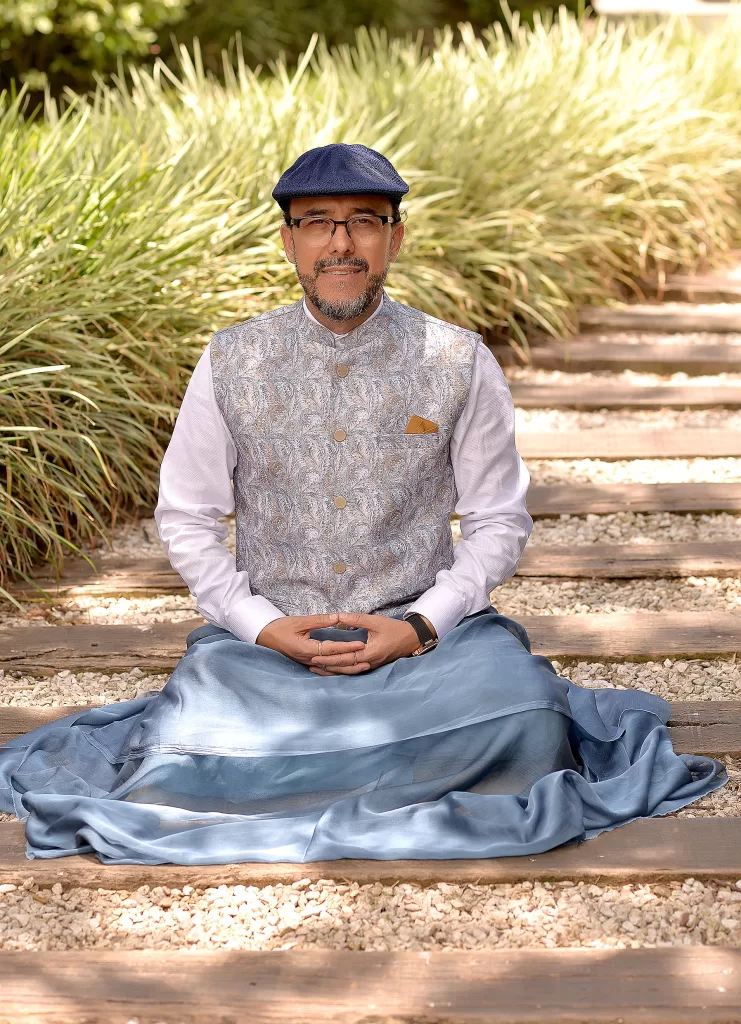
॥ भगवद् गीता ॥ … Bhagavad Gītā … by Acharya Tadany
Chapter 6, Class 235, September 22, 2026.
Summary
The Nature of a Yogi: Spiritual Purity and Freedom from Impurities
Acharya Tadany led an in-depth discussion on the fundamental concepts of yoga and spiritual purity as presented in the Bhagavad Gita. He explained that a true yogi is characterized by two essential qualities: śuddha-kilbiṣaḥ (freedom from all impurities and sins) and śuddha-ahaṅkāra (a purified ego or sense of self).
These qualities are not merely theoretical ideals but represent the actual state of an advanced spiritual practitioner.
Acharya Tadany emphasized that spiritual progress (janma-saṁsiddhi) occurs gradually through many births, with the yogi’s journey representing a progressive refinement of consciousness. The discussion highlighted that purity at this level means complete freedom from mental distortions, selfish motivations, and the binding effects of karma, allowing the practitioner to perceive reality clearly and act in harmony with dharma.
Indicators of Mental Purity: The Natural Inclination Toward Spirituality
Acharya Tadany addressed a profound question: how can we recognize mental purity when there are no objective measuring systems for assessing mental purity levels?
He explained that one of the most reliable indicators is a natural, spontaneous inclination toward spirituality, as described in the sixth chapter of the Bhagavad Gita. This inclination is not forced or artificial but arises organically from within.
Acharya Tadany posed a thought-provoking question: how do certain individuals develop such a powerful and uncontrollable draw toward spiritual life? He clarified that this cannot be attributed to divine partiality or God’s selective favoritism. Rather, it reflects the accumulated spiritual merit and refinement from previous lifetimes. When mental purity reaches a certain threshold, the attraction to spiritual truth becomes as natural as breathing, requiring no external motivation or coercion.
Divine Justice: Why Spiritual Abilities Differ Among People
Acharya Tadany addressed a common philosophical question: why do people possess different levels of spiritual ability and talent? Drawing from Krishna’s teachings in the Bhagavad Gita, he explained that these differences are not due to God’s favoritism, partiality, or arbitrary selection.
Acharya Tadany presented a compelling argument: if God predetermined people’s spiritual talents and capacities, it would make God biased and subject to the same flaws we find in human beings. Such a God would not be worthy of respect or worship. Instead, the principle of divine justice ensures that each person’s spiritual position is the result of their own accumulated actions and refinements across lifetimes (karma-phala).
Therefore, spiritual advantages and disadvantages stem not from divine intervention or luck, but from each individual’s own evolutionary journey through countless births. This understanding places responsibility squarely on the individual while maintaining the perfect justice and impartiality of the Divine.
Aneka-Janma-Saṁsiddha: Accumulating Spiritual Wealth Across Lifetimes
Acharya Tadany introduced one of the central concepts of the discourse: aneka-janma-saṁsiddha, which means “perfection achieved through many births.” He illustrated this profound idea through a simple yet powerful analogy: spiritual growth is like accumulating savings in a bank account. Just as a person deposits money regularly over many years to build substantial wealth, a spiritual seeker accumulates “spiritual currency” through multiple lifetimes of self-refinement, purification, and righteous living. Each lifetime adds to this spiritual bank account through practices like meditation, selfless service, study of scriptures, and ethical living. Over many births, this accumulated spiritual wealth produces transformative results.
The person develops clarity regarding life’s true goals, gaining the wisdom to distinguish between genuine, lasting achievements (nitya) and temporary, superficial ones (anitya). This discrimination (viveka) enables the seeker to pursue more permanent and substantial values rather than being distracted by fleeting pleasures and material accomplishments.
Acharya Tadany emphasized that this clarity about life’s fundamental purpose—known as parama-puruṣārtha (the supreme goal of human life)—is not achieved overnight or in a single lifetime. It is the natural fruit of sustained spiritual evolution over countless births, each one building upon the foundation laid in previous existences.
Two Approaches to Spiritual Preparation: Gradual Growth vs. Last-Minute Effort
Acharya Tadany presented a relatable teaching using the example of how children prepare for examinations, applying this analogy to spiritual development. He described two contrasting approaches:
The First Approach: Gradual Daily Preparation Some students study consistently throughout the term, reviewing their lessons daily, consolidating their understanding step by step. When the exam arrives, they feel prepared, confident, and calm. They don’t experience panic or stress because they have built a strong foundation over time.
The Second Approach: Procrastination and Last-Minute Cramming Other students postpone their studies, neglecting daily practice and review. As the exam date approaches, they panic and attempt to cram everything in a few desperate nights. This approach is stressful, ineffective, and rarely produces good results.
Application to Spiritual Life Acharya Tadany applied these two approaches to spiritual development, explaining that gradual preparation across multiple lifetimes mirrors the first approach. The soul that consistently engages in spiritual practices—even modest ones—across many births accumulates tremendous inner strength and purity. This is the path of aneka-janma-saṁsiddha.
In contrast, attempting to achieve complete spiritual realization in a single lifetime through intensive effort alone, without the foundation of previous spiritual work, is like last-minute cramming. While sincere effort in this life is essential, the most advanced spiritual states arise naturally in those who have been preparing gradually through many existences. This teaching offers both encouragement and perspective: every bit of spiritual practice counts and accumulates, even if we don’t see immediate dramatic results. Nothing is wasted in the spiritual economy.
The Spiritual Path: From Razor’s Edge to Spontaneous Flow
In the concluding section of the discourse, Acharya Tadany presented a powerful contrast between two stages of spiritual development, illustrating the transformation that occurs in an advanced practitioner.
For Most Seekers: The Razor’s Edge Acharya Tadany explained that for most people beginning the spiritual journey, the path is like walking on a razor’s edge (kṣurasya dhārā). It demands:
– Constant discipline and self-control
– Precision in following scriptural guidelines
– Unwavering vigilance over thoughts, words, and actions
– Tremendous effort to resist distractions and temptations
– Consistency despite obstacles and setbacks
This stage requires deliberate, conscious effort at every step. The mind resists, the senses pull in different directions, and maintaining spiritual focus feels like swimming against a strong current.
For Advanced Practitioners: Natural and Effortless However, Acharya Tadany described a completely different experience for those who have achieved significant mental purity through aneka-janma-saṁsiddha. For these advanced souls:
– Spiritual practice becomes natural and spontaneous
– Actions align effortlessly with scriptural guidelines (śāstra-vidhāna)
– There is no internal struggle or resistance
– Meditation, devotion, and ethical living flow like breathing
– The path that once seemed impossibly difficult now feels like the most natural way to live
This transformation is not the result of superhuman willpower but the flowering of accumulated spiritual refinement. Just as a skilled musician plays complex pieces effortlessly after years of practice, the spiritually mature person lives in harmony with dharma without strain or struggle.
Acharya Tadany