Tadany Um refúgio para a alma e um convite à consciência.

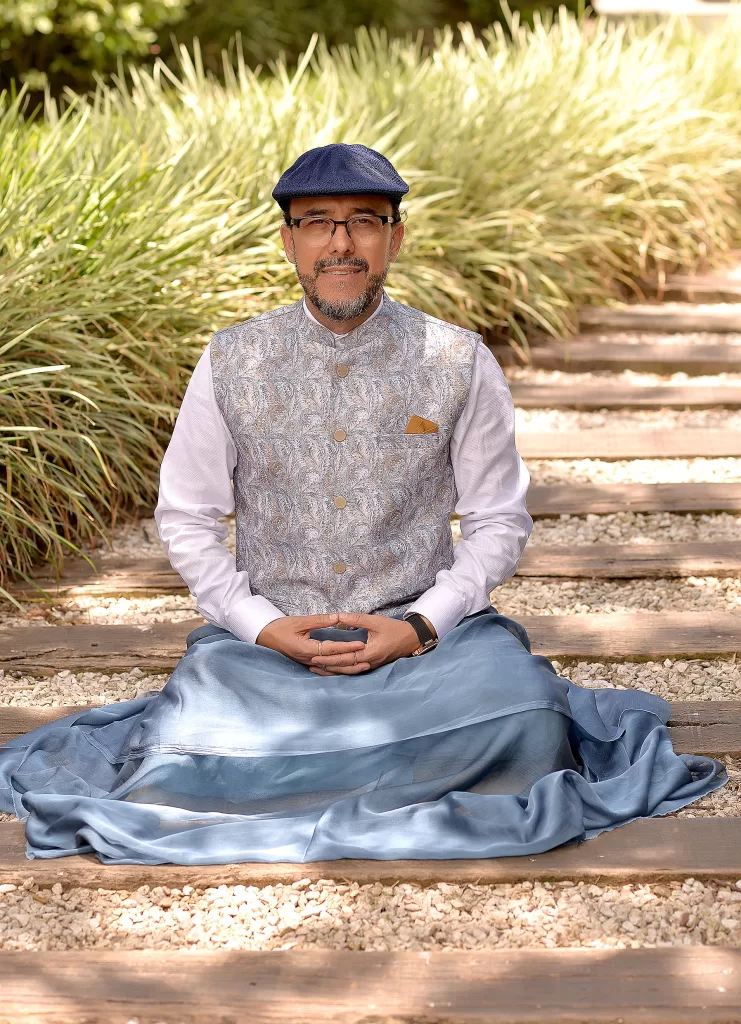
॥ तत्त्व बोध ॥ … Tattva Bodha … By Acharya Tadany
Class 62, Sept 21, 2025
Q&A before class
Introduction to Japa Mala Practice
Preksha initiated the discussion by sharing that she had recently begun practicing Japa Mala, having received a Rudraksha mala from Sophie. She inquired about the proper intention and expectations for this spiritual practice. Acharya Tadany explained that Japa Mala is fundamentally a form of prayer and willful action, serving two primary purposes for a spiritual seeker:
- Devotion (Bhakti): The practice gradually cultivates a more devotional attitude toward Bhagavan (the Lord), helping the practitioner develop faith (śraddhā) and surrender. Through consistent practice, one naturally increases acceptance that there is a total force governing existence, without removing individual free will.
- Spiritual Growth and Mind Management: Japa Mala generates puṇyam (merit) and creates a conducive environment for self-refinement. More importantly, it trains the mind, helping practitioners manage thoughts and develop concentration. An untrained mind acts as an enemy, throwing one into stress, anxiety, and restlessness.
Acharya Tadany emphasized the importance of gradual and patient progress. He explained that the mind naturally wanders during practice—thinking about family, pending tasks, or old memories—and this is completely normal.
The practice involves gently bringing the mind back without self-judgment. Even small improvements, such as extending focused chanting from 30 seconds to one minute, represent substantial (100%) progress. He cautioned against being overly aggressive with spiritual goals.
Practical Applications of Chanting
Preksha shared her positive experience of beginning to chant from Bhagavad Gītā shloka 2.11 onwards, describing how the practice has become a “shock absorber” for dealing with daily challenges.
Acharya Tadany affirmed this benefit, explaining that chanting becomes an immediate tool for emotional regulation during difficult moments throughout the day.
He highlighted that Vedanta students develop exceptional focus and concentration through their intensive five-hour daily curriculum (Gurukulam Example).
This capacity for sustained attention proves beneficial in all areas of life. When unexpected and unpleasant situations arise, one can withdraw for 30 seconds to a minute for chanting, creating immediate calm. The mind becomes conditioned to associate chanting with peace and quietude, making it an effective daily practice similar to deep breathing exercises.
Summary
The Three Types of Karma
Acharya Tadany then transitioned to the formal teaching from Tattva Bodha, beginning with traditional invocation prayers (Sadāśiva samārambhāṃ śaṅkarācārya madhyamām, asmad ācārya paryantāṃ vande guru paramparām) and discussing the fate of the three types of karma for a jīvanmukta (liberated person):
- Prārabdha Karma: The karma that has already begun to fructify in this lifetime and must be exhausted through experience
- Sañcita Karma: The vast accumulated karma from countless past births that has not yet begun to manifest
- Āgāmī Karma: Future karma that would be generated by current and future actions
Prārabdha Karma: The Same for Wise and Unwise
Acharya Tadany explained that Prārabdha karma remains identical for both the wise (jñānī) and the unwise (ajñānī). Both must experience the same physical and physiological processes—aging, illness, pain, decay—as dictated by their Prārabdha. There is no escape from these experiences, and it is a spiritual delusion to think that enlightenment frees one from old age and disease.
He addressed the natural question: “What then is the benefit of jñāna (self-knowledge)?” The answer lies not in changing the experiences themselves, but in fundamentally transforming one’s psychological and emotional responses to those experiences.
Using the balloon analogy, he illustrated how the same event (a balloon bursting) produces different responses: a child experiences it as the end of the world, while parents remain calm, recognizing it as just a balloon. The event is the same; the responses differ based on understanding and maturity.
Self-knowledge provides what Acharya Tadany called a “psychological raincoat” or “emotional umbrella” against life’s inevitable rain (Prārabdha). One cannot stop the rain, but one can prepare for it and remain dry.
A jñānī is not shaken even by the greatest tragedies because they possess a highly developed spiritual immune system. As Lord Krishna teaches in Bhagavad Gītā chapter 6: even the most severe suffering cannot disturb one who is established in their true nature.
Sañcita Karma: Destroyed by Self-Knowledge
Unlike Prārabdha, the entire accumulated karma from countless past births (Sañcita karma) is completely destroyed (naśyati) at the moment of self-knowledge. Acharya Tadany explained this through the powerful dream analogy:
Imagine a person dreams they committed a crime and were sentenced to ten years in prison. In the dream, they are arrested, taken to jail, and pushed into a cell. Their head hits the wall—and they wake up.
In the dream world, they were supposed to spend ten years imprisoned. Upon waking, how many years do they actually spend in jail? Zero. Not even a second. Why? Because they have transitioned to a completely different plane of reality.
This illustrates the revolutionary nature of self-knowledge: it is an awakening from one order of reality to another. The Vedānta teaching “Brahma satyaṃ, jagan mithyā, jīvo brahmaiva nāparaḥ” (Brahman is real, the universe has a dependent reality, the individual is non-different from Brahman) describes three planes of reality:
- Subjective Reality (Prātibhāsika Sattā): The dream world of the dreamer
- Empirical Reality (Vyāvahārika Sattā): The waking world we currently experience
- Absolute Reality (Pāramārthika Sattā): Brahman/Ātman, the unchanging consciousness underlying all experience
Just as waking up completely nullifies all dream-world karma, awakening to absolute reality (self-knowledge) completely destroys all Sañcita karma accumulated in the empirical reality.
The journey of a spiritual seeker is from the subjective “I” to the empirical “I” to the absolute “I.”
Acharya Tadany emphasized that understanding mithyā (dependent reality) frees the mind from emotional turbulence and psychological suffering caused by life’s impermanent, ever-shifting conditions.
Recognizing that the jīva (individual) is non-different from Brahman shifts one’s identity from the small, demanding ego to the eternal, self-luminous consciousness. This knowledge has the power to destroy the bacteria called ignorance, acting as the ultimate spiritual antibiotic.
Āgāmī Karma: The Law of Karma’s Conditions
Acharya Tadany began explaining how a jñānī is free from Āgāmī (future) karma by discussing the conditions necessary for karma to “stick.”
He used the analogy of legal applicability: laws only apply when certain conditions are met. For example, marriage laws require a minimum age; criminal laws require mental competency; Vedic rituals require specific life stages (āśramas). A brahmacārī (celibate student) performing a gṛhastha’s (householder’s) ritual will not receive the expected results because the constitutional conditions are not met.
Similarly, for karma to bind and produce future results (puṇyam or pāpam), four conditions must be present:
- Ahaṅkāra: Egoistic sense of “I” as the doer
- Mamakāra: Possessiveness, the sense of “mine”
- Rāga: Attachment, craving, desire for certain outcomes
- Dveṣa: Aversion, hatred, repulsion toward certain outcomes
When these four are absent, karma does not bind. This is why actions performed in deep sleep don’t generate karma (no ahaṅkāra present), and why animals don’t accumulate puṇya-pāpa (they act purely on instinct without ego-possessiveness-attachment-aversion).
The jñānī has transcended these four conditions, rising from the empirical “I” to the superior “I” which is Ātman itself.
Therefore, Bhagavan exempts the jñānī from Āgāmī karma. (Details of this teaching were to continue in the next class.)
Q&A after class
Handling Family Conflicts: Practical Vedānta
Preksha shared a personal concern about handling situations where she felt wronged and had the impulse to “punish” the other person. She questioned whether she should forgive, pretend nothing happened, or take action, and how to behave toward someone who has hurt her.
Acharya Tadany provided guidance rooted in Bhagavad Gītā principles of “accept and act”:
- If you cannot change the circumstance: Accept it and strengthen yourself emotionally so you are less disturbed. This is not passive acceptance but active inner work to reduce dependency on external validation.
- If you can change the circumstance: Act appropriately within your sphere of responsibility and according to societal/legal structures. For example, if someone breaks into your house, you don’t personally punish them (that’s the legal system’s job), but you can report them and set boundaries.
He emphasized that the intention behind “punishment” often stems from wanting to hurt or harm someone, which generates pāpam (demerit). Instead, one can:
- Clearly communicate when feeling disrespected: “I didn’t like what you said. I felt offended/disrespected.”
- Set and repeat boundaries with increasing assertion when necessary
- Strengthen oneself by removing dependence of self-worth and self-respect from that person’s behavior
- Use organizational or societal structures when appropriate (HR policies, legal systems, etc.)
Acharya Tadany acknowledged that family relationships are particularly complex because parents often continue to see their adult children as children, lacking the maturity to recognize them as independent adults.
Acharya Tadany advised that while one can communicate boundaries, one should not expect others—especially parents—to change.
The key is to immunize oneself emotionally and work toward genuine empathy: understanding that if you were raised in the same circumstances, you might behave similarly. True understanding (not just intellectual acknowledgment) leads to being untouched by such situations.
He recommended prayer as a helpful tool for resolving family entanglements, especially in Indian families which have a particular “flair for drama.”
Sandra’s Perspective: Gratitude and Acceptance
Sandra shared her approach to maintaining relationships with her elderly parents (aged 89 and 84). Despite many differences in values and perspectives, she chose to focus on:
- Valuing the touch points where they share common values
- Being grateful for what they can share together
- Understanding that parents are products of their own lives, relationships, and historical context
- Recognizing that motherhood/parenthood helps one empathize with parents’ challenges
- Accepting that at their advanced age, there is nothing to change—only to appreciate the time remaining
Acharya Tadany affirmed that gṛhastha (householder) life provides tremendous lessons in acceptance, and Sandra’s emphasis on “a mixture of gratitude and understanding” perfectly encapsulates the Vedāntic approach to family relationships.
Recommended Study Resources for Bhagavad Gītā
When Preksha asked for recommendations on which Bhagavad Gītā to purchase for personal study, Acharya Tadany provided several suggestions:
- Best comprehensive resource: The Bhagavad Gītā Home Study Course by Pūjya Swami Dayananda Saraswati—a nine-volume set (small books) or four-volume set (large books) created by transcribing Swamiji’s complete teaching of the Gītā. This is technical, profound, and designed for group or family study.
- Accessible introductory books: Two books by Swamiji’s students (originally one volume, later separated):
- “Living Intelligently” by Swami Dayananda Saraswati
- A second book whose title Acharya Tadany couldn’t recall but promised to share later
- Topic-focused resource: A book on the ten most important verses of the Bhagavad Gītā, based on public talks (transcribed by students)
He directed Preksha to the Arsha Vidya Research and Publication Trust (avrpt.com) where all of Swamiji’s publications are available, noting that many are also now on Amazon. He particularly praised “Living Intelligently” as incredible and filled with practical wisdom for day-to-day life.
Concluding Themes
The session beautifully integrated classical Vedānta philosophy with practical life application. Key themes included:
- The transformative power of consistent spiritual practice (Japa Mala, Gītā chanting) in developing mental focus and emotional resilience
- The distinction between changing experiences (impossible) and changing responses (the true fruit of self-knowledge)
- Understanding the three types of karma and how self-knowledge affects each differently
- The revolutionary nature of self-knowledge as an awakening between orders of reality
- Practical application of Vedāntic principles in family conflicts through acceptance, boundary-setting, empathy, and emotional strengthening
- The importance of gratitude and understanding in maintaining difficult relationships
Acharya Tadany’s teaching style combined rigorous philosophical explanation with relatable modern examples (AI, business tariffs, family dynamics) and personal anecdotes, making ancient wisdom accessible and immediately applicable to contemporary life.
Acharya Tadany