Tadany Um refúgio para a alma e um convite à consciência.

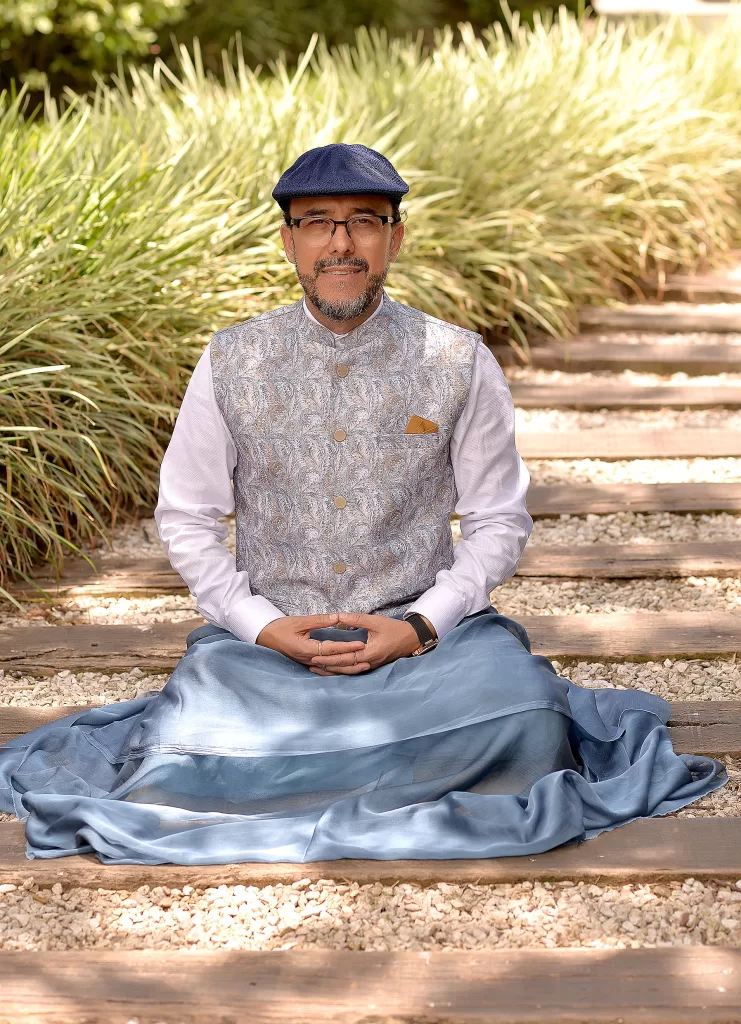
॥ भगवद् गीता ॥ … Bhagavad Gītā … by Acharya Tadany
Chapter 2 – Class 62 –Oct 1, 2026.
Q&A before class
Foundation Texts: The Vedānta Tradition
Acharya Tadany provided an overview of the textual foundation for the upcoming course on Vivekachudamani, confirming that he would share a comprehensive Google Drive link containing all classes and study materials through the WhatsApp group over the weekend.
He explained the hierarchical structure of Vedānta texts, clarifying that the Upaniṣads are the primary Vedānta scriptures, which themselves are derived from the Veda. These texts are classified as śruti, meaning divine revelation that has been transmitted through an unbroken oral tradition across generations. This classification distinguishes them from other philosophical texts and establishes their authority in the tradition.
Tattva Bodha: An Introduction to Vedānta
Acharya Tadany talked about Tattva Bodha as a concise introductory text that serves as an accessible gateway to Vedānta philosophy. While traditionally attributed to Ādi Śaṅkarācārya, Acharya Tadany noted that the actual author remains unknown.
Despite this uncertainty, the text’s value is undisputed—Swami Dayananda Saraswati recognized its pedagogical effectiveness and incorporated it into his teaching curriculum due to its remarkable simplicity and comprehensive presentation of the Vedānta tradition’s core vision. The text efficiently covers fundamental concepts without overwhelming new students, making it an ideal starting point for systematic study.
Summary
Verse 2.46 – The Metaphor of the Well and the Lake
In this class, Acharya Tadany presented a pivotal verse from the second chapter of the Bhagavad Gītā, which Krishna uses to illustrate the relationship between limited worldly pursuits and the infinite fulfillment of liberation. The verse in Sanskrit reads:
यावानर्थ उदपाने सर्वतः संप्लुतोदके ।
तावान्सर्वेषु वेदेषु ब्राह्मणस्य विजानतः ॥
yāvān artha udapāne sarvataḥ samplutodake
tāvān sarveṣu vedeṣu brāhmaṇasya vijānataḥ
To understand the depth of this verse, Acharya Tadany explained the meaning of each Sanskrit term:
- yāvān — as much / whatever
- arthaḥ — use / purpose
- udapāne — in a well of water / in a small pond
- sarvataḥ — everywhere / on all sides
- sampluta-udake — when there is water flooding everywhere / in a large body of water
- tāvān — so much / that much
- sarveṣu — in all
- vedeṣu — in the Vedas
- brāhmaṇasya — for the knower of Brahman / spiritually wise person
- vijānataḥ — of one who truly knows
The Essential Meaning
The verse can be translated as: “For one who truly knows, the utility of all the Vedas is like the utility of a small well when there is abundant water everywhere.”
Acharya Tadany emphasized that this teaching addresses a fundamental question about spiritual life: what is the relationship between worldly pursuits and ultimate liberation?
The Pond and Lake Metaphor Expanded
Krishna uses a vivid and accessible metaphor to convey a profound philosophical truth. Acharya Tadany expanded on this imagery during the class:
Imagine a small well or pond that serves a village’s basic water needs. It provides water for drinking and cooking. For the villagers, this pond has tremendous utility and value.
Now imagine that suddenly the entire region is flooded with abundant water—a vast lake or reservoir appears, water flowing everywhere. In this new situation, does the small pond become useless? Not exactly. Rather, everything the small pond could provide is now available in the vast body of water, i.e., drinking, cooking, bathing, irrigation, and infinitely more.
The crucial insight, as Acharya Tadany explained, is that the finite is included in the infinite, not excluded by it.
The lake doesn’t negate the pond; it encompasses and transcends it. You can still get drinking water, bathing water, irrigation water from the lake— or everything the pond offered—plus you have access to an inexhaustible supply that goes far beyond what the small pond could ever provide.
The Four Puruṣārthas: Human Goals and Their Fulfillment
Acharya Tadany then connected this metaphor to the traditional four goals of human life (puruṣārthas) recognized in Vedic culture:
- Dharma (धर्म) — righteous living, ethical duty, moral law. This represents living in harmony with universal principles and fulfilling one’s social and spiritual responsibilities.
- Artha (अर्थ) — material well-being, wealth, resources, security. This encompasses economic prosperity, physical comfort, and worldly success.
- Kāma (काम) — legitimate desire, enjoyment, pleasure. This includes sensory pleasures, emotional fulfillment, aesthetic enjoyment, and the satisfaction of legitimate human desires within the bounds of dharma.
- Mokṣa (मोक्ष) — liberation, spiritual freedom, ultimate fulfillment. This represents the complete transcendence of all limitation and the realization of one’s infinite nature.
In the metaphor, the small pond represents the first three goals—dharma, artha, and kāma. These are real, valuable, and legitimate pursuits. They provide genuine fulfillment within the finite realm of worldly existence. The vast lake represents mokṣa—infinite, all-encompassing liberation.
The Revolutionary Teaching: Inclusion Rather Than Exclusion
Acharya Tadany emphasized that this verse presents a revolutionary understanding that addresses a common misconception about spiritual life. Many people assume that pursuing mokṣa means renouncing all worldly enjoyment, that spiritual seekers must give up dharma, artha, and kāma entirely. This verse teaches the opposite.
Just as the lake includes everything the pond offers (and more), mokṣa includes all the legitimate fulfillment that dharma, artha, and kāma provide—and infinitely more.
The finite pleasures are not rejected or negated; they are absorbed into and encompassed by infinite fulfillment. When one gains the infinite, one doesn’t lose the finite; rather, the finite is experienced within the context of the infinite.
This understanding transforms one’s entire approach to spiritual practice. It’s not about giving up what is valuable; it’s about gaining something so complete and full that it naturally includes and transcends all partial fulfillments. The effort required for spiritual practice becomes not only worthwhile but deeply attractive—because you’re not being asked to sacrifice genuine happiness, but to exchange limited happiness for unlimited fulfillment.
Practical Application: The Vision That Motivates Sādhana
Acharya Tadany concluded this portion of the class by emphasizing the practical importance of this teaching for spiritual seekers. The vision presented in verse 2.46 provides both inspiration and motivation for the sustained spiritual effort (sādhana) required on the path to liberation.
One should follow dharma, handle artha and kāma properly and legitimately, but not stop there. The Gītā points beyond these finite goals toward mokṣa, the highest fulfillment. Understanding that mokṣa doesn’t exclude but includes all legitimate worldly fulfillment makes the spiritual journey not a path of deprivation but a path of ever-expanding fulfillment.
This vision naturally attracts the sincere seeker and sustains their practice through challenges and obstacles.
The metaphor of the pond and the lake thus becomes not merely a philosophical concept but a living vision that shapes how we approach both our worldly responsibilities and our spiritual aspirations—integrating them rather than seeing them as fundamentally opposed.
Acharya Tadany