Tadany Um refúgio para a alma e um convite à consciência.

By Acharya Tadany
Published in Diário de Santa Maria, August 27, 2026.
For a long time, we imagined that Artificial Intelligence would be just another invention designed to make life easier. First, machines replaced our physical strength. Then, computers accelerated our calculations. Now, AI writes, translates, programs, researches, creates images, analyzes data, and converses with us.
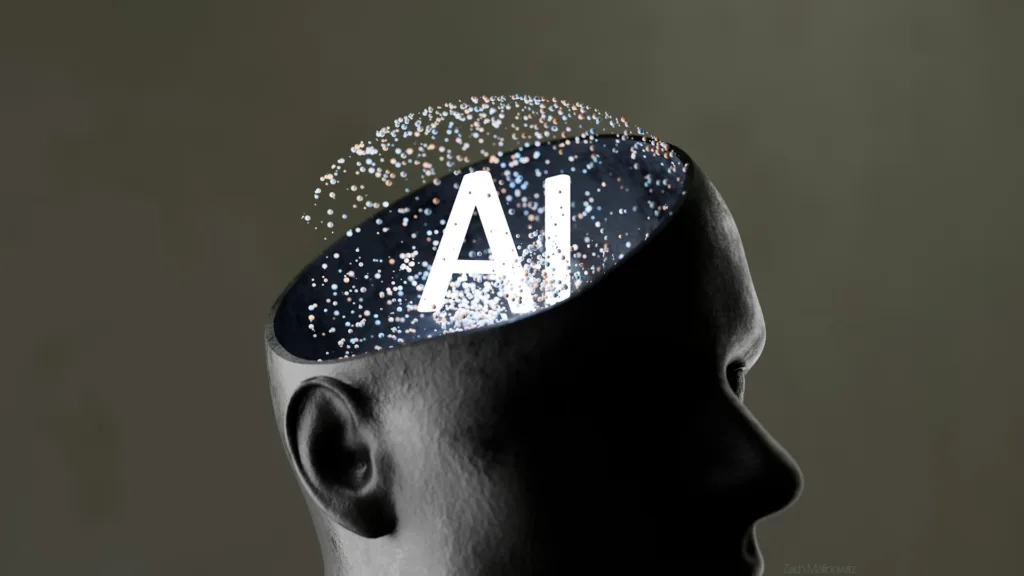
As a result, a deeper question than we anticipated emerges on the horizon: what is Artificial Intelligence revealing about us?
With this in mind, I venture to predict that perhaps AI is less a window into the future of machines and more a mirror of our own attitudes.
Just observe how we use it, for daily we ask AI to write because we do not want to make the effort to organize our own ideas. We seek answers before objectively formulating the questions. We hand problems over to AI before even trying to understand them. In other words, we yearn for speed, synthesis, and efficiency. Meanwhile, we risk confusing having access to an answer with truly understanding something.
I believe this is one of the greatest paradoxes of the new era: we have never had so much access to knowledge, and at the same time, perhaps it has never been so necessary to learn how to think. AI can offer information, compare millions of data points in seconds, find patterns invisible to human eyes, but information is not synonymous with knowledge, and knowledge, in turn, is not necessarily wisdom.
For example, a person may know thousands of facts and still not know how to live. They may receive the best guidance and still make disastrous decisions. They may repeat brilliant concepts without ever reflecting on their meaning.
So, here arises a fundamental difference between intelligence and discernment. The more capable machines become at producing answers, the more important our capacity to evaluate those answers becomes. The more information we have available, the greater the need to distinguish the relevant from the irrelevant, the true from the false, and the essential from the superficial.
Therefore, the illiteracy of the future will not be about knowing how to use AI. Quite the contrary, it will be about using it without developing the capacity to think independently.
This reflection in no way implies rejecting technology, for that would be as absurd as having rejected books because they facilitated access to knowledge. The question is not whether we should use AI, but who we become while using it.
For example, a calculator did not eliminate the need to understand mathematics. A GPS should not eliminate our ability to comprehend the route. Likewise, AI should not replace our capacity to reflect, question, create, and decide.
Thus, I believe the great opportunity lies in using AI to expand our intelligences, but not as an excuse to abandon it.
I say this because, currently, AI poses a fundamental question to us: what, exactly, does it mean to be intelligent?
If intelligence is merely calculating, memorizing, predicting, and combining information, machines are already better. But as human beings, we can ask why we live, we can choose our values, take responsibility for our decisions, transform challenges into learning, knowledge into wisdom, and experience into meaning.
In other words, I believe this is the true hidden gift within this AI revolution: by developing technologies that surpass our basic abilities, we are compelled to look at what we truly are. In this way, AI becomes a mirror, and before it, the crucial question is not how far AI will go, but rather…
As AI advances, how far are we willing to grow, mature, and evolve as human beings?
Acharya Tadany