Tadany Um refúgio para a alma e um convite à consciência.

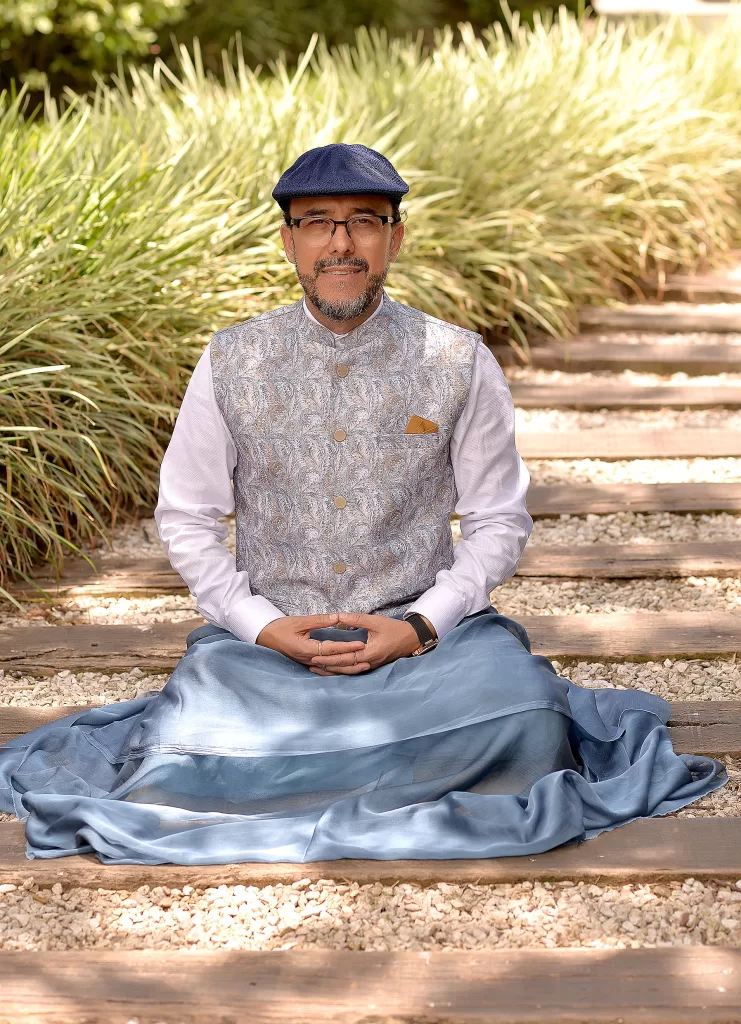
॥ भगवद् गीता ॥ … Bhagavad Gītā …by Acharya Tadany
Chapter 2, Class 58, Sept 4, 2026.
Q&A before class
Child’s Krishna Drawing
Acharya Tadany and Preksha talked about a drawing of Krishna that Preksha’s child had created, and she shared with Guruji, noting its beautiful details including the characteristic blue color and the depiction of Krishna placed upon clouds.
Acharya Tadany shared a touching story about a child who wanted to draw God, using this example to emphasize how children possess a remarkable freedom in their imagination. Unlike adults who are constrained by convention and learned limitations, children can break through boundaries in their understanding of reality, accessing truths that mature minds often overlook or dismiss.
This conversation illustrated how spiritual concepts can be naturally grasped by young minds unburdened by rigid materialism. The innocence and purity of children’s vision allows them to perceive divine reality in ways that are often more direct and unfiltered than adult understanding, which becomes clouded by years of conditioning and material attachment.
Children’s Creativity and Artistry
Acharya Tadany and Preksha explored the remarkable creativity of young children, particularly those below 5-6 years of age, who possess an innate ability to synthesize their observed experiences and spontaneously create new understandings.
Acharya Tadany referenced a famous quote by Picasso: “Every child is an artist. The problem is how to remain an artist once we grow up.” He shared a personal anecdote about his own education, reflecting on how formal schooling can sometimes diminish rather than enhance natural creative and spiritual sensibilities.
This discussion highlighted an important spiritual principle: that fresh, unconditioned perception is often closer to truth than heavily intellectualized understanding. Children’s ability to combine observed elements and create something new mirrors the creative principle of the universe itself. The conversation then gracefully transitioned into a deeper discussion of the Bhagavad Gita’s philosophical teachings, setting the stage for the main lesson on verses 2.42–44.
Reflection & Study Questions
- How does a child’s imagination help them understand spiritual truths that adults often struggle to grasp?
- What conditioning or limitations have you noticed in your own perception as you’ve grown older? Can you identify specific examples?
- Picasso said, “Every child is an artist. The problem is how to remain an artist once we grow up.” How can we preserve childlike creativity and fresh perception while still maturing spiritually?
- In what ways might formal education or social conditioning diminish our natural spiritual sensibilities?
- Reflect on a time when you experienced reality in an unconditioned, fresh way. What allowed that perception to happen?
Summary
Spiritual Growth Class (Verses 2.42–44)
The Problem of Endless Material Projects
Acharya Tadany explained how people often become overwhelmed with multiple projects and activities—constantly adding new commitments, business ventures, and material goals. This pattern leads them to progressively abandon spiritual practices such as attending classes, performing morning rituals, or dedicating time to study and meditation. The class centered on the Bhagavad Gita’s profound teachings about material pursuits versus spiritual growth, specifically focusing on verses 2.42–44.
The Wheel of Saṃsāra: Entering but Never Exiting
Acharya Tadany described how this cycle of constant action creates a metaphorical “wheel” (saṃsāra-cakra) that people enter but struggle to exit. Once caught in this wheel, individuals become trapped in patterns of endless doing, driven by desires for bhoga (sense enjoyment) and aiśvarya (material wealth and power). This entrapment ultimately perpetuates the cycle of rebirth and suffering. The wheel keeps turning, carrying souls through repeated births and deaths, all because they never learned how to step off.
The Āśrama System: Knowing How to Enter and Exit
Acharya Tadany emphasized the crucial distinction between legitimate spiritual activities and purely material pursuits focused on accumulating money and sensory pleasures. He explained the traditional āśrama system (the four stages of life: brahmacarya, gṛhastha, vānaprastha, and sannyāsa) and stressed that true spiritual progress requires not only knowing how to properly enter each life stage, but equally important—and often neglected—knowing how to exit them. Without this wisdom of renunciation and transition, people remain bound to material identification and cannot advance spiritually.
Loss of Viveka and Ethical Decline
The loss of viveka (discriminative wisdom) prevents individuals from recognizing what truly matters, leading to ethical decline and continued bondage. When people become absorbed in endless material projects, their ability to distinguish between what is temporary and what is eternal, between what enslaves and what liberates, gradually deteriorates. This is why the Gītā warns against becoming captivated by flowery language that promises unlimited enjoyment and power through ritual performance alone, without understanding the deeper purpose of spiritual life.
Reflection & Study Questions
- Examine your own life: What “projects” or activities have you accumulated? Which ones support your spiritual growth, and which ones distract from it?
- Have you noticed yourself progressively abandoning spiritual practices as material commitments increased? What pattern led to this?
- What does it mean to “know how to exit” a life stage? Why is this wisdom as important as knowing how to enter it?
- The Gītā warns against being captivated by “flowery language” promising unlimited enjoyment. What modern examples of such language do you encounter in advertising, media, or spiritual communities?
- How can you cultivate viveka (discrimination) in daily life to distinguish between what binds you and what liberates you?
- Reflect on the concept of saṃsāra-cakra (the wheel of birth and death). What specific desires or attachments keep you “on the wheel”?
Noble Models and Karma Yoga
Noble Models and Societal Leadership
Acharya Tadany discussed the importance of having noble models and exemplary figures in life, illustrating how societies often get the government and leadership they deserve. He drew parallels between monarchy and democracy, showing how the quality of leadership reflects the collective consciousness and values of the people. A society focused on material enjoyment and self-centered pursuits will naturally produce leaders who embody those same values.
Karmīs vs. Karma-yogīs: The Distinction
Acharya Tadany explained how materialistic and self-centered people (karmīs—those who work for fruitive results) lack clarity about life’s true priorities and cannot become karma-yogīs (practitioners of spiritual action). Such individuals are characterized by scattered focus—constantly jumping between different projects, business schemes, or even spiritual paths without clear direction or commitment. They are driven by the desire for bhoga (sensory enjoyment) and aiśvarya (material power and prestige), which clouds their judgment and prevents genuine spiritual discrimination.
In contrast, a true karma-yogī works with clear understanding of dharmic priorities, performing actions as an offering rather than for personal gain. The karma-yogī understands the proper goals of life and works systematically toward them, never losing sight of the ultimate destination. Such a person has developed viveka (discrimination) and can distinguish between actions that bind the soul to material existence and actions that lead to liberation.
Acharya Tadany emphasized that without self-knowledge and proper guidance from scripture and qualified teachers, people remain trapped in cycles of material engagement, unable to distinguish between actions that bind and actions that liberate. The materialistic person lacks the focused determination (vyavasāya-ātmikā buddhiḥ—resolute intelligence) mentioned in the Gītā, and instead possesses a consciousness with endless branches (bahu-śākhā), scattered in countless directions by competing desires.
Who Is Qualified for Karma Yoga? (Open Question)
The class concluded with Acharya Tadany introducing an important question for future exploration: Who is qualified to become a karma-yogī? What inner qualities and understanding must one develop to transform ordinary work into spiritual practice? What are the prerequisites for engaging in karma-yoga as a legitimate spiritual path? This topic was left open for continued study in subsequent classes, inviting students to contemplate these questions and prepare for deeper class.
Reflection & Study Questions
- Who are the noble models in your life? How do their examples influence your choices and priorities?
- How does the leadership in your community or society reflect the collective values of the people? Do you see the principle “societies get the leadership they deserve” operating around you?
- Examine your own consciousness: Do you have vyavasāya-ātmikā buddhiḥ (resolute, focused intelligence) or bahu-śākhā (many-branched, scattered) consciousness? What evidence supports your assessment?
- What is the difference between working for results (karmī) and working as spiritual practice (karma-yogī)? Can you identify this distinction in your own daily activities?
- Consider the question Acharya Tadany left open: What inner qualities must you develop to become qualified for karma-yoga? Make a personal list and assess where you currently stand.
- How can you transform your current work or responsibilities into karma-yoga—action as an offering rather than for personal gain?
Acharya Tadany