Tadany Um refúgio para a alma e um convite à consciência.

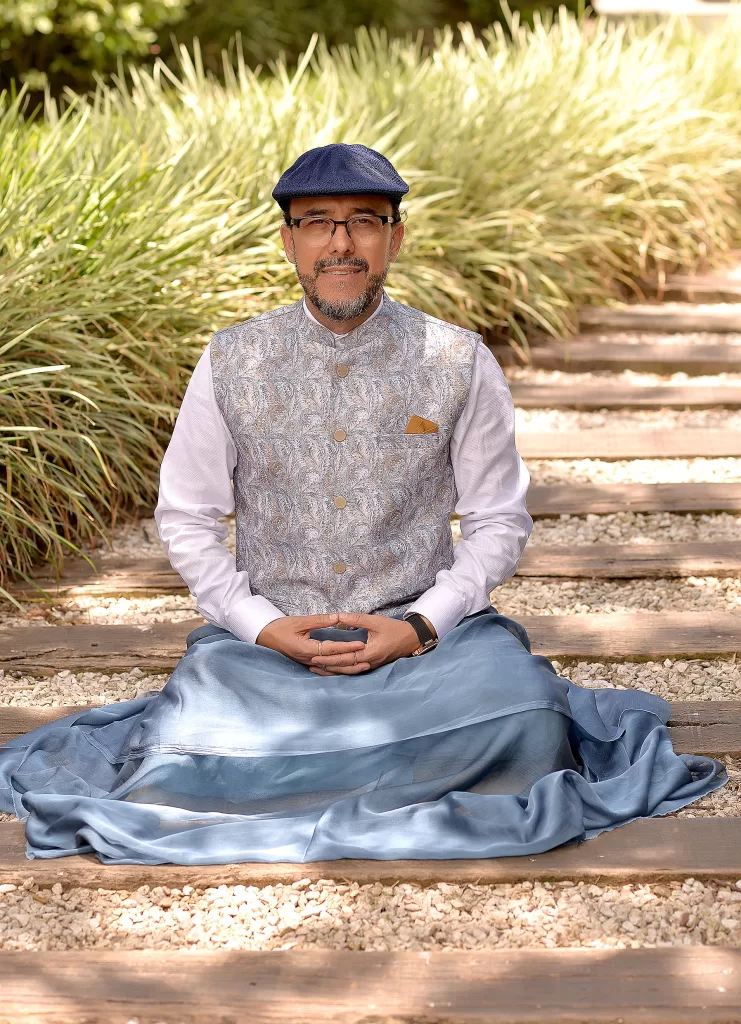
॥ भगवद् गीता ॥ … Bhagavad Gītā … by Acharya Tadany
Chapter 2 – Class 63 – Oct 9, 2026.
Summary
Introduction to Karma Yoga: Actions and Results
Acharya Tadany opened the class by discussing the foundational principles of Karma Yoga from the Bhagavad Gītā, focusing specifically on the relationship between actions (karma) and their results (phala).
He explained that while individuals possess freewill (svātantrya) to choose their actions, they do not have complete control over the outcomes that follow from those actions. This teaching addresses a fundamental tension in human experience: we must act with intelligence, care, and full engagement, yet we must also be prepared to accept results gracefully, regardless of whether they match our expectations or desires.
Acharya Tadany clarified that this principle does not advocate for passivity or carelessness in action; rather, it calls for a mature understanding of causality in which we recognize that outcomes emerge from multiple contributing factors, not solely from our individual effort.
This understanding forms the philosophical foundation for karma-yoga practice, where action is performed with full commitment while the mind remains free from anxious attachment to specific results.
The teaching establishes that spiritual freedom comes not from controlling outcomes—which is impossible—but from cultivating the inner capacity to act skillfully and accept gracefully.
The Principle of Intelligent Action and Graceful Acceptance
Acharya Tadany emphasized the importance of developing both the capacity to perform actions intelligently when we have choices and the capacity to accept results gracefully when we are choiceless.
He explained that this dual capacity—to act wisely and to accept outcomes—is at the very heart of karma-yoga practice and represents a mature spiritual approach to life. The teaching clarifies that having no control over results doesn’t mean acting carelessly, irresponsibly, or without thought; rather, it means doing our absolute best with the knowledge, skills, and resources available to us while remaining mentally prepared for any outcome, favorable or unfavorable.
Acharya Tadany taught that when we have choices—when we can influence the situation through our decisions and actions—we should exercise our intelligence fully, gathering information, considering consequences, and acting with care.
However, once we have done our part, we must recognize that the result belongs to a larger field of causation that includes countless factors beyond our control. At that point, we become choiceless regarding the outcome, and our spiritual work is to accept what comes with equanimity.
This teaching prevents both the paralysis that comes from fear of results and the anxiety that comes from trying to control what cannot be controlled. It cultivates a balanced approach to life where action and acceptance work together harmoniously.
The Voting Analogy: Individual Contribution in Collective Outcomes
To illustrate how individual actions matter significantly even when outcomes depend on many factors beyond personal control, Acharya Tadany used the analogy of voting in elections. He explained that when we vote, we exercise our individual choice and contribute meaningfully to the collective decision-making process, but we cannot control the final election result, which depends on millions of other votes cast by other citizens.
Our individual vote matters and should be cast thoughtfully, with full awareness and consideration of the issues at stake, yet the outcome emerges from the collective will expressed through all votes combined.
This analogy demonstrates beautifully how a karma-yogī should approach action in general: contributing meaningfully and intelligently to any endeavor while accepting that results emerge from multiple causes, conditions, and contributing factors that extend far beyond personal control.
The voting analogy also addresses a common misunderstanding: some people think that if they cannot control the result, their action doesn’t matter, but this is false. Each vote does matter; each contribution makes a difference to the whole.
The teaching is not that individual action is meaningless, but rather that individual action is meaningful within a larger context where many factors converge to produce outcomes. This understanding prevents both the pride that comes from taking sole credit for success and the despair that comes from taking sole blame for failure.
Additional Analogies: Farming and Alphabet Letters
Acharya Tadany provided additional analogies to deepen the students’ understanding of the relationship between action and result, and to show how this principle applies across different domains of life.
He mentioned farming as an example, where a farmer plants seeds and tends crops with great care, skill, and diligence, but the harvest depends not only on the farmer’s effort but also on weather conditions, soil quality, water availability, the absence of pests and diseases, and many other factors beyond the farmer’s control.
The farmer does everything within his or her power—preparing the soil, selecting good seeds, watering appropriately, protecting against pests—but must ultimately accept whatever harvest comes, whether abundant or meager.
This analogy shows that responsible action and graceful acceptance are not contradictory but complementary.
Acharya Tadany also used the example of alphabet letters to illustrate how individual elements contribute to a larger whole while the complete outcome depends on many components working together. Just as a single letter is essential to forming words and sentences, yet cannot create meaning by itself, so too our individual actions are essential contributions to larger outcomes that emerge from multiple causes.
These analogies reinforce the teaching that personal effort is both essential and meaningful, even when we cannot determine final results alone. They help students understand that karma-yoga is not about abandoning effort or becoming passive, but about acting fully while maintaining inner freedom from the tyranny of results.
Q&A after class
Dealing with Political Division: Sandra’s Question
Sandra asked Acharya Tadany for practical advice on how to deal with friends who are experiencing anger, disappointment, and emotional turmoil due to political division in Brazil, particularly around elections.
Acharya Tadany responded with both contextual understanding and practical spiritual guidance. He explained that Brazil’s political polarization is not a recent phenomenon but has deep historical roots, and that such divisions are part of the country’s social and political landscape. He suggested not getting involved in political arguments or heated debates unless one has a direct personal stake in the outcome or unless such involvement serves a clear purpose.
Instead, he recommended focusing on one’s own mental and emotional well-being and accepting that others hold differing views, which they have a right to hold.
Acharya Tadany advised offering emotional support to friends who are unhappy or distressed by political events, being present for them with compassion and empathy, while carefully avoiding getting drawn into aggressive discussions or confrontational exchanges that generate more heat than light.
He taught that if friends specifically ask for advice, one should give honest counsel based on one’s own understanding, but without trying to force others to change their views or conform to one’s own perspective.
Additionally, he recommended praying for friends who are suffering, asking for their peace of mind and well-being.
The key teaching in this response was to maintain compassion and care for others without absorbing their agitation, anxiety, or anger into one’s own mind. This demonstrates how karma-yoga principles apply to social relationships: we act with kindness and offer support (which is within our control), but we accept that others’ emotional states and political views are ultimately beyond our control and not our responsibility to fix.
Understanding Kali Yuga: Preksha’s Question
Preksha asked Acharya Tadany about the concept of Kali Yuga and whether the world is becoming progressively worse, a question that reflects a common concern among spiritually-minded people who observe increasing challenges, conflicts, and apparent deterioration in social, moral, and environmental conditions.
Acharya Tadany responded with a balanced and nuanced perspective, acknowledging that while some people interpret current events and trends as evidence of negative progression and increasing challenges in the world, others hold a different view and see recent decades as potentially marking a transition from Kali Yuga toward more positive periods or cycles.
He explained that different perspectives exist on whether the world is deteriorating or improving, and that both viewpoints have supporting evidence depending on what aspects of reality one focuses on and how one interprets historical patterns.
Some see growing violence, environmental destruction, moral decay, and social fragmentation as signs of deepening Kali Yuga, while others point to increasing global awareness, technological progress that can serve positive purposes, growing movements for justice and equality, and expanding spiritual interest as signs of positive change.
Acharya Tadany’s response suggests that the question of whether we are in Kali Yuga or moving out of it may be less important than how we respond to whatever conditions we find ourselves in. This teaching prevents students from falling into either naive optimism that denies real problems or paralyzing pessimism that sees only deterioration and offers no hope.
The Karma-Yogī’s Focus: Personal Growth Over External Conditions
Acharya Tadany concluded the class by emphasizing that a karma-yogī‘s primary focus should be on personal spiritual growth, inner development, and self-transformation rather than on external conditions, world circumstances, or historical periods beyond one’s control.
He taught that maintaining equanimity (samatva)—mental and emotional balance—regardless of external circumstances is essential for spiritual practice and for living a fulfilling life. This equanimity should be grounded in self-worth, self-confidence, and self-respect, not as ego-based pride but as recognition of one’s inherent value and dignity as a human being worthy of love and respect.
He advised students to be prepared for change and unpredictability in the world, as change is the nature of the empirical universe, and to cultivate the inner flexibility and resilience needed to adapt to changing circumstances while maintaining one’s spiritual center. Most importantly,
Acharya Tadany taught that external world conditions—whether we live in Kali Yuga or any other age, whether society is progressing or declining, whether political circumstances are favorable or unfavorable—should not determine one’s spiritual progress, sense of self-worth, or capacity for inner peace and growth.
The teaching stressed that spiritual practice and inner development can proceed successfully regardless of external historical conditions, as the path of yoga depends primarily on individual effort, sincere commitment, and divine grace, not on external circumstances being perfect or favorable.
This liberating teaching frees students from the paralysis that can come from waiting for ideal conditions and empowers them to begin and sustain spiritual practice here and now, whatever the external situation may be. It also prevents the tendency to blame external conditions for one’s own inner states, placing responsibility and power back in the individual’s hands.
Acharya Tadany