Tadany Um refúgio para a alma e um convite à consciência.

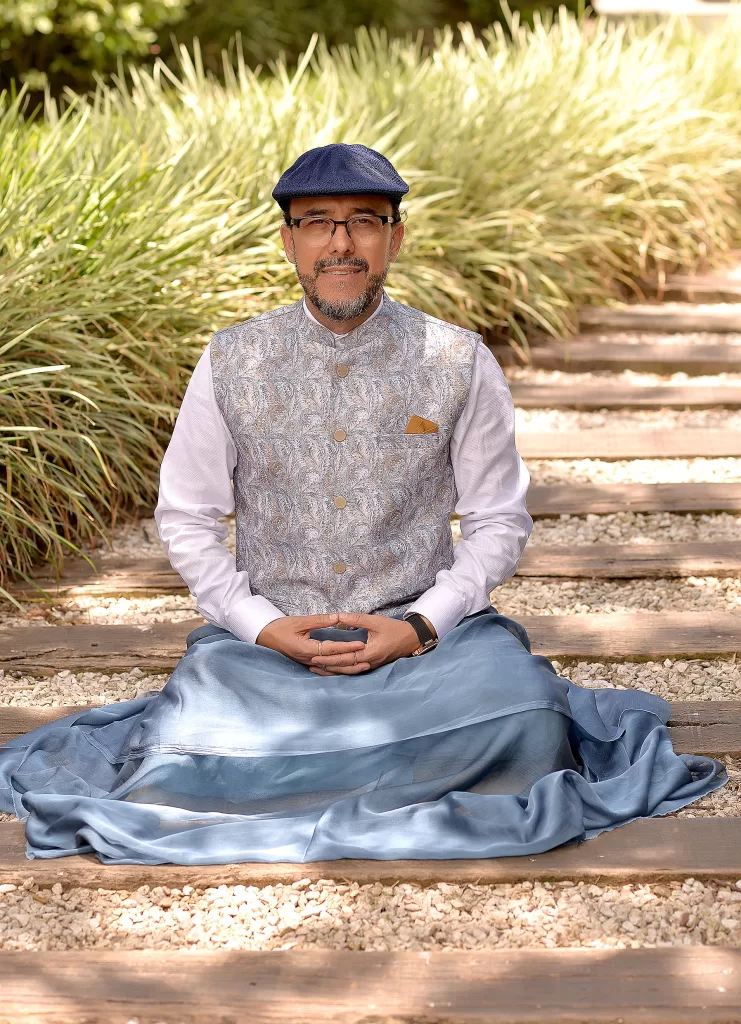
॥ भगवद् गीता ॥ … Bhagavad Gītā … by Acharya Tadany
Chapter 5, Class 200, Oct 8, 2026.
Q&A before class
The Challenge of Applying Spiritual Knowledge
Acharya Tadany and Dipti discussed spiritual practice and the challenges of applying philosophical teachings to daily life.
Dipti openly shared her experience of feeling a gap between knowing spiritual concepts intellectually and practically implementing them in everyday situations, particularly regarding detachment and letting go of problems.
Acharya Tadany mentioned that this is a common challenge faced by spiritual seekers because understanding the philosophy intellectually is relatively easier, but transforming one’s behavior and emotional responses in real-life situations requires sustained effort and practice.
Acharya Tadany advised that patience and persistence are key qualities in spiritual pursuits, especially in Vedānta. The spiritual journey is not about achieving perfection overnight, but about making steady progress over time. He noted that willingness to undergo changes is important in this journey, as growth requires us to let go of old patterns and habits. During the class, he mentioned a recent poem called “The Tug of War” that connects to Vedāntic principles, illustrating the internal struggle that spiritual seekers often face between their higher understanding and their conditioned tendencies.
Understanding the Spiritual Path: Overcoming Saṃskāras and Vāsanās
Acharya Tadany explained the spiritual path in detail, highlighting that while developing initial awareness is the first hurdle, the biggest challenge lies in overcoming saṃskāras (mental impressions from past actions) and vāsanās (deep-rooted tendencies and desires) through consistent meditation and practice. These unconscious patterns drive much of our behavior and emotional reactions, and they can only be gradually weakened and transformed through regular spiritual practice.
He emphasized the importance of Karma Yoga in purifying the mind (citta śuddhi) and developing vairāgya (dispassion toward the fruits of action and worldly attachments). Through Karma Yoga—performing one’s duties without attachment to results—the mind gradually becomes purified, making it fit for higher knowledge. Acharya Tadany encouraged Dipti to focus on patience and persistence rather than seeking perfection, reminding her that spiritual progress is gradual and requires consistent effort. The goal is not to be perfect immediately, but to keep practicing and moving forward steadily.
Dipti acknowledged that while she has experienced some positive changes over the past few years of study and practice, she still struggles with fully implementing the philosophy when facing challenging situations in daily life. This honest reflection shows the common gap between theoretical understanding and practical application that many spiritual seekers experience. The teachings may be clear, but applying them in the heat of the moment—when emotions are strong or circumstances are difficult—requires a deeper level of integration that comes only through continued practice and meditation.
Krishna’s Guidance on Self-Compassion
Acharya Tadany hinted at the 6th chapter of the Bhagavad Gītā where Krishna addresses Arjuna’s mindset and concerns about the spiritual path. He emphasized the importance of being gentle, patient, and kind towards oneself as a significant step towards personal growth on the spiritual path. Krishna teaches that the spiritual seeker should be his or her own friend, not enemy, by treating oneself with compassion and understanding.
This teaching is particularly relevant for students who may be hard on themselves when they struggle to apply Vedāntic principles perfectly. Self-criticism and frustration can actually hinder spiritual progress by creating additional mental disturbance. Instead, self-compassion and patience with one’s own progress are essential qualities for sustainable spiritual development. The path of Vedānta is a journey of gradual transformation, not instant perfection.
Acharya Tadany recommended that Dipti dedicate time to listening to Vedānta classes, particularly focusing on Chapter 2 of the Bhagavad Gītā, as this chapter contains foundational teachings on the nature of the self and Karma Yoga. He advised her to engage in śravaṇam (listening to the teachings) for 15-30 minutes daily, followed by 5-10 minutes of meditation (mananam) on what was taught. The key is to meditate on the teachings by understanding that Vedānta discusses one’s own true nature (ātman)—not external concepts or objects, but the very essence of who we are.
This shift in perspective—recognizing that the teachings point to one’s own essential nature rather than something outside oneself—is crucial for deepening understanding and making the knowledge transformative rather than merely intellectual.
Summary
Sādhana: The Spiritual Practices — Karma Yoga and Jñāna Yoga
The Relationship Between Karma Yoga and Jñāna Yoga as Means and End
A central teaching of this class was the clarification of the relationship between Karma Yoga and Jñāna Yoga. Acharya Tadany explained that these are not two alternative paths from which a seeker can choose according to preference. Rather, they represent a sequential progression in spiritual development—Karma Yoga is the means (sādhanā) and Jñāna Yoga is the end (sādhya) that leads to liberation (mokṣa).
This distinction is crucial because many students mistakenly believe they can choose between practicing Karma Yoga or Jñāna Yoga based on their temperament or inclination. However, the Bhagavad Gītā teaches that Karma Yoga is the preparatory discipline that purifies the mind and makes it fit for receiving the knowledge of Jñāna Yoga.
Without the foundation of Karma Yoga, the mind remains agitated, attached, and impure—unable to properly grasp or assimilate the subtle teachings about one’s true nature.
Karma Yoga: The Preparatory Practice
Karma Yoga, as taught in the Bhagavad Gītā, is the practice of performing one’s duties (dharma) without attachment to the fruits of action. Acharya Tadany indicated that the teachings on Karma Yoga begin in Chapter 2 of the Bhagavad Gītā (from verses 33 or 34 onwards) and continue extensively through the entire Chapter 3. These chapters provide detailed instructions on how to practice Karma Yoga in daily life.
The purpose of Karma Yoga is twofold: first, it brings about citta śuddhi (purification of the mind) by reducing selfish desires, ego, and attachment; second, it develops vairāgya (dispassion) toward worldly objects and outcomes. Through consistent practice of Karma Yoga, the practitioner gradually weakens the hold of saṃskāras (mental impressions) and vāsanās (deep-rooted tendencies) that keep one bound to habitual reactions and worldly pursuits.
Acharya Tadany emphasized that Karma Yoga is not optional or something that can be bypassed. It is the necessary foundation upon which Jñāna Yoga rests. The mind must first be purified through selfless action before it can successfully engage in the pursuit of self-knowledge. This purification process takes time and requires patience, persistence, and willingness to change—qualities that Acharya Tadany repeatedly emphasized during the class.
Jñāna Yoga: The Culmination Leading to Liberation
Once the mind has been adequately purified through Karma Yoga, the seeker becomes qualified for Jñāna Yoga— self-knowledge or wisdom. Jñāna Yoga involves the systematic study of Vedāntic scriptures (śāstra), particularly texts like the Bhagavad Gītā and the Upaniṣads, under the guidance of a qualified teacher (guru). This process includes śravaṇam (listening to the teachings), mananam (reflecting and reasoning upon them), and nididhyāsanam (deep meditation on the truth).
Jñāna Yoga is not mere intellectual study or philosophical speculation. It is the direct inquiry into one’s true nature—the discovery that one’s essential self (ātman) is not the body, mind, or personality, but rather the eternal, unchanging consciousness that witnesses all experiences. This knowledge, when fully assimilated, leads to mokṣa—liberation from the cycle of birth and death, and freedom from all suffering.
Acharya Tadany emphasized that Jñāna Yoga naturally follows Karma Yoga. When practiced correctly, Karma Yoga prepares the ground, and Jñāna Yoga plants the seed of liberating knowledge. The two are inseparable stages in the spiritual journey, not competing alternatives.
The progression is: Karma Yoga (preparatory practice) → Jñāna Yoga (knowledge and inquiry) → Mokṣa (liberation).
Niṣṭhā: The Choice of Lifestyle — Gṛhastha and Sannyāsa
Understanding Niṣṭhā: The Lifestyle Decision
While there is no choice between Karma Yoga and Jñāna Yoga (since they are sequential stages), Acharya Tadany clarified that there is a choice regarding niṣṭhā—one’s lifestyle or way of life.
This choice is between Gṛhastha (the householder life) and Sannyāsa (the renunciate life). Each lifestyle has its own set of duties, responsibilities, and spiritual practices, but both ultimately follow the same progression from Karma Yoga to Jñāna Yoga.
This distinction is important because students sometimes conflate the choice of lifestyle with the choice of spiritual practice. Acharya Tadany emphasized that regardless of which lifestyle one chooses, both require the practice of Karma Yoga appropriate to that lifestyle, followed by Jñāna Yoga. The path to liberation is fundamentally the same; only the external circumstances and specific duties differ.
Gṛhastha: The Householder Path
The Gṛhastha lifestyle involves marriage, family, career, and social responsibilities. For a householder, Karma Yoga means performing all family, professional, and social duties without attachment to the results. This includes earning a livelihood, caring for family members, contributing to society, and fulfilling one’s obligations—all done as an offering to the Divine or as service to dharma, rather than for personal gratification or egoistic gain.
The householder path does not mean abandoning spiritual life or postponing liberation to a future lifetime. Rather, it means integrating spiritual practice into the midst of worldly responsibilities. Through proper practice of Karma Yoga within the householder context, the mind becomes purified over time. When sufficient purification has occurred, the householder then becomes qualified for Jñāna Yoga—the study and inquiry into the nature of the self—which can be pursued while still maintaining household responsibilities.
Many great sages in Indian tradition were householders who achieved liberation while fulfilling their worldly duties. The key is not the external circumstances, but the internal attitude of non-attachment and the dedication to both purification through action and the pursuit of self-knowledge.
Sannyāsa: The Path of Renunciation
Sannyāsa is the lifestyle of formal renunciation, in which one gives up family ties, possessions, and social roles to dedicate oneself entirely to spiritual pursuit. For a sannyāsī (renunciate), Karma Yoga takes a different form—it involves following the disciplines and duties specific to the renunciate order, such as study, teaching, meditation, and service to society through spiritual guidance, while maintaining detachment from personal comfort and recognition.
Even in renunciation, Karma Yoga remains essential. The sannyāsī must practice non-attachment to the fruits of even spiritual activities, must serve without ego, and must follow the dharma appropriate to the renunciate life. Only through this practice does the mind become sufficiently pure and dispassionate to successfully engage in Jñāna Yoga at a deeper level.
After adequate purification through Karma Yoga, the sannyāsī then intensively pursues Jñāna Yoga—often with more time and fewer distractions than a householder might have. However, Acharya Tadany’s teaching makes clear that both paths—householder and renunciate—follow the same fundamental progression: Karma Yoga first purifies the mind, then Jñāna Yoga leads to mokṣa.
Both Paths Lead to Liberation Through the Same Progression
The essential message Acharya Tadany conveyed is that liberation is available to both householders and renunciates. The choice of lifestyle is a personal decision based on one’s temperament, circumstances, and inner calling. What is not a choice, however, is the need for both Karma Yoga and Jñāna Yoga. Both lifestyles require:
- First, the practice of Karma Yoga appropriate to one’s chosen lifestyle and duties
- Second, the pursuit of Jñāna Yoga once the mind has been adequately purified
- Finally, the attainment of mokṣa through the full assimilation of self-knowledge
This teaching liberates students from the misconception that one must become a sannyāsī to achieve liberation, or conversely, that householders are somehow second-class spiritual seekers. Both paths are equally valid when practiced with dedication, proper understanding, and guidance from the scriptures and a qualified teacher.
Acharya Tadany