Tadany Um refúgio para a alma e um convite à consciência.

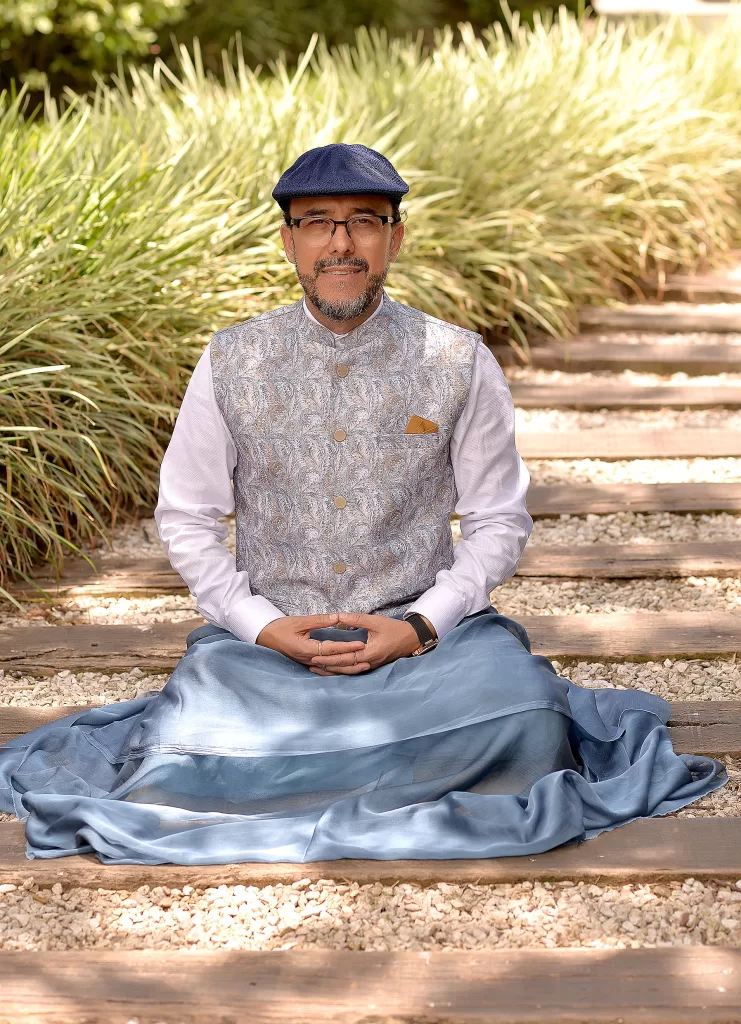
॥ भगवद् गीता ॥ … Bhagavad Gītā … Chapter 6 – By Acharya Tadany
Class 231, Aug 25, 2026.
Summary
The Context: Arjuna’s Doubt and Krishna’s Compassionate Response
Understanding the Foundation of This Class
Before diving into the specific topics covered in this class, it is essential to understand the foundational context that gives rise to this entire teaching. What Acharya Tadany explained in this class — the twofold benefits of Vedānta study, the fate of yoga bhraṣṭas, the guaranteed outcomes, and the equivalence of śāstra śravaṇam to Vedic rituals — is not abstract theory.
Rather, it is Krishna’s direct, compassionate response to a profound doubt raised by Arjuna in the Bhagavad Gita.
Arjuna’s Pessimistic Doubt
In Chapter 6 of the Bhagavad Gita (verses 37-39), after Krishna has explained the path of meditation and self-knowledge in great detail, Arjuna raises a troubling question that reflects a deep anxiety common to all spiritual seekers. Arjuna asks, in essence: “What happens to the person who begins the spiritual path with faith (śraddhā) but fails to achieve liberation? What is the fate of someone who starts the journey toward mokṣa but does not complete it in this lifetime?”
Arjuna’s question reveals a pessimistic doubt — he does not seem to believe that he (or any ordinary person) can attain mokṣa in this life. He worries that such a person, having invested tremendous effort in spiritual practice but not reaching the final goal, will end up with nothing — neither worldly success (since they renounced it) nor spiritual achievement (since they didn’t complete the path).
Arjuna compares this situation to a cloud that breaks apart in the sky, disappearing without reaching anywhere — falling from both the worldly path and the spiritual path, left without support in either realm.
This doubt is not unique to Arjuna. It reflects a universal human anxiety: “What if I’m not good enough? What if I don’t make it? Will all my effort be wasted?” This fear can paralyze spiritual seekers and prevent them from fully committing to the path.
Krishna’s Response: The Teaching of Guaranteed Progress
Krishna’s response (Bhagavad Gita 6.40-45) is one of the most reassuring and compassionate teachings in the entire scripture. He directly addresses Arjuna’s fear and completely dismantles it with absolute clarity:
“Pārtha naiveha nāmutra vināśas tasya vidyate” — “O Arjuna, neither in this world nor in the next is there destruction for such a person.”
Krishna then explains in detail:
- The spiritual seeker who does not complete the journey in this life accumulates tremendous puṇyam (spiritual merit) through sincere practice
- This puṇyam leads to svargaloka (heavenly realms) where the person enjoys the fruits of their spiritual efforts
- After exhausting the merit in heaven, the person is reborn in exceptionally favorable circumstances, i.e., in a prosperous and cultured family (śrīmān yoginām kule)
- In this new life, the spiritual impressions (saṁskāras) and qualifications from the previous life remain intact and continue to develop
- The person naturally gravitates back to the spiritual path and continues the journey, often with accelerated progress
- Eventually, through continued sincere effort across lifetimes, mokṣa is guaranteed.
Krishna emphasizes that no sincere spiritual effort is ever lost. The universe operates according to precise karmic law, and every step taken toward self-knowledge is permanently recorded and honored.
Why This Context Is Critical
Understanding this context — which was emphasized by Acharya Tadany in both this class and the previous class — is absolutely essential for properly understanding all the topics that follow:
The Two Types of Benefits from Studying Vedānta (Kr
Acharya Tadany began the teaching by explaining that studying Vedānta texts like the Bhagavad Gita yields two distinct types of benefits, known as phalam (fruits or results). These benefits depend on the qualifications and readiness of the student:
- Mukhya Phalam (Primary Benefit): This is the direct and highest benefit—self-knowledge or ātma-jñānam. For students who possess the necessary qualifications (sādhana-catuṣṭaya-sampatti), serious study of the śāstras leads directly to the realization of one’s true nature as the self (ātmā), which results in mokṣa (liberation from the cycle of birth and death). This is the ultimate goal of Vedānta study.
- Avāntara Phalam (Secondary Benefit): For those who are not yet fully qualified for self-knowledge, the study still produces significant benefit in the form of puṇyam (spiritual merit). This merit accumulates through the sacred act of listening to and contemplating the teachings (śāstra śravaṇam), and it leads to svargaloka (heavenly realms) after death, where one enjoys the fruits of their spiritual efforts before being reborn in favorable circumstances.
Understanding the Primary Benefit (Mukhya Phalam):
The primary benefit of Vedānta study is ātma-jñānam—direct knowledge of the self. This is not mere intellectual understanding but a transformative realization that “I am not the body, mind, or individual personality, but rather the infinite, unchanging consciousness (brahman) that underlies all existence.” This understanding completely destroys ignorance (avidyā) and ends the cycle of birth, death, and rebirth (saṁsāra).
However, this primary benefit is available only to qualified students. The qualifications required are collectively called sādhana-catuṣṭaya-sampatti (the fourfold qualification), which includes:
- Viveka (discrimination) — the ability to distinguish between the eternal and the temporary, the real and the unreal
- Vairāgya (dispassion) — detachment from worldly pleasures and results, both in this life and in heaven
- Ṣaṭ-sampatti (six-fold wealth) — including mental calmness (śama), sense control (dama), withdrawal from distractions (uparati), endurance (titikṣā), faith (śraddhā), and concentration (samādhāna)
- Mumukṣutva (intense desire for liberation) — a burning aspiration to be free from the limitations of individual existence.
When a student with these qualifications studies Vedānta under a qualified teacher, the teaching acts as a pramāṇa (valid means of knowledge) that directly reveals the nature of the self. This knowledge is immediate and transformative, leading to mokṣa.
Understanding the Secondary Benefit (Avāntara Phalam):
For students who do not yet possess complete qualifications, the study of Vedānta still yields tremendous benefit in the form of puṇyam (spiritual merit). The very act of engaging with sacred knowledge—listening to teachings (śravaṇam), reflecting on them (mananam), and contemplating them (nididhyāsanam)—is considered a sacred activity that purifies the mind and accumulates positive karma.
This puṇyam has several important effects:
- It leads to svargaloka (heavenly realms) after death, where the individual enjoys the fruits of their spiritual efforts in the form of happiness, peace, and refined experiences
- After exhausting the merit in svargaloka, the individual is reborn in favorable circumstances—in families and environments that support continued spiritual growth
- The accumulated puṇyam gradually develops the qualifications (adhikāritva) needed for self-knowledge in future lifetimes
- It creates positive mental impressions (saṁskāras) that make spiritual practices easier and more natural in subsequent lives.
Acharya Tadany emphasized that this secondary benefit is not inferior or less valuable—it is the natural stepping stone toward the primary benefit. Every student is on a continuous journey, and accumulating puṇyam through sincere study is an essential part of preparing oneself for eventual liberation.
Attending Gita Classes: Equivalent to Vedic Rituals
Acharya Tadany emphasized an important and encouraging point for students: attending Bhagavad Gita classes provides spiritual benefits equivalent to performing elaborate Vedic rituals (yajñas and yāgas). This is a profound teaching that validates the spiritual value of regular study and creates confidence in the path of knowledge.
The Traditional Value of Vedic Rituals:
In the Vedic tradition, rituals such as yajñas (fire ceremonies) and yāgas (highly elaborated rites) have been performed for thousands of years to accumulate puṇyam and gain divine blessings.
These rituals require significant resources—materials, priests, time, and proper knowledge of complex procedures. They produce powerful results, including entry into svargaloka (heavenly realms), material prosperity, health, and spiritual merit.
However, in the current age (Kali Yuga), performing these elaborate rituals correctly has become increasingly difficult for most people due to lack of resources, qualified priests, and proper understanding of the intricate procedures.
Śāstra Śravaṇam as an Equivalent Path:
The Vedānta tradition teaches that śāstra śravaṇam—the systematic study of sacred texts like the Bhagavad Gita under a qualified teacher—produces benefits equal to or even greater than these elaborate rituals. This is because:
- The knowledge contained in these texts is itself the highest yajña (sacrifice of ignorance in the fire of knowledge)
- Listening to teachings with faith (śraddhā) and attention purifies the mind and accumulates tremendous puṇyam
- Unlike material rituals that produce temporary results, knowledge-based practices develop lasting inner transformation
- The Bhagavad Gita itself declares (4.33): “śreyān dravyamayād yajñāj jñāna-yajñaḥ” — “The sacrifice of knowledge is superior to the sacrifice of material objects”
Guaranteed Minimum Benefit:
Acharya Tadany assured students that even if one does not immediately attain mokṣa through study, the minimum guaranteed outcome is the accumulation of puṇyam sufficient to gain entry into svargaloka. This means that no sincere student leaves empty-handed. Every class attended, every teaching absorbed, and every moment spent in contemplation of these sacred truths contributes to one’s spiritual bank account.
This teaching should inspire great confidence and enthusiasm in students. Simply by showing up regularly, listening with an open heart, and making sincere effort to understand, one is performing a sacred ritual whose benefits are assured—either immediate liberation (best case) or guaranteed spiritual progress and heavenly rewards (minimum case).
Practical Implications for Students:
This understanding should motivate students to:
- Attend classes regularly with the understanding that each class is itself a sacred ritual
- Approach the study with reverence and seriousness, recognizing its profound spiritual value
- Let go of anxiety about “getting” mokṣa immediately, trusting that sincere effort will never be wasted
- Appreciate that even if one’s understanding seems incomplete, the very act of engaging with the teachings is transforming the mind and accumulating merit
The Fate of Yoga Bhraṣṭas (Those Who Could Not Attain Liberation)
An important question addressed in this class was: What happens to sincere spiritual seekers who do not attain mokṣa in their current lifetime? These individuals are called yoga bhraṣṭas—literally “those who have fallen from jñāna yoga” or those who did not complete their spiritual journey in one lifetime.
A Common Fear Among Spiritual Seekers:
Many sincere students harbor a subtle fear: “What if I invest all this time and effort in spiritual practice but don’t achieve liberation in this lifetime? Will all my effort be wasted? Will I be thrown back into ordinary worldly existence and lose all my spiritual progress?” This fear can create anxiety and even discourage people from pursuing the spiritual path seriously.
Acharya Tadany addressed this fear directly by explaining the fate of yoga bhraṣṭas as taught in the Bhagavad Gita (Chapter 6, verses 37-45). The teaching is profoundly reassuring and eliminates this anxiety completely.
The Divine Safety Net: No Spiritual Effort Is Ever Lost:
Acharya Tadany explained that sincere spiritual seekers are never spiritually lost. The universe operates according to the law of karma, which is absolutely precise and fair. Every sincere effort made toward self-knowledge is recorded as puṇyam (spiritual merit) and creates positive saṁskāras (mental impressions) that cannot be destroyed. This accumulated merit ensures that the spiritual journey continues seamlessly across lifetimes.
Two Types of Favorable Rebirth:
Due to the puṇyam accumulated through sincere study and practice, yoga bhraṣṭas will be reborn in these favorable situations:
- In a prosperous and cultured family (śrīmān kule): They will be born into a wealthy, educated, and cultured family with access to spiritual knowledge and qualified teachers. Such families typically value education, have refined values, and provide an environment conducive to spiritual pursuits. Material comfort removes obstacles like poverty and struggle, allowing the individual to focus on spiritual growth from an early age.
- In a family of wise yogis (yoginām kule): They will be born into a family of spiritual practitioners—such as a family of teachers, monks, or dedicated seekers. In such an environment, spiritual practice is woven into daily life from childhood. The individual is naturally exposed to meditation, sacred texts, devotional practices, and spiritual values as a normal part of their upbringing.
The Continuity of Spiritual Progress:
In both cases, these individuals carry forward several crucial advantages:
- Retained saṁskāras: The mental impressions and spiritual conditioning from previous practice remain in the subtle body (sūkṣma śarīra) and express themselves as natural inclinations, talents, and attractions toward spiritual topics. This is why some children show remarkable spiritual maturity or interest in philosophy from a very young age—they are continuing a journey begun in previous lifetimes.
- Better qualifications (adhikāritva): The qualifications for self-knowledge that were partially developed in the previous life continue to develop more easily in the new life. Practices that seemed difficult before become more natural. Understanding that seemed elusive becomes clearer.
- Natural attraction to the path: Yoga bhraṣṭas often feel an inexplicable but strong pull toward spiritual teachings, meditation, or the company of wise people. This inner calling is the continuation of their unfinished journey.
- Accelerated progress: Because they are picking up where they left off (with accumulated merit and impressions), their spiritual progress in the new life is often faster than it was in the previous life. They may achieve in a few years what took decades before.
The Bhagavad Gita’s Assurance:
The Bhagavad Gita explicitly addresses this concern. In Chapter 6, Arjuna asks Krishna: “What happens to the person who begins the spiritual path with faith but fails to achieve perfection? Does he perish like a broken cloud, without support, having fallen from both worldly success and spiritual attainment?”
Krishna responds with absolute clarity and compassion: “Pārtha naiveha nāmutra vināśas tasya vidyate” — “O Arjuna, neither in this world nor in the next is there destruction for such a person.” He goes on to explain that the person attains heavenly realms and then is reborn in favorable circumstances to continue the spiritual journey.
Practical Reassurance for Students:
This teaching should completely eliminate spiritual anxiety and replace it with confidence and patience. Students should understand:
- Every sincere effort counts and accumulates, even if results are not immediately visible
- There is no time pressure to “achieve” mokṣa in this lifetime—the journey is guaranteed to continue
- Even incomplete practice yields tremendous benefit and sets up the next life for continued progress
- The spiritual path is the safest investment one can make—unlike worldly pursuits that can be destroyed by time, circumstances, or death, spiritual merit is permanent and carries forward
Therefore, students should approach their study with dedication and sincerity, free from anxiety about outcomes, trusting in the perfect functioning of the universal law of karma.
The Best and Minimum Outcomes of Vedānta Study
Acharya Tadany provided a clear framework for understanding the range of possible outcomes from studying Vedānta, which helps students set realistic expectations and appreciate the value of their practice regardless of immediate results.
The Best Outcome: Mokṣa (Complete Liberation)
- Best outcome: Mokṣa—complete liberation through self-knowledge.
The highest possible outcome of Vedānta study is mokṣa—complete and permanent liberation from the cycle of birth, death, and rebirth (saṁsāra). This occurs when a qualified student, through systematic study under a competent teacher, gains direct knowledge of their true nature as the infinite, unchanging self (ātmā or brahman).
Mokṣa is characterized by:
- Complete freedom from suffering: All forms of psychological suffering—fear, anxiety, desire, anger, jealousy, grief—are permanently eliminated because their root cause (misidentification with the limited body-mind) is destroyed
- End of rebirth: The individual is no longer subject to compulsory rebirth. The cycle of saṁsāra ends permanently
- Infinite fullness: The person recognizes themselves as already complete and whole, lacking nothing. All sense of inadequacy or need vanishes
- Abiding peace: A permanent state of peace (śānti) that is independent of external circumstances
- Freedom in life: The liberated person (jīvanmukta) continues to live and function in the world but is no longer bound by it. They act with complete freedom, without compulsion or inner conflict
This outcome is available to those who possess the necessary qualifications and engage seriously with the teachings. It is not a distant, mythical goal but a real possibility for earnest seekers.
The Minimum Outcome: Puṇyam and Svargaloka
- Minimum outcome: Puṇyam leading to svargaloka, followed by rebirth in favorable circumstances to continue spiritual progress.
For those who do not yet possess complete qualifications, or who have not had sufficient time or circumstances to complete the journey in this lifetime, the minimum guaranteed outcome is still extraordinarily valuable:
- Accumulation of puṇyam: Every class attended, every teaching contemplated, and every sincere effort made accumulates spiritual merit. This puṇyam is like a spiritual savings account that never loses value and compounds over lifetimes
- Entry into svargaloka: After death, the accumulated puṇyam takes the individual to heavenly realms where they experience the fruits of their spiritual efforts in the form of peace, happiness, and refined experiences. This is not the ultimate goal, but it is a valuable interim stage
- Favorable rebirth: After the merit in svargaloka is exhausted, the individual is reborn in circumstances that support continued spiritual growth—either in prosperous, cultured families (śrīmān kule) or in families of spiritual practitioners (yoginām kule)
- Continued progress: In the new life, the individual retains subtle impressions (saṁskāras) and qualifications from previous practice, allowing them to pick up the spiritual journey where they left off, often with accelerated progress
No Possibility of Spiritual Loss:
What is crucial to understand—and what makes this framework so reassuring—is that there is no downside to sincere spiritual effort. Unlike worldly pursuits where investment can be completely lost, spiritual practice has a guaranteed minimum return. The worst-case scenario for a sincere student is still tremendously positive:
- Heavenly enjoyment followed by favorable rebirth
- Retained spiritual progress and accumulated merit
- Better circumstances and qualifications in the next life
- Continued advancement toward the ultimate goal
A Range of Intermediate Outcomes:
Between these two poles—immediate mokṣa and minimum puṇyam—there exists a wide range of intermediate benefits that students may experience even in this lifetime:
- Mental peace and clarity: Reduced anxiety, better emotional regulation, and increased mental calmness
- Improved discernment: Better ability to distinguish between what is essential and what is superficial in life
- Reduced suffering: Even partial understanding of Vedānta teachings significantly reduces psychological suffering
- Deeper self-awareness: Growing recognition of one’s patterns, motivations, and true nature
- Value reorientation: Natural shift away from purely material pursuits toward more meaningful goals
- Development of qualifications: Gradual development of discrimination (viveka), dispassion (vairāgya), and other qualifications needed for self-knowledge
Living with Confidence on the Path:
This framework ensures that every student who engages sincerely with Vedānta teachings is progressing on the spiritual path, whether the progress manifests as immediate liberation or gradual advancement over lifetimes. This understanding should inspire:
- Confidence: Trust that sincere effort will never be wasted
- Patience: Freedom from anxiety about “achieving” results on a particular timeline
- Consistency: Motivation to maintain regular practice regardless of immediate results
- Gratitude: Appreciation for whatever level of understanding and benefit one is currently experiencing
- Long-term perspective: Recognition that spiritual development is a journey that may span multiple lifetimes, and every step counts
Students should remember: the goal is guaranteed for sincere seekers—it’s only a question of when, not if. The universe supports all genuine spiritual effort, and the teachings themselves create the conditions for their own fulfillment.
Acharya Tadany