Tadany Um refúgio para a alma e um convite à consciência.

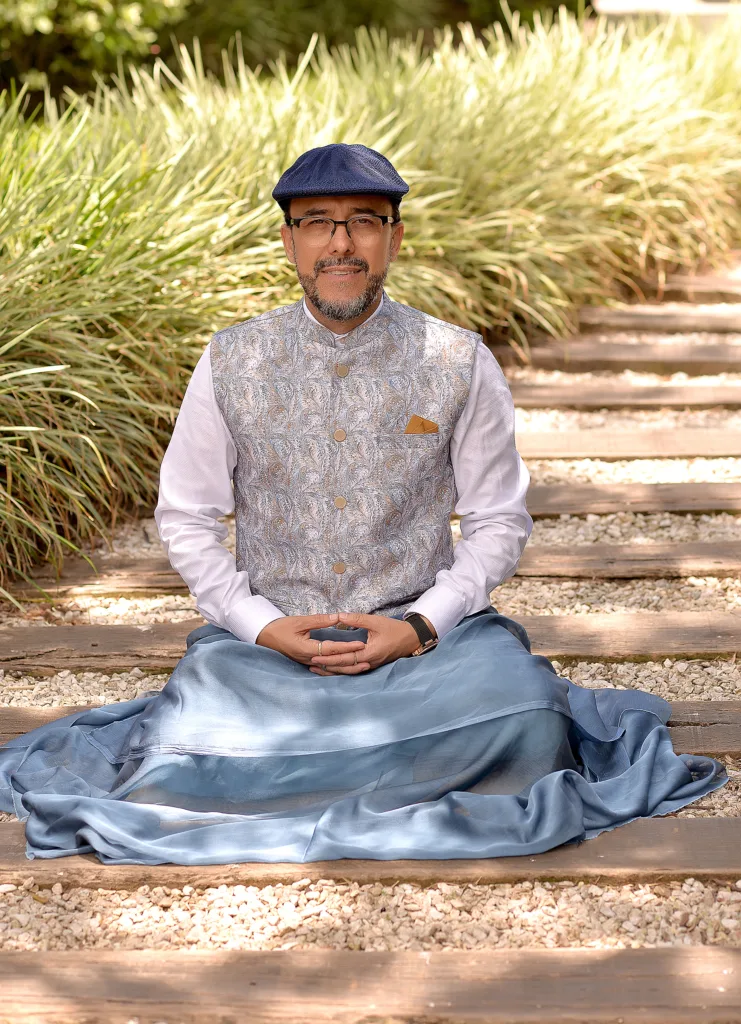
Vivekacūḍāmaṇi – Class 130, by Acharya Tadany
The Self-Evident Nature of Consciousness and the Hierarchy of Its Manifestation
July 29, 2026
Q&A – Before Class: The Self-Evident Nature of Consciousness (Ātman)
The session began with a question from Dipti, who asked what it means for the Self (ātman) to be “evident” in the waking state.
Acharya Tadany explained that consciousness is self-evident (svayaṃsiddha), meaning it does not require any external means or instruments to validate its existence. Unlike objects that need perception or inference, consciousness is the constant witness that illuminates all experiences—physical sensations (hunger, thirst, fatigue), emotional states (happiness, sadness, anger), and intellectual conditions (knowledge, doubt, ignorance).
The Unchanging Witness vs. Changing Body-Mind Complex
Acharya Tadany emphasized the fundamental distinction between the witness consciousness and the objects it witnesses. While the body undergoes continuous transformation—from childhood (kaumāra) through youth (yauvana) to old age (jarā)—the consciousness principle (dehī or ātman) remains unchanged and eternal.
This was illustrated through Bhagavad Gītā verse 2.13:
“dehino ‘smin yathā dehe kaumāraṃ yauvanaṃ jarā”
(Just as the embodied soul continuously passes through childhood, youth, and old age in this body).
The problem of spiritual seekers is misidentification—identifying with the changing body (“I am tired,” “I am hungry”) rather than recognizing the unchanging witness.
Summary: Consciousness as Illuminator – Vivekacūḍāmaṇi Verse 127
The core teaching focused on verse 127 from Śaṅkarācārya’s Vivekacūḍāmaṇi:
“yaḥ paśyati svayaṃ sarvaṃ yaṃ na paśyati kaścana / yaś cetayati buddhyādi na taṃ yaṃ cetayati”
Acharya Tadany explained that ayam (this consciousness, this ātman) illuminates everything without requiring any external instrument.
Consciousness Illuminates Without Instruments
The first line establishes that consciousness is “yaḥ svayaṃ sarvaṃ paśyati”—that which illuminates everything by itself, without assistance.
The teacher drew a crucial contrast: the mind requires instruments to know anything. To hear this class, you need ears; to see the text, you need eyes; to smell fragrances, you need the nose; to know textures, you need the sense of touch. Each sense organ (jñānendriya) operates within its specific domain—eyes cannot hear sounds, ears cannot see colors, the nose cannot taste. Knowledge in the mind depends on employing the correct instrument for the appropriate object.
However, consciousness illuminates whatever happens in the mind without requiring any instrument whatsoever. This is the meaning of svayam—by itself, without external assistance.
Consciousness Can Never Be an Object
The second line states that nothing can illuminate consciousness: “yaṃ na paśyati kaścana”—which no one perceives, which nothing knows.
Consciousness is ever the subject, never the object. It is always the experiencer, never the experienced; always the witness, never the witnessed. This makes the study of consciousness extraordinarily difficult, even impossible from a purely empirical standpoint.
Why Science Cannot Objectify Consciousness
Acharya Tadany addressed the limitations of scientific approaches to studying consciousness. Science requires objects that can be perceived, measured, analyzed, and studied through instruments. However, consciousness is never available as an object of perception, inference, or any other means of empirical investigation. Even with the most sophisticated microscopes or telescopes, you cannot “see” consciousness itself, because consciousness is not an object—it is the eternal subject.
Scientists study the brain, neurons, synapses, neural networks, and particles, believing they are studying consciousness. But Vedānta clarifies that these are all inert objects (jaḍam, acetana) through which consciousness manifests. The brain is not consciousness; neurons are not consciousness; particles are not consciousness. They are inert instruments or media (upādhi) through which consciousness becomes manifest. If you remove the medium (the brain), consciousness is no longer available for study through that particular medium, but consciousness itself remains unchanged and independent.
The teacher explained that many scientists and scholars send him articles to review, asking for validation of their theories about consciousness. While their intentions are good, they lack the background in Vedānta and śabda pramāṇa (verbal testimony as a valid means of knowledge) necessary to understand this subject. Science misses the essential point: consciousness is not a product, property, or part of the brain; it is not produced by neurological phenomena. Consciousness is an independent entity that uses the brain as a medium for manifestation.
The Mind as the Borrower and Lender of Consciousness
Śaṅkarācārya states in the verse: “yaś cetayati buddhyādi”—that which enlivens the intellect (buddhi) and so forth.
The ātman lends consciousness to the mind (antaḥkaraṇa), which has a special capacity to borrow consciousness. But why can the mind borrow consciousness while other objects like clips, cases, or water cannot?
Acharya Tadany used the analogy of electricity: when electricity passes through a tungsten filament, the filament glows; but when the same electricity passes through water, the water doesn’t become bright. Both are material substances, but the tungsten filament has an intrinsic nature that allows it to manifest brightness, while water does not.
Similarly, the mind is material (jaḍam by nature), but it possesses a unique intrinsic capacity to borrow consciousness from ātman. This makes the mind a “secondary source” of consciousness—like a retail agent. Just as you can buy a book directly from the factory (the original source) or from a bookstore (a retail agent), consciousness is available at its original source (ātman) and through the retail agent (the mind). The mind borrows consciousness and becomes a live, sentient mind capable of knowing and perceiving.
The Three-Tier Hierarchy: Ātman → Mind → Body
Acharya Tadany outlined the complete structure of how consciousness flows through different levels:
| Level | Role | Description |
|---|---|---|
| 1. Ātman | Original Sentient Source | The original, eternal consciousness (caitanya) |
| 2. Mind | Secondary Source / Retail Agent | Borrows from ātman and lends to the body; becomes sentient (cetana) |
| 3. Body | Tertiary Borrower | Receives consciousness from the mind, making the body alive and sentient |
Importantly, consciousness stops at the body level. Beyond the body, no object can borrow consciousness. The teacher used a humorous example: if your dress could borrow consciousness, it would have its own moods and preferences—”I don’t want to leave home today,” or “You don’t look good today, I don’t want to be worn.” Objects like clothes, though connected to the body, cannot borrow consciousness. This transmission stops at the boundary of the living body.
Not All Parts of the Body Borrow Consciousness
Even within the body, not every part borrows consciousness. Hair provides a clear example: though the roots are embedded in the skin and connected to the body, hair itself is inert (jaḍam). How do we know? When you get a haircut, there is no pain. If hair were conscious, cutting it would be painful, and every haircut would be traumatic. The same applies to nails—you can trim them without any sensation. This demonstrates that even within the body, only certain parts are sentient, while others remain inert.
The skin, on the other hand, has borrowed consciousness, which is why cutting the skin is painful and requires anesthesia during surgery. This selective borrowing of consciousness within the body demonstrates the precise and limited nature of how consciousness manifests through physical structures.
The Dead Body and the Necessity of the Mind as Medium
A crucial question arose: if ātman is all-pervading, why is a dead body still dead?
Acharya Tadany clarified that while consciousness is indeed all-pervading (sarvagata), the dead body lacks the necessary intermediary—the mind. The body does not have the capacity to borrow consciousness directly from ātman. The body can only borrow consciousness through the mind.
When death occurs, the subtle body (sūkṣma śarīra), which includes the mind, departs from the physical body. Without the mind to serve as the medium, the body cannot access consciousness, even though ātman is omnipresent.
The teacher jokingly imagined a factory that could manufacture minds like tungsten filaments for light bulbs—then you could simply replace the departed mind with a new one and reanimate the dead body. This is actually the premise of many movies and even appears in the Purāṇas, where certain yogis possess the power to transfer the mind from one body to another. However, even in such cases, the analysis reveals that if you transfer a mind from one living body to a dead body, the previously dead body becomes alive, but the original body becomes dead. Consciousness itself is not created or destroyed; it simply manifests or ceases to manifest depending on the presence or absence of the appropriate medium.
Ātman as Ever the Lender, Never the Borrower
The verse concludes: “na taṃ yaṃ cetayati”—but nothing enlivens that (the ātman). This is the final establishing statement.
Ātman lends consciousness to everything in manifestation, but nothing lends consciousness to ātman. Ātman is not like a bank that borrows from some sources and lends to others, making profit in between. Ātman is:
- Ever the lender, never the borrower
- Ever the subject, never the object
- Ever the experiencer, never the experienced
- Ever the illuminator, never the illuminated
This teaching establishes the absolute independence and supremacy of consciousness. Ātman is self-existent, self-evident, self-luminous, and self-complete. It does not depend on anything for its existence or its capacity to illumine. Everything else depends on it, but it depends on nothing.
Q&A After Class: Different Capacities of Different Media
The class concluded with a question from H about whether animal brains can also serve as media for consciousness.
Acharya Tadany confirmed that yes, any brain—human or animal—can serve as a medium for consciousness. However, the levels of consciousness manifested are limited or expanded based on the intrinsic capacity of each medium. A human brain has the capacity to listen to Vedānta teachings, contemplate subtle philosophical truths, and assimilate this knowledge for liberation. A dog’s brain, while also serving as a medium for consciousness, has limited capacity and cannot engage with such refined and abstract teachings.
This demonstrates an important Vedāntic principle: while the consciousness principle (caitanya, ātman) is universal and identical in all beings, its manifestation is conditioned by the nature and capacity of the medium through which it operates. The same sun shines on all objects, but different objects reflect that light differently based on their nature—a mirror reflects clearly, water reflects with some distortion, and a stone barely reflects at all. Similarly, the same consciousness pervades all beings, but manifests with different degrees of clarity and capacity depending on the nature of the body-mind complex serving as the medium.
Key Takeaways for Students
- Consciousness is self-evident—it does not require any external means to validate its existence.
- Consciousness is ever the subject, never the object—it cannot be perceived, measured, or objectified by science.
- The mind is a “retail agent” that borrows consciousness from ātman and lends it to the body.
- Consciousness flows through a three-tier hierarchy: Ātman → Mind → Body.
- The body requires the mind as a medium to access consciousness; without the mind, the body is inert.
- Different media manifest consciousness differently, based on their intrinsic capacity.
- Ātman is the eternal lender—it depends on nothing and illuminates everything.