Tadany Um refúgio para a alma e um convite à consciência.

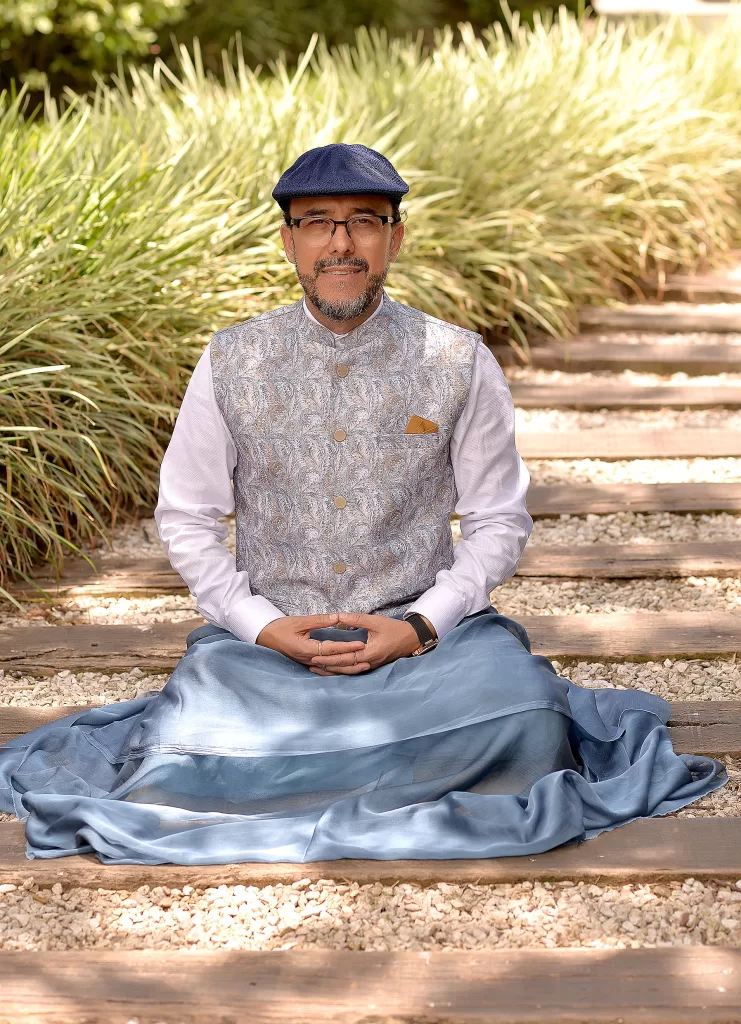
॥ विवेकचूडामणि ॥ … Vivekacūḍāmaṇi … By Acharya Tadany
Class 137, Sept 23, 2026.
Summary
Ātmā as the Cosmic Illuminator
Acharya Tadany explained that just as the sun (ākāśa ravivat) shines brightly in the sky above, Ātmā shines like the bright sun over our mental firmament.
The key teaching is expressed in the phrase viśvam idam prakāśayati — Ātmā not only shines by itself but also illuminates the entire universe (viśvam) with its own luminosity (prakāśa).
This teaching connects to a famous śloka from the Muṇḍaka Upaniṣad, Kaṭha Upaniṣad, and Bhagavad Gītā:
“Na tatra sūryo bhāti na candra tārakam,
nema vidyuto bhānti kuto’yam agniḥ.
Tam eva bhāntam anubhāti sarvaṃ,
tasya bhāsā sarvam idaṃ vibhāti.”
This verse establishes that consciousness is self-revealing (svayam prakāśa) and does not need another lamp, another consciousness, or even external organs to prove its existence.
The Cascade of Consciousness
Acharya Tadany described how consciousness flows in a cascading manner:
- Ātmā (pure consciousness) lends consciousness to the mind (antaḥkaraṇa)
- The mind becomes sentient and aware, then lends consciousness to the sense organs (indriyāṇi)
- The sense organs become sentient and aware, then illuminate the entire external universe
- Through this cascade, we become conscious of rūpa (form), gandha (smell), rasa (taste), and all perceptible objects
The analogy given was of a mahā-dīpa (powerful lamp) inside a ghaṭa (pot) with many holes.
The light of pure knowledge streams outward through the doorways of cakṣuḥ (eyes) and all other sense organs, illuminating everything visible and invisible, perceptible and imperceptible.
The Fire and Iron Analogy
Acharya Tadany used the beautiful analogy of ayaḥ agnivat (iron and fire). When iron is placed in fire, it becomes red hot, glows, and radiates heat—it appears like fire itself. However, the fire does not become the iron, and the iron does not become the fire. The fire lends its heat and light to the iron.
Similarly, the mind, ego (ahaṃkāra), body, senses, and prāṇa appear to be conscious only because they are in contact with consciousness. They do not possess consciousness as their intrinsic attribute—it is borrowed consciousness. Without Ātmā, the body-mind-sense complex is as inert as iron without fire.
Ātmā as the Eternal Witness
The verse jñātā manaso’haṃkṛti vikrīyāṇām teaches that Ātmā is the knower and witness of:
- All modifications (vrtti) of the mind—thoughts that arise and subside, emotions that appear and disappear, moods that constantly shift
- All modifications of ahaṃkāra—feelings of confidence and insecurity, pride and shame, being on top of the world or feeling down in the dungeons
- All bodily actions (dehendriya-prāṇa-kṛta-kriyāṇām)—walking, sitting, eating, sleeping
- All sensory activities—eyes seeing, ears hearing, tongue tasting, skin touching, nose smelling
- All vital functions of prāṇa—breathing, heartbeat, circulation, digestion
The crucial teaching: na ceṣṭate no vikaroti kiñcana—Ātmā does not act, does not undergo any modification whatsoever. You, the Ātmā, are akartā (non-doer). The body acts, the senses perceive, the prāṇa functions, but Ātmā is the witness of all of them.
Key Philosophical Distinctions
The Paradigm Shift: Acharya Tadany emphasized the fundamental shift in understanding: “I am the witness of all thoughts—not the thoughts themselves. I, the Ātmā, am the witness of all emotions and sensations—not the emotions, nor the sensations.”
Ātmā is Sat: Ātmā alone is Sat—that which never changes, the absolute reality. Everything else (body, mind, senses, ahaṃkāra) is mithyā—having dependent, ever-changing reality. Ātmā is the ever-unchanging witness of all change, present across all three states: waking (jāgrat), dream (svapna), and deep sleep (suṣupti).
Illumination Requires Pervasion: Acharya Tadany explained that when we say “Ātmā illuminates,” we must understand this is not an action requiring volition or causing modification. It is a compromising expression for want of better words. What it truly means is: in the presence of Ātmā, everything is illuminated. Just as light must pervade an object to illuminate it, Ātmā pervades the mind, which pervades the senses, which pervade the entire universe—thus everything is known as sentient.
Practical Application
Acharya Tadany suggested a self-observation exercise for students: write down all the moods experienced throughout one or two days. This practice helps one observe how violently moods shift throughout even a single day—from peaceful after temple prayers to angry in traffic—while the witnessing Self remains unchanged throughout all these modifications.
Acharya Tadany