

 Tadany Um refúgio para a alma e um convite à consciência.

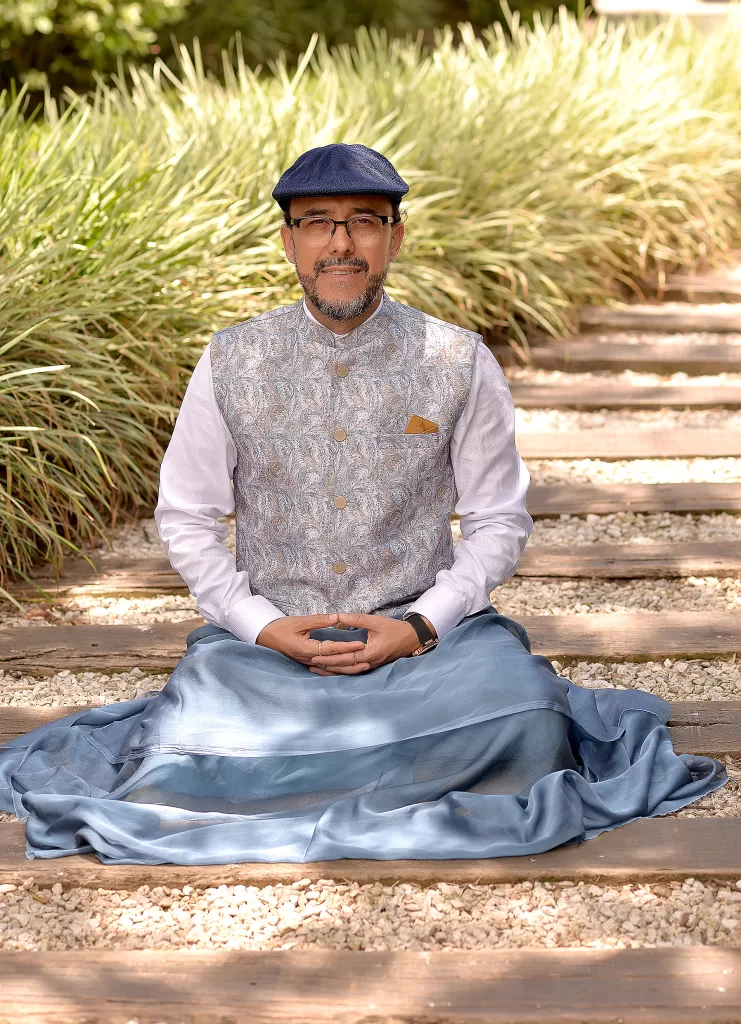
॥ विवेकचूडामणि ॥ … Vivekacūḍāmaṇi … by Acharya Tadany
Class 142, Nov 4, 2026.
Summary
The Dual Nature of Brahman: Saguṇa and Nirguṇa
Ācārya Tadany began by explaining that Brahman manifests in two aspects:
Saguṇa Brahman (Brahman with Attributes):
- Nimitta Kāraṇam (Intelligent Cause): Brahman as Īśvara is the supreme intelligence behind the design and order of the entire universe. Just as a carpenter designs a chair with intelligence, Īśvara is the conscious designer of all manifestation.
- Upādāna Kāraṇam (Material Cause): Brahman is also the very substance from which the universe emerges. Unlike human creation where the maker and material are separate, Brahman is simultaneously both the creator and the material of creation.
- Abhinna (Non-different): These two aspects are not separate but constitute an undivided reality. The example given was of a spider that produces its web from its own body—being both the intelligent agent and the material source.
Nirguṇa Brahman (Brahman without Attributes):
- Adṛśyam: That which cannot be perceived by the eyes or sense organs
- Agrahyam: That which cannot be grasped by the organs of action
- Agotram: That which has no lineage, species, or category
- This is pure, undifferentiated consciousness—the ever-abiding, self-evident witness (Sākṣī) which is one’s true nature (Ātman)
The Central Role of Buddhi (Intellect) in Self-Knowledge
Ācārya Tadany emphasized a crucial point that is often misunderstood in spiritual teachings: the intellect is the locus of all knowledge.
Buddhi as the Locus of Knowledge:
- Knowledge can only take place in the intellect (buddhi), not in the physical body (sthūla śarīra), not in the causal body (kāraṇa śarīra), and not in Ātman itself
- The physical body is not the location of knowledge
- The kāraṇa śarīra is the embodiment of ignorance (ajñāna), not knowledge
- Ātman, being consciousness itself, cannot be a location where knowledge “happens”
- Therefore, by elimination, buddhi (which is part of the subtle body—sūkṣma śarīra) is the only locus of knowledge
Instruments vs. Locus of Knowledge:
- While there are many instruments of knowledge (pramāṇas), there is only one locus where knowledge takes place
- The five sense organs (pañca jñānendriyāṇi) are instruments: eyes perceive colors and forms, ears perceive sound—but the knowledge itself occurs in the buddhi
- Buddhi itself can be both locus and instrument: when we use inference (anumāna), logic, or reasoning, buddhi serves as the instrument, but the knowledge still takes place in buddhi
- For self-knowledge, śāstra (scripture) is the primary instrument of knowledge (pramāṇa)
Critical Clarification on Śāstra’s Position:
- When Upaniṣads state that “mind cannot reach Brahman” (Taittirīya Upaniṣad: yato vāco nivartante aprāpya manasā saha) or “Brahman is not what the mind thinks” (Kena Upaniṣad: yan manasā na manute yena āhur mano matam), they are negating buddhi as an instrument of knowledge, NOT as the locus of knowledge
- This distinction is crucial: the śāstra never asks us to abandon or transcend the intellect completely—that would make knowledge impossible
- Rather, it teaches that buddhi cannot independently grasp Brahman; we need śāstra-pramāṇa (scriptural testimony) as the valid means
- Many spiritual traditions misinterpret these verses and wrongly teach people to “go beyond the mind” or “empty the mind,” which Ācārya Tadany clarified as contrary to Vedānta
Prerequisites for Vedānta Study
Ācārya Tadany outlined what is required to successfully study Vedānta:
Emotional Health and Stability:
- A calm, relaxed, non-critical, sober mind (niyamita manas) is essential
- Connection with Īśvara through devotion (bhakti) to one’s iṣṭa-devatā helps resolve emotional issues
- Practice of karma yoga cultivates emotional balance
- However, emotional health alone is not sufficient for mokṣa
Intellectual Preparation (Buddhi-prasāda):
- A healthy, sound, sharp, logical, and rational intellect is absolutely necessary
- Unlike many religions that discourage thinking, Vedānta demands deep intellectual effort and conviction
- Study requires understanding of:
- Language: Good command of the language of instruction (Sanskrit knowledge is beneficial)
- Grammar (Pada-jñānam/Vyākaraṇa): Ability to analyze sentences properly
- Mīmāṃsā (Vākya-jñānam): Methodology for interpreting and analyzing teachings
- Logic (Tarka-jñānam/Pramāṇa-jñānam): Understanding logical frameworks and structures
Why Such Rigor?
- The Vedāntic vision is intellectually challenging: “Brahman is real, the world is mithyā (relatively real), the jīva is non-different from Brahman”
- It requires accepting that this tangible world we experience is not absolutely real
- It requires accepting that the invisible, unchanging, immortal Brahman is the only absolute reality
- Most challenging: accepting “Aham Brahmāsmi”—I am Brahman—which many traditions consider sacrilege
- All this demands tremendous intellectual conviction, which requires a sound buddhi
The Nature of Self-Knowledge
The Knowledge Itself:
- Self-knowledge is a specific mental modification (vṛtti): Aham Brahmāsmi iti vṛtti (I am Brahman)
- This knowledge is direct (sākṣāt), immediate (aparokṣa-jñānam), not inferential
- It takes place in the buddhi (ātmāni, meaning antaḥkaraṇe/buddhau)
The Means of Knowledge:
- Śāstra-śravaṇam (listening to the scriptures) is the primary means (pramāṇa)
- Not meditation (nirvikalpa samādhi), which cannot produce knowledge because it involves the cessation of mental modifications
- Not emotional devotion alone, though it helps prepare the mind
- Śabda-pramāṇam (verbal testimony of śāstra) is the unique and only means for this knowledge
The Result of Self-Knowledge (Jñāna-phalam)
Abiding as Brahman:
- Brahmarūpeṇa saṃsthāḥ: Abide as Brahman, not in Brahman (which would imply duality)
- This means constant remembrance of one’s true nature, as taught in Bhagavad Gītā 5.8-9: in all activities—seeing, hearing, touching, walking, sleeping, breathing—remember “I am not the doer”
Total Fulfillment (Kṛtārtha):
- Complete satisfaction and fulfillment
- Recognition that “I am okay, the world is okay, everything is okay”
- No sense of deficiency or defect remains
- Kṛtārtha means one who has accomplished all four puruṣārthas (dharma, artha, kāma, mokṣa)
- Mokṣa includes all other puruṣārthas—as Gītā 2.46 states, for one who has knowledge, everything else becomes as useful as a small pot of water when there is a flood everywhere
Important Distinction:
- Having no money is a fact; feeling poor is bandha (bondage)
- Poverty and richness are mental constructions, not based on possessions
- One can have millions and feel poor, or have nothing and feel rich
- The liberated person, even as a renunciate with minimal possessions, feels like the richest person in the world
Crossing the Ocean of Saṃsāra
The Nature of Saṃsāra:
- Janma-maraṇa-taraṅga-aparaṃ saṃsāra sindhum: The shoreless ocean of saṃsāra with waves of birth and death
- Apara means limitless, without shore—wherever you go, whatever you do, saṃsāra never leaves you
- It is internal, like tinnitus (ringing in the ears) that follows you everywhere
- The waves of birth and death are like tsunamis—small in the open ocean but massive when they reach the shore of existence
The Solution:
- Saṃsāra is caused by internal ignorance, not external circumstances
- It cannot be solved by changing circumstances (spouse, job, government, location)
- Just as one goes to an ENT doctor for ear problems, one goes to a Guru for the “noise” of saṃsāra
- The Guru removes ignorance through śāstra-pramāṇa
- This alone enables one to cross (pratara) the ocean of saṃsāra
Question and Answer
Dipti asked for clarification on the difference between Nirguṇa and Saguṇa Brahman. Ācārya Tadany explained:
- Saguṇa Brahman encompasses the entire manifestation and its intelligent design—like a car that requires both material components (rubber, metal, plastic) and intelligence to function
- Just having materials doesn’t create a car; you need the intelligence to organize them into something useful
- Similarly, the universe requires both the material cause (upādāna kāraṇam) and intelligent cause (nimitta kāraṇam), which together constitute Saguṇa Brahman
- Nirguṇa Brahman is the undivided, undifferentiated consciousness (ātman) that is your true nature
Sanskrit Terms Glossary
| Sanskrit Term | Devanāgarī | Meaning |
| Brahman | ब्रह्मन् | The ultimate, absolute reality; pure consciousness |
| Saguṇa Brahman | सगुण ब्रह्मन् | Brahman with attributes; the manifested universe with Īśvara as its intelligent cause |
| Nirguṇa Brahman | निर्गुण ब्रह्मन् | Brahman without attributes; pure, undifferentiated consciousness |
| Nimitta Kāraṇam | निमित्त कारणम् | Intelligent cause; the conscious designer |
| Upādāna Kāraṇam | उपादान कारणम् | Material cause; the substance from which something is made |
| Abhinna | अभिन्न | Non-different; undivided; not separate |
| Īśvara | ईश्वर | God; the Lord; Brahman as the creator and controller |
| Buddhi | बुद्धि | Intellect; the faculty of discrimination and understanding |
| Ātman | आत्मन् | The Self; one’s true nature; consciousness |
| Adṛśyam | अदृश्यम् | That which cannot be seen by the eyes |
| Agrahyam | अग्राह्यम् | That which cannot be grasped by the organs of action |
| Agotram | अगोत्रम् | That which has no lineage, species, or category |
| Sākṣī | साक्षी | Witness; the consciousness that witnesses all experiences |
| Sthūla Śarīra | स्थूल शरीर | Gross body; physical body |
| Sūkṣma Śarīra | सूक्ष्म शरीर | Subtle body; consisting of mind, intellect, and sense organs |
| Kāraṇa Śarīra | कारण शरीर | Causal body; the body of ignorance |
| Pramāṇa | प्रमाण | Valid means of knowledge; instrument of knowledge |
| Pañca Jñānendriyāṇi | पञ्च ज्ञानेन्द्रियाणि | Five sense organs (eyes, ears, nose, tongue, skin) |
| Anumāna | अनुमान | Inference; logical reasoning |
| Śāstra | शास्त्र | Scripture; authoritative text |
| Śāstra-pramāṇa | शास्त्र-प्रमाण | Scriptural testimony as a valid means of knowledge |
| Śāstra-śravaṇam | शास्त्र-श्रवणम् | Listening to the scriptures |
| Śabda-pramāṇa | शब्द-प्रमाण | Verbal testimony as valid means of knowledge |
| Antaḥkaraṇa | अन्तःकरण | Inner instrument; mind-intellect complex |
| Ajñāna | अज्ञान | Ignorance; not-knowing |
| Upaniṣad | उपनिषद् | Vedic texts teaching the knowledge of Brahman |
| Mīmāṃsā | मीमांसा | System of textual interpretation and analysis |
| Tarka | तर्क | Logic; logical reasoning |
| Vyākaraṇa | व्याकरण | Grammar |
| Iṣṭa-devatā | इष्ट-देवता | Chosen deity; personal form of God |
| Karma Yoga | कर्म योग | Path of selfless action; offering actions to Īśvara |
| Mokṣa | मोक्ष | Liberation; freedom from the cycle of birth and death |
| Mithyā | मिथ्या | Relatively real; not absolutely real; dependent reality |
| Jīva | जीव | Individual being; embodied soul |
| Aham Brahmāsmi | अहम् ब्रह्मास्मि | “I am Brahman” – mahāvākya from Bṛhadāraṇyaka Upaniṣad |
| Vṛtti | वृत्ति | Mental modification; thought form |
| Sākṣāt | साक्षात् | Directly; immediately |
| Aparokṣa-jñānam | अपरोक्ष-ज्ञानम् | Direct knowledge; immediate knowledge (not mediate) |
| Nirvikalpa Samādhi | निर्विकल्प समाधि | State of absorption without mental modifications |
| Kṛtārtha | कृतार्थ | One who has fulfilled all purposes; completely satisfied |
| Puruṣārtha | पुरुषार्थ | Goals of human life: dharma, artha, kāma, mokṣa |
| Dharma | धर्म | Righteousness; duty; universal law |
| Artha | अर्थ | Wealth; material prosperity; security |
| Kāma | काम | Desire; pleasure; enjoyment |
| Bandha | बन्ध | Bondage; sense of limitation |
| Saṃsāra | संसार | The cycle of birth, death, and rebirth; worldly existence |
| Janma | जन्म | Birth |
| Maraṇa | मरण | Death |
| Taraṅga | तरङ्ग | Wave |
| Apara | अपर | Without limit; shoreless; infinite |
| Sindhu | सिन्धु | Ocean |
| Pratara | प्रतर | To cross over |
| Guru | गुरु | Teacher; one who removes darkness (ignorance) |
| Vivekacūḍāmaṇi | विवेकचूडामणि | “Crest-Jewel of Discrimination” – text by Ādi Śaṅkarācārya |
| Ādi Śaṅkarācārya | आदि शङ्कराचार्य | The great Advaita Vedānta teacher (8th century CE) |
| Bhagavad Gītā | भगवद् गीता | “Song of the Lord” – sacred Hindu scripture |
| Taittirīya Upaniṣad | तैत्तिरीय उपनिषद् | One of the principal Upaniṣads |
| Kena Upaniṣad | केन उपनिषद् | One of the principal Upaniṣads |
| Niyamita Manas | नियमित मनस् | Controlled, disciplined, steady mind |
| Buddhi-prasāda | बुद्धि-प्रसाद | Grace of a clear intellect; intellectual clarity |
| Vedānta | वेदान्त | “End of the Vedas”; the philosophical system based on the Upaniṣads |
Acharya Tadany