Tadany Um refúgio para a alma e um convite à consciência.

By Acharya Tadany
May the grace of Śrī Mahālakṣmī illumine your mind with wisdom, your heart with compassion, and your life with inner and outer abundance.
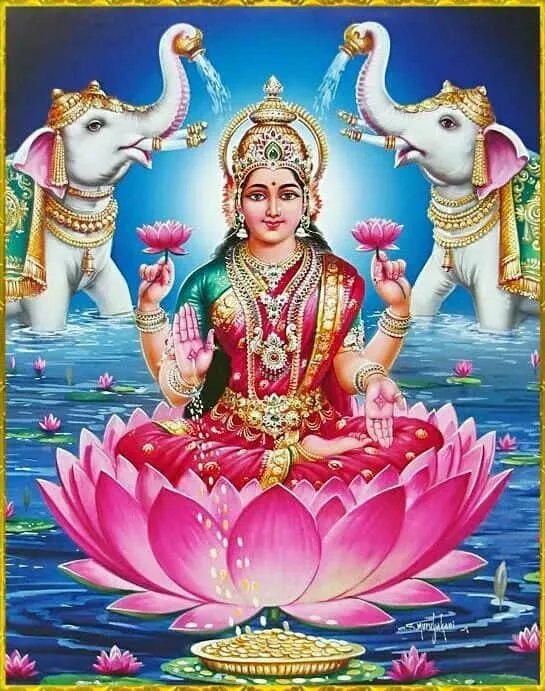
The Śrī Mahālakṣmī Aṣṭakam is much more than a prayer for material prosperity.
From a Vedāntic perspective, it is a hymn that invokes the Divine as the source of every form of abundance…
Material,
Ethical,
Intellectual,
Amotional,
Spiritual.
Each verse highlights a different facet of Lakṣmī, guiding the devotee from dependence on external wealth toward the recognition of inner fullness.
॥ श्रीमहालक्ष्म्यष्टकम् ॥
… Śrī Mahālakṣmī Aṣṭakam …
नमस्तेऽस्तु महामाये श्रीपीठे सुरपूजिते ।
शङ्खचक्रगदाहस्ते महालक्ष्मि नमोऽस्तु ते ॥१॥
Namastestu Mahāmāye Śrīpīṭhe Surapūjite
Śaṅkha-cakra-gadā-haste Mahālakṣmi Namo’stu Te (1)
1. I bow to You, O Mahālakṣmī, the Great Divine Power, enthroned upon the seat of prosperity and worshipped by the devas. Holding the conch, discus, and mace, I offer my salutations.
Symbolism
• Mahāmāyā — The great cosmic power through which Īśvara manifests the universe. Māyā is neither good nor bad; it is the divine power that makes the universe possible.
• Śrīpīṭha — The throne of auspiciousness, beauty, harmony, and prosperity.
• Worshipped by the devas, even the cosmic forces depend upon the Divine.
• Śaṅkha (Conch) — Represents purity, the primordial sound, and the call to awaken.
• Cakra (Discus) — Represents time, dharma, order, and the destruction of ignorance.
• Gadā (Mace) — Represents strength, discipline, and the power to remove obstacles.
Vedāntic Reflection
Real prosperity begins with inner order. Without discipline, clarity, and righteousness, external wealth often becomes a source of anxiety rather than happiness.
नमस्ते गरुडारूढे कोलासुरभयङ्करि ।
सर्वपापहरे देवि महालक्ष्मि नमोऽस्तु ते ॥२॥
Namaste Garuḍārūḍhe Kolāsura-bhayaṅkari
Sarva-pāpa-hare Devi Mahālakṣmi Namo’stu Te (2)
2. Salutations to You, who rides upon Garuḍa, who destroys the fear caused by the demon Kolāsura, and who removes all sins.
Symbolism
• Garuḍa represents transcendence and freedom.
• Kolāsura symbolizes greed, arrogance, and attachment.
• Destroyer of sin means remover of ignorance and its consequences.
Vedāntic Reflection
The greatest demon is not outside us but within—the tendency to seek lasting happiness in impermanent things. Lakṣmī helps free us from this confusion.
सर्वज्ञे सर्ववरदे सर्वदुष्टभयङ्करि ।
सर्वदुःखहरे देवि महालक्ष्मि नमोऽस्तु ते ॥३॥
Sarvajñe Sarvavarade Sarvaduṣṭa-bhayaṅkari
Sarvaduḥkha-hare Devi Mahālakṣmi Namo’stu Te (3)
3. O All-knowing One, Bestower of every blessing, Destroyer of evil and remover of all sorrow, I bow to You.
Symbolism
Lakṣmī is presented as:
• Omniscient.
• The giver of all legitimate blessings.
• The remover of suffering born of ignorance.
Vedāntic Reflection
Not every desire deserves fulfillment. Lakṣmī grants what supports dharma and spiritual growth, not merely what satisfies momentary impulses.
सिद्धिबुद्धिप्रदे देवि भुक्तिमुक्तिप्रदायिनि ।
मन्त्रमूर्ते सदा देवि महालक्ष्मि नमोऽस्तु ते ॥४॥
Siddhi-buddhi-prade Devi Bhukti-mukti-pradāyini
Mantra-mūrte Sadā Devi Mahālakṣmi Namo’stu Te (4)
4. You bestow accomplishment and wisdom, worldly enjoyment and liberation. You are the very embodiment of sacred mantras.
Symbolism
• Siddhi — Success and accomplishment.
• Buddhi — Clear understanding and discrimination.
• Bhukti — Legitimate worldly enjoyment.
• Mukti — Liberation.
• Mantra-mūrti — The living embodiment of sacred knowledge.
Vedāntic Reflection
Vedānta does not reject worldly life. It teaches proper enjoyment without attachment while ultimately pointing toward mokṣa.
आद्यन्तरहिते देवि आद्यशक्तिमहेश्वरि ।
योगजे योगसम्भूते महालक्ष्मि नमोऽस्तु ते ॥५॥
Ādyanta-rahite Devi Ādya-śakti-Maheśvari
Yogaje Yoga-sambhūte Mahālakṣmi Namo’stu Te (5)
5. O Beginningless and Endless One, Primordial Power of the Lord, born of Yoga and the source of Yoga, I bow to You.
Symbolism
Lakṣmī is timeless and represents the eternal creative power associated with Īśvara.
Vedāntic Reflection
Everything in the universe has a beginning and an end. The Divine alone is beyond both.
स्थूलसूक्ष्ममहारौद्रे महाशक्तिमहोदरे ।
महापापहरे देवि महालक्ष्मि नमोऽस्तु ते ॥६॥
Sthūla-sūkṣma-mahāraudre Mahāśakti-Mahodare
Mahāpāpa-hare Devi Mahālakṣmi Namo’stu Te (6)
6. You pervade the gross and subtle universe. You are the infinite power containing all creation and the remover of great ignorance.
Symbolism
• Sthūla — The visible universe.
• Sūkṣma — The subtle dimensions: mind, intellect, prāṇa.
• Mahodare — The One in whom the entire universe rests.
Vedāntic Reflection
Lakṣmī is not confined to temples or wealth. Every aspect of existence is an expression of divine order.
पद्मासनस्थिते देवि परब्रह्मस्वरूपिणि ।
परमेशि जगन्मातर्महालक्ष्मि नमोऽस्तु ते ॥७॥
Padmāsana-sthite Devi Parabrahma-svarūpiṇi
Parameśi Jaganmātar Mahālakṣmi Namo’stu Te (7)
7. O Goddess seated upon the lotus, whose true nature is Parabrahman, Supreme Ruler and Mother of the Universe, I bow to You.
Symbolism
• Lotus symbolizes purity amidst the world.
• Parabrahma-svarūpiṇī points beyond form to the Absolute Reality.
Vedāntic Reflection
The hymn now shifts from devotion to knowledge. Lakṣmī is no longer merely a deity who grants blessings but the very expression of Brahman.
श्वेताम्बरधरे देवि नानालङ्कारभूषिते ।
जगत्स्थिते जगन्मातर्महालक्ष्मि नमोऽस्तु ते ॥८॥
Śvetāmbaradhare Devi Nānālaṅkāra-bhūṣite
Jagat-sthite Jaganmātar Mahālakṣmi Namo’stu Te (8)
8. O Goddess clothed in white, adorned with many ornaments, abiding throughout the universe, Mother of all beings, I bow to You.
Symbolism
• White garments represent purity and serenity.
• Ornaments symbolize the countless manifestations of creation.
• Mother of the Universe reflects unconditional compassion and sustenance.
Vedāntic Reflection
The hymn concludes by recognizing that all beauty, order, nourishment, and life are expressions of the Divine Mother. To see Lakṣmī everywhere is to cultivate gratitude, humility, and reverence for existence itself.
Phalaśruti (Benefits of this Chanting)
महालक्ष्म्यष्टकं स्तोत्रं यः पठेद्भक्तिमान्नरः ।
सर्वसिद्धिमवाप्नोति राज्यं प्राप्नोति सर्वदा ॥
Mahālakṣmyaṣṭakaṃ stotraṃ yaḥ paṭhed bhaktimān naraḥ ।
Sarva-siddhim avāpnoti rājyaṃ prāpnoti sarvadā ॥
Whoever recites this Mahālakṣmī Aṣṭakam with devotion attains all accomplishments and obtains sovereignty (or prosperity and success).
Symbolism
• Bhaktimān – One who chants with devotion, sincerity, and reverence—not mechanically.
• Sarva-siddhi – All accomplishments or attainments. This may refer to success in righteous endeavors, mastery, or spiritual maturity.
• Rājyam – Literally “kingdom.” Symbolically, it means leadership, stability, influence, self-mastery, or a life well governed.
Vedāntic Reflection
The highest kingdom is not external power but mastery over oneself. One who governs the mind is greater than one who governs a nation. Lakṣmī blesses the devotee first with inner order, from which outer success naturally follows.
एककाले पठेन्नित्यं महापापविनाशनम् ।
द्विकालं यः पठेन्नित्यं धनधान्यसमन्वितः ॥
Ekakāle paṭhen nityaṃ mahā-pāpa-vināśanam ।
Dvikālaṃ yaḥ paṭhen nityaṃ dhana-dhānya-samanvitaḥ ॥
One who recites it once daily destroys great sins. One who recites it twice daily becomes endowed with wealth and abundant nourishment.
Symbolism
• Mahāpāpa – Literally “great sins.” In Vedānta, this points primarily to deeply rooted tendencies (vāsanās) born of ignorance.
• Dhana – Wealth in all its forms.
• Dhānya – Grain, food, nourishment, security, and the ability to sustain oneself and others.
Vedāntic Reflection
The repetition of sacred teachings gradually purifies the mind. As attachment, greed, and fear weaken, one’s actions become more aligned with dharma. The “destruction of sin” is therefore the dissolution of ignorance-driven habits.
Wealth is not merely money. A peaceful family, good health, knowledge, trustworthy friends, and a contented heart are all forms of Lakṣmī.
त्रिकालं यः पठेन्नित्यं महाशत्रुविनाशनम् ।
महालक्ष्मीर्भवेन्नित्यं प्रसन्ना वरदा शुभा ॥
Trikālaṃ yaḥ paṭhen nityaṃ mahā-śatru-vināśanam ।
Mahālakṣmīr bhaven nityaṃ prasannā varadā śubhā ॥
Whoever recites it three times daily destroys great enemies. Mahālakṣmī remains ever pleased, granting blessings and auspiciousness.
Symbolism
The great enemies are not merely external people. Vedānta consistently identifies the true enemies as the inner obstacles that bind us:
• Kāma – Self-centered desire.
• Krodha – Anger.
• Lobha – Greed.
• Moha – Delusion.
• Mada – Pride.
• Mātsarya – Jealousy.
When these diminish, one experiences the grace of Lakṣmī.
Prasannā means serene, gracious, and favorable. Divine grace is reflected in a mind that is calm, clear, and receptive to truth.
Vedāntic Reflection
The greatest enemies are conquered within, allowing one to live with serenity and self-mastery.
A Final Reflection
The phalaśruti teaches that the power of a stotram does not lie merely in the repetition of words but in the transformation of the one who chants them. Devotion (bhakti), consistency (nityam), and sincerity gradually reshape the mind. As the mind becomes pure and steady, one discovers that the highest blessing of Mahālakṣmī is not the accumulation of possessions but the recognition of one’s innate fullness (pūrṇatva). Material prosperity may come and go, but the wealth of wisdom, contentment, compassion, and freedom remains the greatest treasure.
By Acharya Tadany
July, 2026.
Photo: https://hindugallery.com//
Join Acharya Tadany’s WhatsApp community to receive thoughts, poems, reflections on spirituality, and artistic inspirations directly in a secure and private space:
Link – https://chat.whatsapp.com/IxaGLooSrrl5iAjOK8H6gS