Tadany Um refúgio para a alma e um convite à consciência.

By Acharya Tadany
Published in Diário de Santa Maria, July 16, 2026.
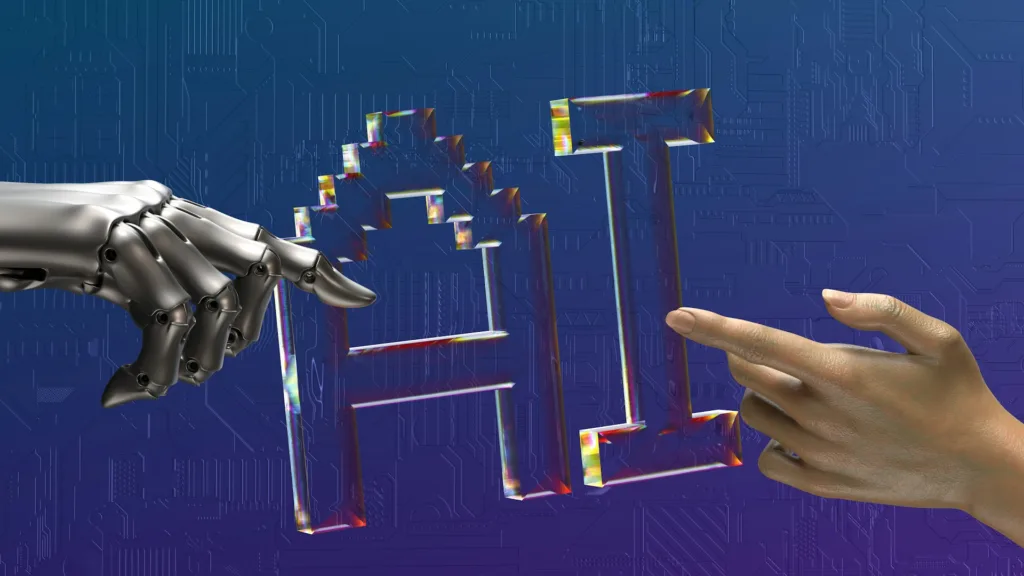
As AI evolves, the ultimate competitive advantage will not reside in the most sophisticated algorithms, but in the ability to combine technology, human knowledge, ethics, and responsibility.
Much is said about Artificial Intelligence (AI) as a tool to automate tasks and increase productivity. While this is true, this view represents only a small fraction of the transformation we are experiencing, for the true revolution lies not in replacing people, but in expanding what they are capable of achieving.
Throughout history, technology has always expanded human capabilities. The steam engine multiplied our physical strength. Computers accelerated calculations. The internet democratized access to information. Now, AI ushers in a new era: it expands our capacity to think, analyze, create, and solve problems.
This landscape is giving rise to what we call AI-native teams. This is not merely about using tools in our daily routines, but about completely rethinking the way we work, integrating AI as a permanent collaborator across all stages of product and solution development.
One of AI’s greatest contributions is the elimination of limitations that previously restricted teams. Activities that once required days of research or highly specialized knowledge can now be completed in minutes. Professionals analyze vast volumes of data, compare scenarios, generate alternatives, and test ideas with unprecedented speed.
However, greater speed does not mean the absence of human involvement. One of the greatest misconceptions is to imagine that AI will replace human judgment. In practice, it possesses no goals of its own, no values, no accountability, and no ethical sense. AI can suggest solutions, summarize documents, and identify patterns, but it cannot decide what is most appropriate for a client, a company, or society—by this, I mean that these decisions remain exclusively human.
The most successful organizations are not those that use the most AI, but those that use it responsibly. It is indispensable to question the results: Is this information correct? Does this recommendation make sense? Are there unconsidered risks? In other words, AI must be viewed as an excellent assistant, never as an uncontestable authority.
Another fundamental aspect is transparency. More important than presenting a ready-made answer is explaining how it was built: which suggestions the AI offered, which were utilized, which were discarded, and why. This openness strengthens trust and preserves human accountability over every decision.
The central concept of this new reality is called the Human-AI Loop. It all begins with the human being clearly defining the objective. AI assists in generating ideas and analyzing information. Next, people evaluate these results with experience and discernment. New questions arise, new alternatives are created, and the process begins anew. With each cycle, learning increases and the quality of decisions improves.
This collaborative model is already present in practically every profession. Engineers design projects with greater efficiency. Doctors analyze medical research rapidly without relinquishing the final diagnosis. Lawyers review complex documents in less time while maintaining legal responsibility. Teachers produce personalized materials, while journalists accelerate research without losing editorial quality.
In all of these cases, AI does not replace the human being. It expands their capacity to act.
The future of work, therefore, will not be a battle between people and machines. It will be defined by the quality of collaboration between them. Those who learn to utilize AI intelligently will not only work faster, but will tackle more complex challenges, explore new possibilities, and dedicate more time to creativity and innovation.
As AI evolves, the ultimate competitive advantage will not reside in the most sophisticated algorithms, but in the ability to combine technology, human knowledge, ethics, and responsibility.
Essentially, like so many other technologies that are now commonplace, the era of AI does not diminish the importance of people; on the contrary, it amplifies human potential and offers us the opportunity to achieve what, until recently, seemed impossible.
Photo by Igor Omilaev on Unsplash