Tadany Um refúgio para a alma e um convite à consciência.

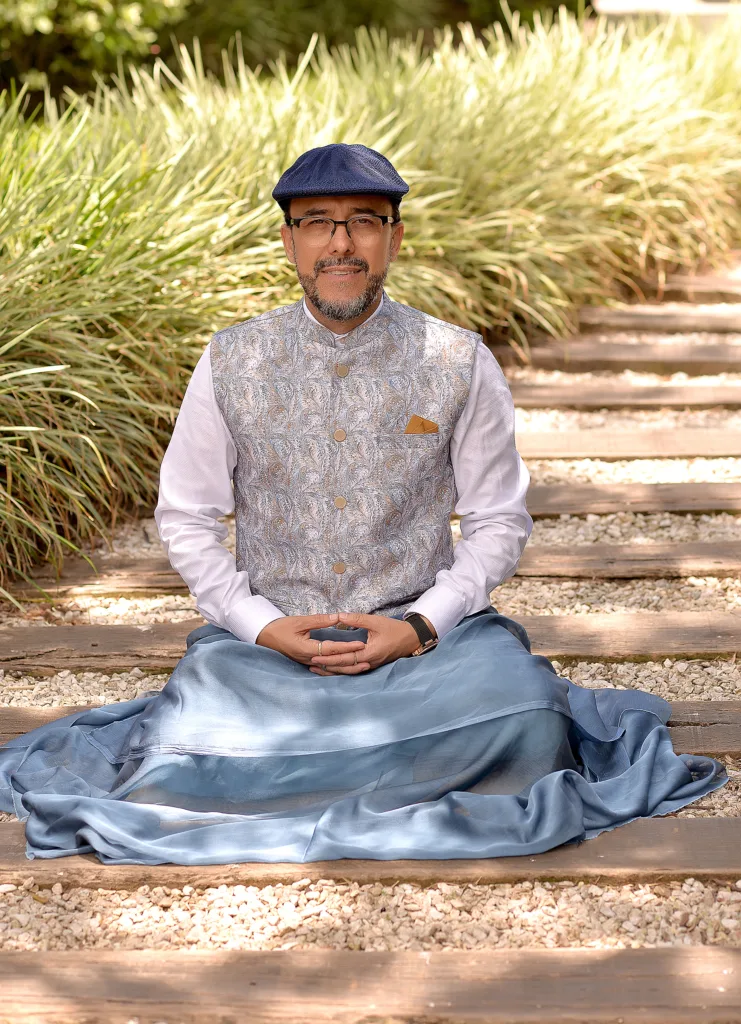
Tattva Bodha – Summary, by Acharya Tadany
Class 53
Date: July 20, 2025
In this class, Acharya Tadany continued the central topic of Jīva-Īśvara Aikyam (the oneness of the individual and God), deepening the understanding of the three components and addressing important student questions.
Q&A Before Class: The Desire to End Cyclic Existence
Sophie asked whether it is wrong to not want another human experience after this life. Acharya Tadany clarified that the answer depends on the intention:
- If arising from fear, aversion, or disappointment — it can be dangerous and should be addressed carefully.
- If arising from viveka (discrimination) and jñāna (knowledge) — it is a natural aspiration for mokṣa (liberation).
Occasional thoughts are natural, but constant preoccupation requires attention.
Jīva-Īśvara Aikyam
Acharya Tadany explained that this is the fourth and most important topic of Tattva Bodha. The goal is to shift the meaning of “I” from the superficial to the essential, recognizing the oneness underlying all existence.
The Three Components of Jīva
Every individual (jīva) consists of:
- Reflecting Medium (upādhi) — The three bodies (gross, subtle, causal) — like a mirror.
- Reflected Consciousness (pratibimba caitanya) — Temporary consciousness reflected in the bodies — like the image of the sun in the mirror.
- Original Consciousness (mūla caitanya) — The eternal, all-pervading consciousness — like the sun itself.
The reflecting medium and reflected consciousness are finite and temporary. When the body dies, the reflection disappears. The original consciousness remains infinite and eternal.
The Three Components of Īśvara
The same framework applies to Īśvara (God) at the macro level:
- Reflecting Medium — The three universes (physical, subtle, causal).
- Reflected Consciousness — The intelligence that maintains all natural and moral laws (dharma).
- Original Consciousness — The same eternal consciousness that enlivens the universe.
The original consciousness is identical in both jīva and Īśvara.
The Wave-Ocean Analogy
- The wave (jīva) is temporary and finite.
- The ocean (Īśvara) is vast and seemingly infinite.
- Essentially, both are water (original consciousness).
From the standpoint of original consciousness, jīva and Īśvara are one.
Saṃsāra: The Root of Insecurity and Fear
Identifying with the body-mind complex leads to the claim “I am mortal,” which creates profound insecurity (bhaya). This insecurity drives most human struggles. Spiritual wisdom begins with accepting the mortality of the body while claiming our higher, immortal nature.
The Path to Liberation
As long as we maintain the vision of difference (bheda) through the limiting adjuncts, the cycle of birth and death continues. When we shift to essential oneness (aikya), we attain mokṣa.
Key Takeaways
- Jīva and Īśvara share the same three components, with the original consciousness being identical.
- We have a choice: identify with the temporary components or with our eternal true nature.
- Saṃsāra is rooted in the identification with mortality and insecurity.
- The shift from superficial difference to essential oneness leads to liberation.