Tadany Um refúgio para a alma e um convite à consciência.
By Acharya Tadany
Published in Diário de Santa Maria, August 13, 2026.
…Of course, we do not control everything. There are events we do not choose, losses we cannot avoid, and situations that lie completely beyond our will. Recognizing this is a mark of wisdom.
However, accepting what we cannot change is one thing; giving up on what we can still transform is another…
He was sitting in the middle of a park, absorbed in the natural beauty surrounding him. The trees swayed gently, the birds sang, and for a few moments, it seemed that nothing else existed beyond that instant.
Suddenly, an elderly man dressed as a magician stopped before him.
—“Do you want to know your future?”
The young man looked up, curious, and said, “Yes.”
The magician remained silent for a few seconds, as if searching within himself for a mysterious answer. Then, he bent down and drew two separate circles on the ground. One was plain, while the other was filled with several crisscrossing lines.
Next, he pulled a small insect from the pocket of his cloak, placed it between the two circles, and explained:
—“If the insect enters the plain circle, your future will be inspiring, prosperous, and admirable. But if it goes into the circle with lines, dark clouds of suffering, debt, and frustration will permeate your path.”
The magician then released the insect, and for a few moments, everything seemed to confirm the prediction, as the tiny creature began crawling toward the plain circle.
The young man’s eyes brightened, a smile spread across his face, and his future seemed promising.
However, as the insect reached the edge of the circle, something unexpected happened. It stopped, turned around, and slowly began crawling away from the plain circle, heading toward the one that, according to the magician, represented suffering and frustration.
The brightness vanished from the young man’s eyes, and his smile gave way to an expression of dismay as he silently watched the little creature, as though witnessing his own future change right before his eyes.
When the insect finally reached the edge of the line-filled circle, the young man did not hesitate. He reached out, picked it up quickly and gently, and placed it inside the plain circle.
The magician was indignant:
—“Who do you think you are to meddle in my ritual?”
The young man looked at him and replied calmly:
—“My dear sir, I cannot simply sit by and watch my destiny crumble before my eyes—especially if I can do something about it. If I have the ability to act and change the course of events, why should I remain passive? After all, my destiny is also in my hands.”
The magician fell silent. The young man then smiled, stood up, gave a nod of farewell, and walked away.
He did not know exactly what lay ahead. He had no guarantees of success, prosperity, or happiness. But he had understood something fundamental: we do not have to be mere spectators of our own existence.
This short story brings us to an important question: how much of our future is predetermined, and how much depends on our choices?
It is very easy to believe that we are victims of circumstance. When something goes wrong, we can blame fate, luck, other people, or the conditions around us. This stance, though comfortable, can turn us into spectators of our own lives.
Of course, we do not control everything. There are events we do not choose, losses we cannot avoid, and situations that lie completely beyond our will. Recognizing this is a mark of wisdom.
However, accepting what we cannot change is one thing; giving up on what we can still transform is another.
We do not choose all the cards we are dealt, but we can decide how to play them. We do not control everything that happens to us, but we can choose how we respond to what happens.
The insect represents circumstances. The youth represents the consciousness that observes, understands, and acts.
Perhaps that is the true lesson: not to confuse circumstance with destiny.
The future is not merely what awaits us. It is also what, within the bounds of reality, we help to build.
Therefore, when someone says that our destiny is already written, perhaps we should ask:
—“And what can I do about it?”
Sometimes, the change we seek does not begin with a new prediction about the future. It begins when we reach out our hands and decide to act.
Acharya Tadany
Translated to English by gemini.google.com
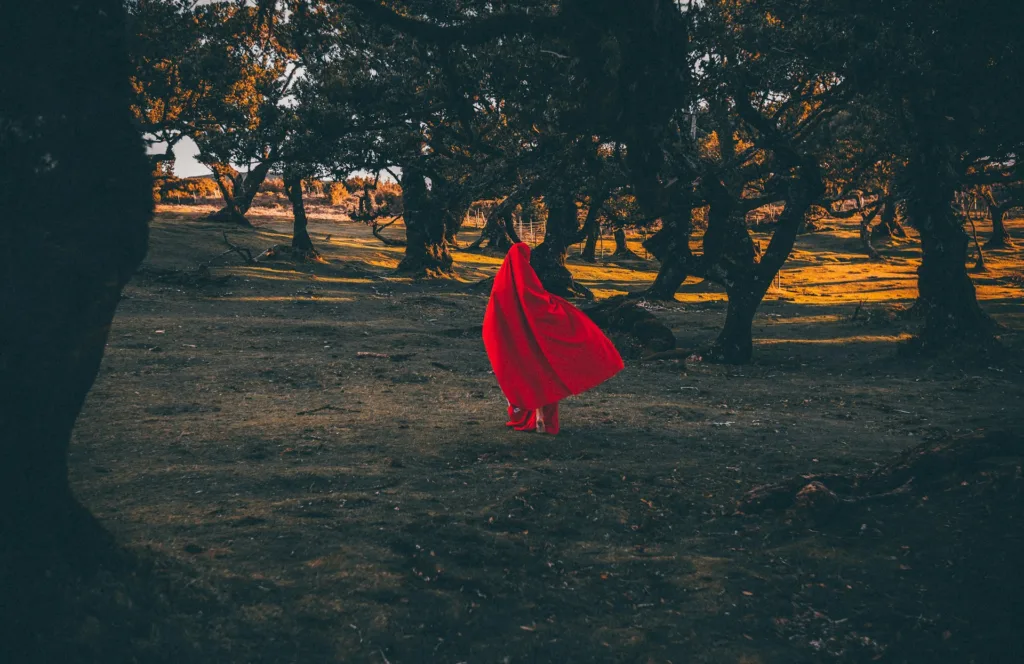
Photo by Daniele Franchi on Unsplash
Join Acharya Tadany’s WhatsApp community to receive thoughts, poems, reflections on spirituality, and artistic inspirations directly in a secure and private space:
Link – https://chat.whatsapp.com/C9EnrWVVc4GHN3XBheabDY