

 Tadany Um refúgio para a alma e um convite à consciência.

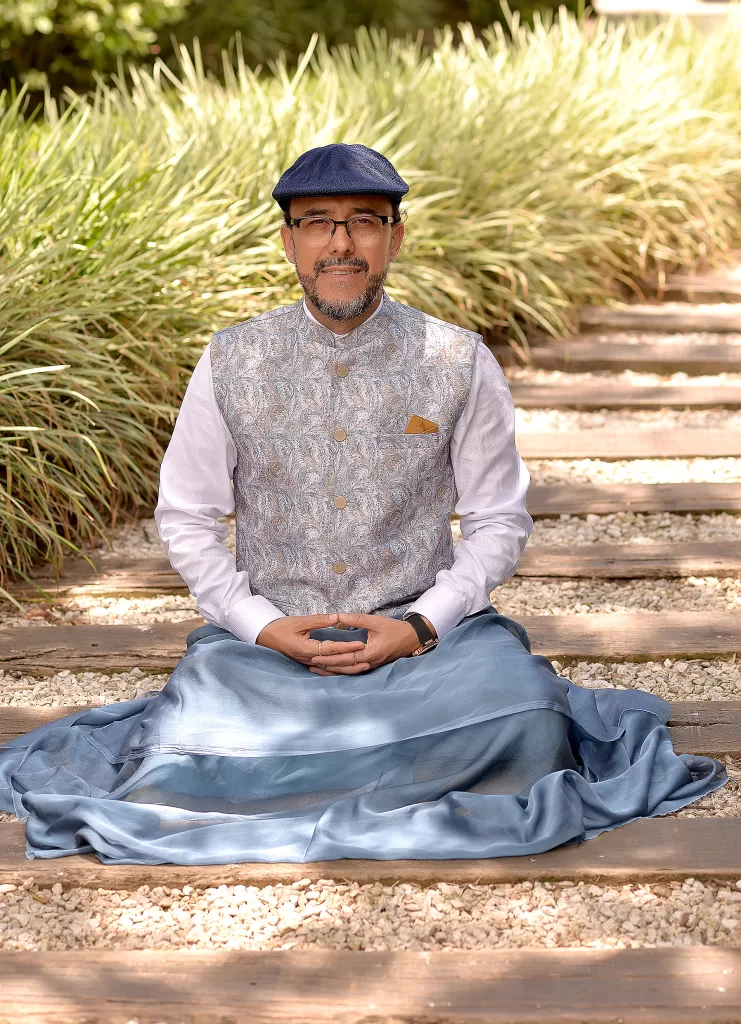
॥ विवेकचूडामणि ॥ … Vivekacūḍāmaṇi … By Acharya Tadany
Class 5, Nov 9, 2026.
Summary
Overview
Acharya Tadany presents Śankarācārya’s progressive framework of stages leading toward Mokṣa (liberation), using a Sanskrit verse to outline an ascending ladder of spiritual qualifications. The class covers the distinction between Dharma Śāstra and Vedānta, the three stages of Vedantic learning (Śravaṇam, Mananam, Nididhyāsanam), and the culminating states of Jīvan Mukti and Videha Mukti.
Key Concepts
- Vipratā vs. Vidvattva: Vipratā refers to knowledge of Dharma Śāstra (values, attitudes, righteous living), while Vidvattva refers to Vedantic learning (Śravaṇam — listening to Vedānta under a qualified guru)
- Karma Yoga vs. Jñāna Yoga: Karma Yoga belongs to Dharma Śāstra; Jñāna Yoga is Vedānta proper — a critical distinction often misunderstood
- Śravaṇam: Listening to Vedānta under a qualified guru; requires both a competent teacher and a prepared student
- Mananam (Ātma-Anātma Vivecanam): Independent reasoning and discernment to remove doubts and vagueness about the teaching
- Nididhyāsanam (Svanubhava): Internalization and assimilation of self-knowledge; replacing the concept of Brahman/Ātmā with the direct conviction “I am Brahman”
- Jīvan Mukti: Liberation while alive — abiding in self-knowledge effortlessly and spontaneously
- Videha Mukti: Liberation after death — freedom from the cycle of birth and death; dissolution of the three bodies (physical, subtle, causal)
- Īśvara Anugraha: Divine grace as a booster to one’s own effort; both personal effort and grace are necessary for Mokṣa
- Śrotriyam and Brahmaniṣṭha: The two essential qualifications of a true guru as defined in the Muṇḍaka Upaniṣad
Important Questions Raised
- What is the difference between Vipratā and Vidvattva?
- Why should Vedānta not be introduced in schools and universities?
- How does one identify a genuine guru if one lacks the knowledge to evaluate the guru’s liberation?
- What is the difference between Nididhyasanam and Jivan Mukti?
- How much grace (punyam) is required to attain Mokṣa, and what role does personal effort play?
Summary of Learning
- Śankarācārya presents an ascending ladder of spiritual qualifications, each stage rarer and more difficult than the previous one
- Vipratā (Dharma Śāstra knowledge) and Vidvattva (Vedantic learning) are distinct; only Dharma Śāstra is appropriate for schools and universities
- Karma Yoga is part of Dharma Śāstra, not Vedānta — a common source of confusion
- Śravaṇam requires a qualified guru; one cannot undertake Vedantic learning independently
- Mananam demands independent thinking and rational inquiry; Vedānta cannot be passively received
- Nididhyāsanam is the internalization of self-knowledge, requiring effort and will
- Jīvan Mukti is the effortless, spontaneous abidance in the knowledge “I am Brahman”
- Videha Mukti is the final liberation after the physical death of the Jīvan Mukta
- Both personal effort (Prayatnaḥ) and divine grace (Īśvara Anugraha) are indispensable for Mokṣa
- Human birth is an extraordinarily rare and precious opportunity that must not be taken for granted
Viprata vs. Vidvatva — Dharma Śāstra and Vedānta Distinguished
Śankarācārya’s verse presents a hierarchy of spiritual qualifications. Two terms in this hierarchy — Vipratā and Vidvattva — are often confused because both relate to learning.
Vipratā refers to knowledge of Dharma Śāstra: the study of values, attitudes, and righteous living (karma yoga).
Vidvattva, by contrast, refers to Vedantic learning — specifically Śravaṇam, the act of listening to and receiving the teaching of Vedānta from a qualified guru.
Acharya Tadany emphasized that this distinction has a direct practical implication: Vedānta should not be introduced in schools, colleges, or universities. Vedānta is a body of knowledge meant exclusively for those who have already attained the preparedness known as Sādhana Catuṣṭaya Sampatti — the fourfold qualifications gained through Dharma Śāstra.
What schools and universities may appropriately teach is the Veda Pūrva portion — specifically the attitudinal and value-based dimensions of Dharma Śāstra (excluding rituals, which are tied to birth-based traditions and are not universally applicable in contemporary society).
A common confusion arises because Karma Yoga — which belongs to Dharma Śāstra — appears prominently in the Bhagavad Gītā, which is widely regarded as the essence of Vedānta. This leads many to mistakenly classify Karma Yoga as Vedānta. Acharya Tadany clarified: Karma Yoga is Dharma Śāstra; Jñāna Yoga is Vedānta. Śankarācārya uses Vipratā and Vidvattva to make precisely this distinction.
Śravaṇam — Listening to Vedānta Under a Qualified Guru
Vidvattva corresponds to Śravaṇam: exposing oneself to the teaching of Vedānta by listening to a qualified and competent guru. Śankarācārya places Śravaṇam higher on the ladder of rarity because it requires not only a prepared student but also a genuine guru.
The Muṇḍaka Upaniṣad defines a true guru by two qualifications: Śrotriyam (mastery of the scriptural tradition) and Brahmaniṣṭha (abidance in Brahman). Acharya Tadany acknowledged a fundamental epistemological challenge: to verify whether a guru is a Brahmaniṣṭha, one would already need the knowledge that the guru is meant to impart — a classic catch-22.
The Śāstra’s resolution is that one must pray to Bhagavān (God), who, out of infinite grace, presents the appropriate guru to the appropriate seeker at the appropriate time. This means a seeker may pass through various teachers and traditions before arriving at a qualified Vedānta guru — and this is considered a natural part of the journey.
Śravaṇam is thus rare because it requires the convergence of a prepared student, a qualified guru, and divine grace.
Mananam — Independent Thinking and Discernment (ātmā-Anātmā Vivecanam)
After Śravaṇam comes Mananam, represented in the verse as Ātma-Anātma Vivecanam — the capacity to discriminate between the Self (Ātmā) and the non-Self (Anātmā), between the permanent and the temporary, between what is liberating and what is binding.
Vedānta does not ask students to accept the teacher’s words blindly. Independent thinking is not merely encouraged — it is required. Acharya Tadany cited the traditional preparatory disciplines of Tarka (logic and reasoning), Vyākaraṇa (grammar), and Mīmāṃsā (epistemological analysis) as tools for sharpening the intellect before Vedantic study.
A Sanskrit verse was quoted to illustrate this point: just as a mirror is useless to a person without eyes, the Śāstra (Vedānta) cannot benefit a student who lacks independent discernment. The Śāstra is the mirror; independent thinking, reasoning, and the removal of doubt are the eyes. The Upaniṣads use the terms Paṇḍita (one with scriptural learning) and Medhāvī (one with independent intelligence) to describe the ideal Vedānta student.
Mananam is the stage at which the student uses his or her own reasoning to assimilate the teaching, resolve doubts, and remove vagueness — making the knowledge genuinely one’s own.
Nididhyasanam, Jivan Mukti, and Videha Mukti
The third stage of Vedantic practice is Nididhyāsanam, referred to in the verse as Svanubhava (direct personal experience) or Aparokṣīkaraṇam — the internalization and assimilation of self-knowledge. This stage involves replacing the conceptual understanding of “Brahman” or “Ātmā” as something external or separate with the direct, wholehearted conviction: “I am Brahman” (Aham Brahmāsmi).
The distinction between Nididhyāsanam and Jīvan Mukti is subtle but significant. In Nididhyāsanam, effort and will are still involved — the student actively works to reprogram habitual patterns of identification. In Jīvan Mukti, this abidance in self-knowledge has become effortless and spontaneous. The liberated person (Jīvan Mukta) lives out the remainder of their Prārabdha Karma (the portion of karma that has already begun to bear fruit) in this state of freedom.
Upon the death of the physical body, the Jīvan Mukta transitions to Videha Mukti — liberation from the cycle of birth and death, with the dissolution of all three bodies: the physical (Sthūla Śarīra), the subtle (Sūkṣma Śarīra), and the causal (Kāraṇa Śarīra). This is the final stage of the Vedantic journey, from human birth (Nara Janma) all the way to complete liberation (Mukti).
Śankarācārya concludes the verse by stating that Mokṣa is not possible without Īśvara Anugraha — divine grace accumulated over millions of human births (Śata Koṭi). However, grace does not replace personal effort; it serves as a booster. Both Prayatnaḥ (one’s own effort, dedication, and emotional bravery) and Īśvara Anugraha are necessary. Acharya Tadany used the analogy of the Snakes and Ladders game to illustrate how progress can be reversed at any stage, and how grace and effort together determine the outcome.
The overarching message is that human birth is an extraordinarily rare and precious opportunity. Every stage of the spiritual ladder becomes rarer as one ascends. Students are urged not to take their human existence for granted but to engage with sincerity, humility, and devotion.
Sanskrit Glossary
| Sanskrit Term (Transliteration) | Devanāgarī | Meaning |
| Ātmā | आत्मा | The Self; the eternal, unchanging consciousness |
| Anātmā | अनात्मा | The non-Self; that which is not the eternal Self |
| Brahman | ब्रह्मन् | The absolute reality; the supreme cosmic consciousness |
| Mokṣa / Mukti | मोक्ष / मुक्ति | Liberation; freedom from the cycle of birth and death |
| Vipratā | विप्रता | Knowledge of Dharma Śāstra; spiritual culture and values |
| Vidvattva | विद्वत्त्व | Vedantic learning; knowledge acquired through Śravaṇam |
| Dharma Śāstra | धर्म शास्त्र | Scripture dealing with righteous living, values, and duties |
| Karma Yoga | कर्म योग | The path of selfless action; righteous living through duties |
| Jñāna Yoga | ज्ञान योग | The path of knowledge; Vedānta proper |
| Śravaṇam | श्रवणम् | Listening to Vedānta teachings from a qualified guru |
| Mananam | मननम् | Reflection; independent reasoning to remove doubts |
| Nididhyāsanam | निदिध्यासनम् | Deep meditation; internalization and assimilation of knowledge |
| Svanubhava | स्वानुभव | Direct personal experience; self-realization |
| Aparokṣīkaraṇam | अपरोक्षीकरणम् | Making the indirect knowledge direct; actualization |
| Jīvan Mukti | जीवन् मुक्ति | Liberation while living; living in freedom |
| Videha Mukti | विदेह मुक्ति | Liberation after death; final freedom from embodiment |
| Īśvara Anugraha | ईश्वर अनुग्रह | Divine grace; blessing of the Lord |
| Śrotriyam | श्रोत्रियम् | One well-versed in the scriptures; scriptural mastery |
| Brahmaniṣṭha | ब्रह्मनिष्ठ | One established in Brahman; abiding in the highest reality |
| Bhagavān | भगवान् | The Lord; God |
| Śāstra | शास्त्र | Scripture; authoritative text |
| Ātma-Anātma Vivecanam | आत्म-अनात्म विवेचनम् | Discrimination between Self and non-Self |
| Sādhana Catuṣṭaya Sampatti | साधन चतुष्टय सम्पत्ति | The fourfold qualifications for Vedantic study |
| Tarka | तर्क | Logic and reasoning |
| Vyākaraṇa | व्याकरण | Grammar; linguistic analysis |
| Mīmāṃsā | मीमांसा | Epistemological analysis; philosophical inquiry |
| Paṇḍita | पण्डित | One with scriptural learning; learned scholar |
| Medhāvī | मेधावी | One with independent intelligence; bright intellect |
| Aham Brahmāsmi | अहं ब्रह्मास्मि | “I am Brahman” — the great Vedantic declaration |
| Prārabdha Karma | प्रारब्ध कर्म | The portion of past karma that has begun to bear fruit |
| Sthūla Śarīra | स्थूल शरीर | The physical body; gross body |
| Sūkṣma Śarīra | सूक्ष्म शरीर | The subtle body; mind and sense organs |
| Kāraṇa Śarīra | कारण शरीर | The causal body; body of ignorance |
| Nara Janma | नर जन्म | Human birth |
| Prayatnaḥ | प्रयत्नः | Personal effort; dedicated practice |
| Śata Koṭi | शत कोटि | Hundreds of millions; countless |
| Puṇyam | पुण्यम् | Merit; spiritual credit from righteous actions |
| Veda Pūrva | वेद पूर्व | The earlier portion of the Vedas; Karma Kāṇḍa |
| Bhagavad Gītā | भगवद् गीता | The Song of the Lord; sacred Hindu scripture |
| Muṇḍaka Upaniṣad | मुण्डक उपनिषद् | One of the principal Upaniṣads |
Acharya Tadany