Tadany Um refúgio para a alma e um convite à consciência.

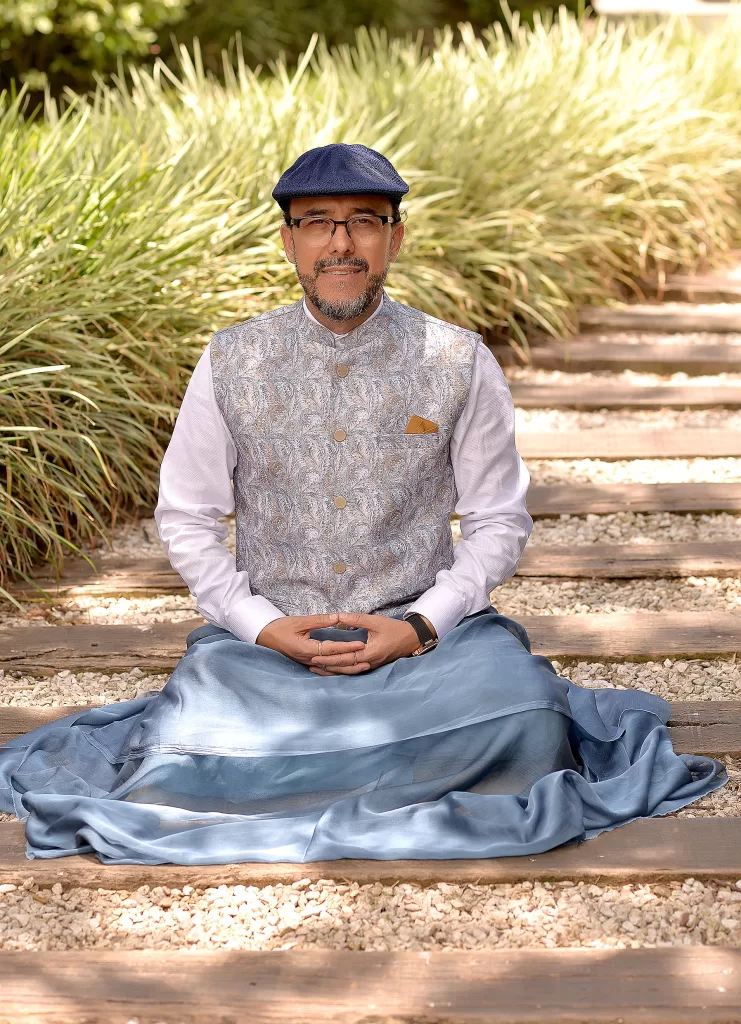
॥ तत्त्व बोध ॥ … Tattva Bodha …By Acharya Tadany
AI Summary – Class 58, Aug 24, 2025
Summary
Benefits of Self-Knowledge
Acharya Tadany began the main teaching by reading from the Tattva Bodha text in Sanskrit, including the opening invocation and the verse defining Jīvan Mukti. He explained that the benefits of Ātma Jñāna (self-knowledge) in Vedānta are broadly classified into two categories:
- benefits enjoyed while living in the body (Jīvan Mukti)
- benefits relating to liberation from the cycle of birth and death (Videha Mukti).
Jīvanmukti – Liberation While Living
The first benefit discussed was Jīvan Mukti, which refers to the state of the wise person (jñānī) who still possesses a physical body and lives in the world with family and circumstances.
Despite experiencing all the ups and downs, favorable and unfavorable moments of life, the jñānī enjoys inner peace, composure, and a balanced mind. Such a person remains in harmony and maintains inner joy throughout all changing circumstances.
Acharya Tadany explained that even when the greatest tragedy occurs, the jñānī initially experiences shock—asking “What?”—but quickly invokes the knowledge of the higher Self. The wise person recognizes that all tragic circumstances belong to the mortal “I” (the body-mind-sense complex), whereas the real “I” (the immortal, absolute Self) remains undisturbed.
By invoking the higher Self, even the worst tragedies become insignificant, like stars that disappear in the presence of the sun’s light.
Emotional Immunity and Inner Composure
Jīvan Mukti provides what Acharya Tadany described as “emotional immunity”—the emotional strength to bounce back from any situation and move forward as if there were no problems. This higher Self is always available for the jñānī to invoke at will, at any time.
To illustrate this principle, Acharya Tadany used the analogy of an actor. A famous actor may play the role of a miserable pauper, crying and suffering on stage, but deep inside knows “this is just a role.” Similarly, actors in Indian plays based on the Rāmāyaṇa or Mahābhārata may weep for a lost Sītā while their real spouse sits in the audience. The actor can always invoke the trouble-free “I” beyond the role.
Another analogy used was that of a musician who must maintain śruti (the scale or note) throughout all songs. If the śruti is forgotten, the music becomes noise and loses harmony.
Similarly, the jñānī continues playing all life’s roles while always maintaining awareness of the true Self in the background, ensuring inner harmony.
The Worldly Person Before Knowledge
Before self-knowledge, the ordinary person firmly identifies with the mortal body, thinking “I am this body” (deho’ham), “I am male” or “I am female” (puruṣo’ham), and “I am a brāhmaṇa” or belonging to a particular varṇa (social class). This person is convinced that these identities—gender, nationality, age, social status—constitute their true nature. This is the only “I” such a person knows.
The Wise Person After Knowledge
After śravaṇam (listening to the teaching), mananam (reflection and removal of doubts), and nididhyāsanam (meditation), the wise person practices shifting identity from the mortal “I” to the immortal “I.” Through Vedantic meditation as described in the sixth chapter of the Bhagavad Gītā, one learns to maintain awareness of the absolute Self while continuing to play all worldly roles.
The jñānī understands: “I am not a brāhmaṇa, not a kṣatriya, not a vaiśya, not a śūdra. I am not in the brahmacārya, gṛhastha, vānaprastha, or sannyāsa stage of life. I am not male, not female.” Gender belongs to the physical body, which is merely a temporary costume worn in this birth. In previous births, one might not have even been human.
The Nature of the True Self
The true Self is described as asaṅgaḥ (unattached), saccidānanda svarūpaḥ (of the nature of existence-consciousness-bliss), and prakāśa svarūpaḥ (of the nature of illumination). The consciousness principle reveals not only one’s own body-mind-sense complex but the entire physical universe. The Self is sarvāntaryāmī (the inherent principle of all), present in everybody and everything.
Acharya Tadany used the analogy of a wave recognizing that its true nature is water, not limited to one location. Similarly, the jñānī understands: “I am the consciousness not only behind this body but behind all bodies.” Like a thread connecting all beads in a mālā (necklace), consciousness connects all beings. Though normally invisible, without the thread, the beads cannot be held together.
The Self is also compared to space (cidākāśa)—space-like consciousness that pervades everything, supports everything, yet remains unaffected by anything moving within it.
For the Jīvanmukta, these are not mere words but lived realities claimed through direct knowledge (aparokṣa jñāna). The wise person claims: “Consciousness is myself. I am of the nature of consciousness.”
Benefits of Self-Knowledge Throughout Life
Acharya Tadany emphasized that self-knowledge provides emotional immunity that becomes especially valuable as one ages. Normally, identifying with the body-mind-sense complex leads to increasing emotional problems in old age: fear of diseases, fear of losing loved ones, fear of loneliness, and fear of death. Children become busy with their own lives, leaving elderly parents to confront their existence alone.
However, with self-knowledge, one recognizes that all these—disease, loss, loneliness, even the departure of one’s own body—are incidental. The jñānī can always dwell on the higher nature that never comes and goes. This allows one to enjoy even old age without complaining about what one used to be able to do or lamenting that loved ones are unavailable. The “complaining department” is shut down because “everything’s okay.”
Vedānta clearly states that only self-knowledge can provide this emotional immunity. Money, people, fame, positions—all come and go. Once retired, former directors and vice presidents sit on sofas praying for hours to fly by. None of these external things provide lasting immunity because they are impermanent. Only Ātma Jñāna offers true emotional strength, and this benefit is available right here, right now, while living this very life.
Connection to Bhagavad Gītā
Acharya Tadany referenced the end of the second chapter of the Bhagavad Gītā, where the glory of the JīvanMukta is described as sthitaprajña (one of steady wisdom). This person is described as vītarāgabhayakrodhaḥ (free from attachment, fear, and anger), sthitadhīr muniḥ (a sage of steady intellect), one who is not disturbed by joyful moments nor carried away by unhappy moments, but enjoys samatvam (equanimity) throughout all situations and circumstances of life. The word samatvam is repeated throughout the Bhagavad Gītā to describe this harmonious existence.
Videha Mukti – Liberation from Birth and Death
The second benefit of self-knowledge is Videha Mukti—liberation from the cycle of birth and death. Acharya Tadany contrasted the fate of the wise with that of the unwise (ajñānī).
At death, the physical body (sthūla śarīra) returns to the five elements (pañca bhūtāni) from which it came. However, the subtle body (sūkṣma śarīra) and causal body (kāraṇa śarīra)—the invisible core and reflecting medium—survive.
For the ignorant person (saṃsārī), the surviving reflecting medium and reflected consciousness continue and eventually take another physical body based on accumulated karma. Each individual is responsible for their own rebirth (punarjanma). The next body could be any form—human, animal, or plant—depending on the type of karma. After living in that body for a time, it too is dropped, and the cycle continues endlessly.
Acharya Tadany quoted from Bhaja Govindam by Śaṅkarācārya: “Punarapi jananam, punarapi maraṇam, punarapi janani jaṭhare śayanam. Iha saṃsāre bahu dustāre kṛpayā’pāre pāhi murāre.” (Again birth, again death, again lying in the mother’s womb. This saṃsāra is very difficult to cross—save me, O Lord!)
The Law of Karma and Transcendence
The journey of the ignorant person is governed by the law of karma—a unique law taught by the śāstra (scriptures). While science discusses physical and natural laws available for scientific study, only the śāstra reveals the law of karma, which governs the entire manifestation and individual lives. Our lives are thus governed by two sets of laws: natural/scientific laws and the law of karma.
The wise person, however, transcends karma and thereby transcends the cycle of birth and death. By gaining aparokṣa jñāna—direct knowledge that “I am Brahman” (brahmaivaham asmi)—the jñānī becomes free (vinimuktaḥ) from all karmas responsible for perpetuating the cycle. This freedom from rebirth is Videha Mukti.
Q&A After class
Sandra asked what happens after saṃsāra stops—after the person or spirit is liberated and no longer returns. Acharya Tadany answered that one merges with the totality, which is the only way to finish the cycle of birth and death. Just as when a wave breaks, it doesn’t disappear but becomes water, the liberated being merges back into the infinite. There is no longer the individual, intrinsic, incidental identification. He noted that this question would be addressed more fully in the next class.
Acharya Tadany