Tadany Um refúgio para a alma e um convite à consciência.

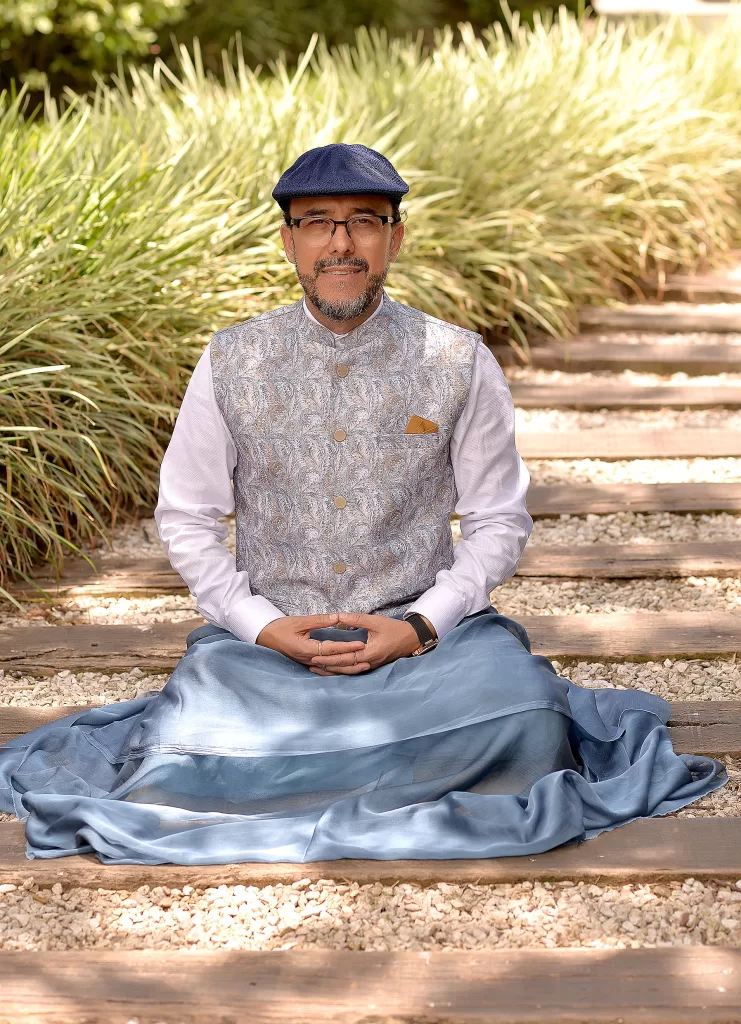
॥ विवेकचूडामणि ॥ … Vivekacūḍāmaṇi …By Acharya Tadany
Class 136, Sept 16, 2026.
Before Class
Chanting of Gaṇapati Atharvaśīrṣa Upaniṣad
Ācārya Tadany chanted the complete Gaṇapati Atharvaśīrṣa Upaniṣad at the beginning of class, explaining that this Upaniṣadic text presents Lord Gaṇeśa as Ātman or Brahman itself. He noted that he had been memorizing this text over the past couple of months through daily practice. The Upaniṣad is described as containing the essence (sāra) of Vedānta in a short, powerful form, making it accessible and meaningful for Vedānta students who can directly relate its teachings to the non-dual reality.
Summary
Where Consciousness Can Be Recognized
The central teaching of the class focused on Śloka 132 from Vivekacūḍāmaṇi. Ācārya Tadany explained that although consciousness (Ātman) is all-pervading (sarvagata), it can only be directly recognized in one specific place: within one’s own mind (antaḥkaraṇa).
Key points on the recognition of consciousness:
- Consciousness cannot be experienced in the external world or in material objects. When scientists probe the brain or any part of the body, they only find various forms of matter—cells, neurons, synapses—never consciousness itself.
- You cannot directly experience consciousness in another person’s body or mind. You can only infer that another person is conscious based on their responses and behaviors.
- The only place where consciousness can be intimately and directly experienced is within your own mind—not even in your own body, but specifically in the mind.
- This is why a doctor cannot feel a patient’s pain. When examining where pain is located, the doctor must rely on the patient’s responses because pain (a conscious experience) can only be felt by the person experiencing it.
- Similarly, the difference between a sleeping person and a dead person cannot be determined by examining their bodies alone—both appear as inert matter. Only when responses occur can we infer consciousness is present.
The Cave of the Mind (Buddhi-guhā)
Ācārya Tadany explained the Vedāntic metaphor of the mind as a cave (guhā). The word guhā comes from the root guh, meaning “to hide” or “to conceal.” A cave is naturally dark within, and whatever is inside remains hidden and imperceptible unless light is brought in.
The human mind is likened to this cave because Ātman, though present within everyone, remains hidden due to the darkness of ignorance (ajñāna). The Kaṭhopaniṣad describes Ātman as durdarsham (very difficult to see), gūḍham (hidden), and guhāhitam (placed in the cave), concealed from ancient times (purāṇam).
However, Ātman is not truly hidden—it only appears as though concealed. It is always self-evident (svayam-prakāśa), but the darkness of ignorance in the mind obscures its recognition.
The Nature of a Tranquil Mind (Sattvātmani)
Ācārya Tadany introduced the term avyaktakṛta-ākāśa, which technically refers to the kāraṇa-śarīra (causal body) but in this context indicates a quiet, non-extroverted, tranquil mind. The śloka describes the mind as sattvātmani—a mind constituted predominantly of sattva-guṇa.
Understanding sattvātmani:
- The mind itself is born from the sattva-guṇa of the five elements, as studied in the foundational classes on creation (sṛṣṭi-prakriyā).
- A sāttvika mind is characterized by tranquility, clarity, and non-distraction.
- In such a mind, Ātman becomes uṣa-prakāśa—intensely bright and self-evident.
Ācārya Tadany clarified an important distinction: In both a thoughtful (restless, extroverted) mind and a thoughtless (quiet, introverted) mind, consciousness is equally present. However:
- In a thoughtful, distracted mind, consciousness is present but not easily recognized because thoughts demand attention and create distractions.
- In a thoughtless, tranquil mind, consciousness becomes clearly evident because distractions are absent.
Analogies: The Movie Screen, the Moon, and the Candle
To illustrate how Ātman appears to “shine brighter” in a quiet mind, Ācārya Tadany offered several powerful analogies:
1. The Movie Screen:
When you watch a movie in a theater, the screen is present both during the intermission and during the film. However, during the intermission, you barely notice the blank screen. During the movie, you are completely absorbed in the plot and characters, yet the screen is still there—you simply don’t pay attention to it because of the distraction of the moving images.
For a spiritual seeker who has done śravaṇam (listening), mananam (reflection), and nididhyāsanam (meditation), even while the “movie” of life plays, the “screen” (Ātman) is never forgotten. It remains constantly evident regardless of activity.
2. The Full Moon (Pūrṇimā):
On a full moon night, if you observe the moon at 5 or 6 PM, it appears relatively dim. As evening progresses and the sun sets, the moon appears progressively brighter. By midnight, the moonlight is unmistakable and demands your attention.
But has the moon actually become brighter? No—its brightness remains constant. What has changed is the removal of the distraction of sunlight. Similarly, Ātman’s self-evidence is constant, but with fewer mental distractions, its recognition becomes clearer and more intense.
3. The Candle in the Pūjā Room:
A candle burning in your pūjā room during the day goes largely unnoticed. But as evening comes and household lights are turned off, that same candle appears increasingly bright. In the middle of the night, when you walk through a dark house, that candlelight demands your attention—you cannot miss it.
The candle’s light has not changed; what has changed is the presence or absence of other lights (distractions). In the same way, when the distractions of thoughts and desires diminish, Ātman’s self-luminosity becomes strikingly evident.
4. The Ticking Clock:
An old mechanical clock ticks constantly, but during the busy day, no one notices it. At night, when all other sounds cease and everyone is asleep, that same ticking can become so prominent it may even disturb sleep for those with sensitive hearing.
The volume of the ticking has not increased—the surrounding noise has decreased, making what was always present suddenly undeniable.
The Progression of Recognition: From Beginner to Established (Niṣṭhā)
Ācārya Tadany explained that for a beginning spiritual seeker (śiṣya), these “intermissions”—periods of mental quietude, meditation, or withdrawal from sense objects—are necessary to recognize the “screen” of consciousness.
However, after thorough śravaṇam, mananam, and nididhyāsanam, the seeker reaches niṣṭhā (establishment in the knowledge). At this stage, Ātman is recognized continuously, regardless of activity. As stated in the Bhagavad Gītā (Chapter 6): “Sarvathā vartamāno’pi sa yogī mayi vartate”—”Though engaged in all activities, that yogi abides in Me.”
This means that whether seeing, hearing, touching, smelling, tasting, eating, walking, sleeping, breathing, or talking (paśyan, śṛṇvan, spṛśan, jighran, aśnan, gacchan, svapan, śvasan, pralāpan), the established knower never loses sight of the self-evident Ātman, which is the substratum of all experience.
Q&A after class
What Does “Shining Brighter” Mean?
After the end of the class, Dipti asked an important clarifying question: When we say Ātman “shines brighter” in a tranquil mind, does this mean we become emotionally more aware or experience more ānanda (bliss)?
Ācārya Tadany’s response:
- The recognition of Ātman is a cognitive state, not an emotional experience.
- It is a recognition of one’s true nature—an abiding understanding, not a fleeting feeling or experiential object.
- Experience presupposes a subject-object relationship: an experiencer and an object of experience. But Ātman is never an object—it is the eternal subject, the witnessing consciousness itself.
- Therefore, “shining brighter” refers to the clarity and firmness of cognitive recognition when the mind is tranquil and free from distractions, not to any increase in emotional intensity or pleasure.
Ācārya Tadany indicated that this topic would be explored in greater depth in upcoming classes, building on this foundational understanding.
Acharya Tadany