

 Tadany Um refúgio para a alma e um convite à consciência.

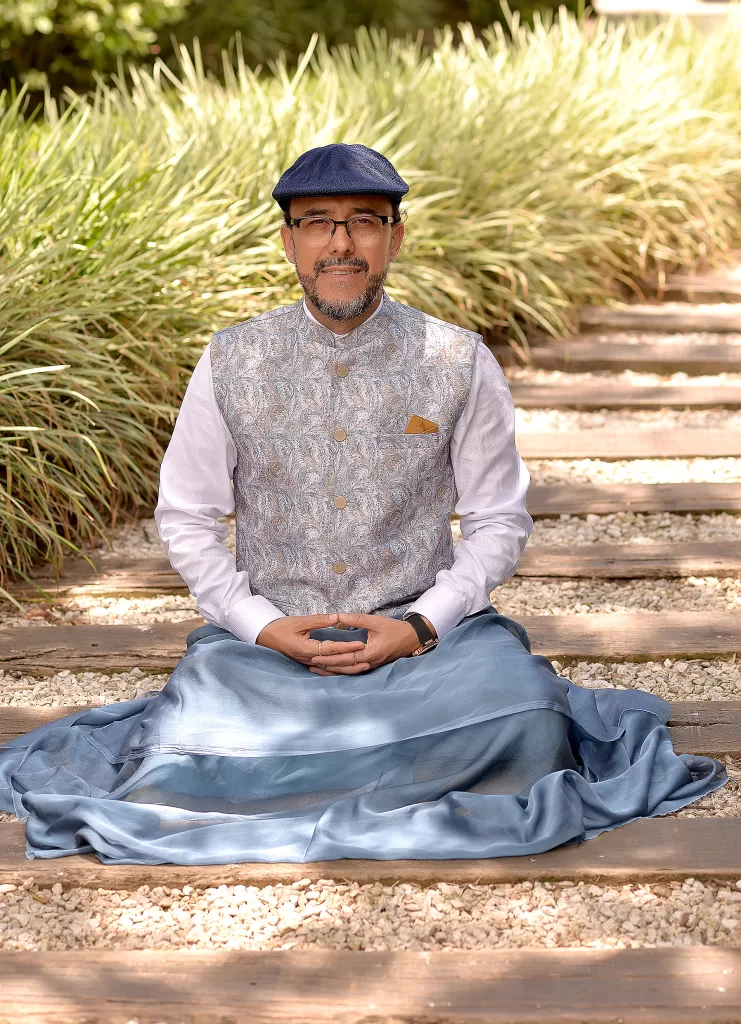
॥ भगवद् गीता ॥ … Bhagavad Gītā … by Acharya Tadany
Chapter 5, Class 201, Oct 15, 2026.
Summary
Introduction to Chapter 5 of the Bhagavad Gītā
This class focused on the fifth chapter of the Bhagavad Gītā, where a central question arises regarding the choice between two distinct spiritual lifestyles: Gṛhastha (householder life) and Sannyāsa (renunciate life).
Acharya Tadany explained that Arjuna is experiencing confusion about which path is superior, as Krishna had previously glorified both lifestyles in earlier chapters of the Gītā. This confusion is natural because Krishna’s teachings in the earlier chapters presented compelling arguments for both paths, making it difficult for Arjuna to discern which one he should follow.
Arjuna’s Confusion: The Central Dilemma
Arjuna’s confusion stems from not clearly assimilating Krishna’s teachings in previous chapters, where both the Gṛhastha and Sannyāsa āśramas were presented as valid paths to spiritual liberation.
The fifth chapter addresses this confusion directly, with Krishna providing clarification on how both paths can lead to the same ultimate goal.
Acharya Tadany emphasized that this type of confusion is a natural part of spiritual inquiry, as sincere seekers often struggle to reconcile seemingly different teachings that all point toward the same truth.
The Gṛhastha Āśrama: Householder Life
Advantages: The Gṛhastha āśrama provides a structured framework for spiritual growth while fulfilling worldly duties.
- Provides material and emotional security through family and community support
- Offers opportunities for dharma (righteous duty) through social service and family responsibilities
- Allows for spiritual practice while engaged in worldly duties
- Creates a stable foundation for raising children and contributing to society
Challenges: Despite its advantages, the householder life requires careful balance and discipline to avoid becoming solely focused on material concerns.
- Carries significant responsibilities toward family members and dependents
- Requires balancing material obligations with spiritual aspirations
- May involve attachment to family, possessions, and social status
The Sannyāsa Āśrama: Renunciate Life
Advantages: The Sannyāsa āśrama offers an undivided focus on spiritual assimilation, free from the distractions of worldly life.
- Provides freedom from material responsibilities and family obligations
- Allows complete focus on spiritual practice and self-realization
- Eliminates material concerns that can distract from spiritual goals
- Offers a direct path to mokṣa (liberation) through renunciation
Challenges: However, renunciation is not merely an external act of giving up possessions, but requires genuine internal detachment and spiritual readiness.
- Lacks material security and stable support systems
- Requires complete dependence on divine providence or charity
- Demands exceptional spiritual strength and detachment
- May be difficult to sustain without proper preparation and guidance
Krishna’s Teaching: Both Paths Lead to Liberation
Acharya Tadany emphasized Krishna’s key teaching that both the Gṛhastha and Sannyāsa lifestyles are valid paths to spiritual liberation. Neither path is inherently superior to the other.
The choice between them depends on an individual’s spiritual development, personal nature, and life circumstances. What matters most is not which āśrama one chooses, but how sincerely and skillfully one practices within that chosen path.
- Current spiritual development and maturity
- Personal temperament and natural inclinations
- Life circumstances and karmic obligations
- Capacity for renunciation and detachment
Understanding the Repetition in Krishna’s Teachings
The class explored why Krishna repeats these teachings in the fifth chapter. The repetition serves to clarify the fundamental principles and address Arjuna’s persistent confusion. By presenting both paths again, Krishna ensures that Arjuna understands that liberation is accessible through either lifestyle when practiced with proper understanding, discipline, and devotion. This pedagogical approach demonstrates Krishna’s compassion and wisdom in ensuring that his student truly comprehends these essential spiritual principles.
Practical Application for Students
The teaching highlights that spiritual progress is not determined by external lifestyle choices alone, but by one’s internal attitude, dedication to dharma, and sincerity in spiritual practice.
Whether one chooses the path of engaged action (karma yoga) as a householder or the path of renunciation (sannyāsa yoga), what matters most is the purity of intention and consistency of practice.
Acharya Tadany stressed that students should focus on cultivating the right inner qualities—such as detachment, devotion, and self-discipline—regardless of which āśrama they find themselves in.
.
Acharya Tadany