

 Tadany Um refúgio para a alma e um convite à consciência.

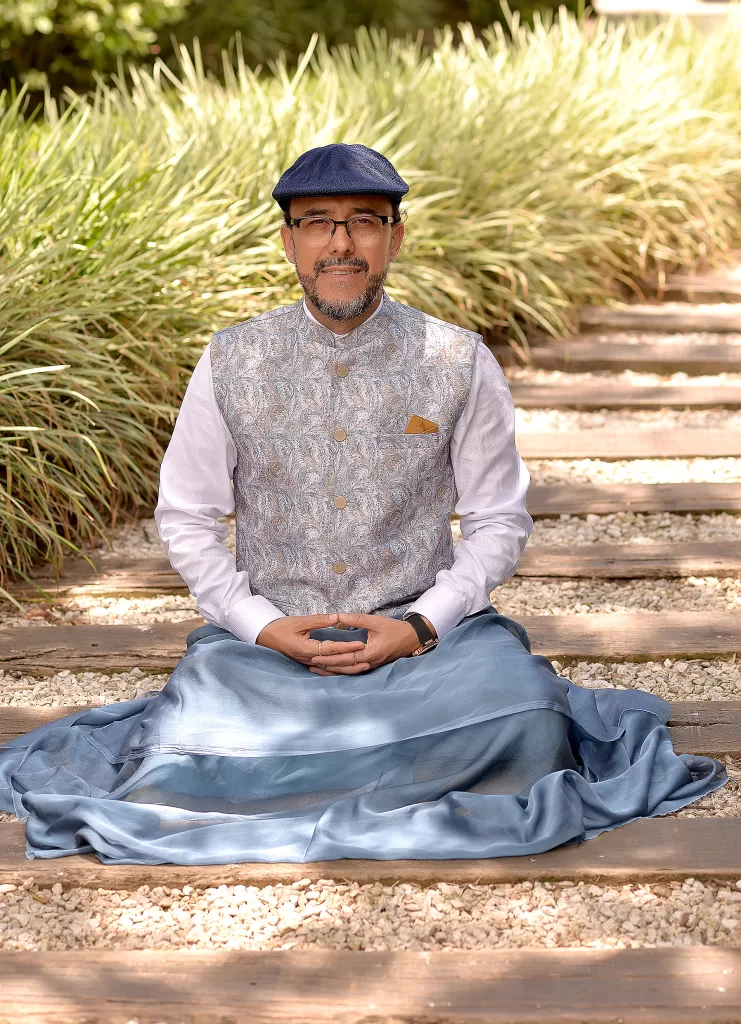
॥ भगवद् गीता ॥ … Bhagavad Gītā … by Acharya Tadany
Chapter 6, Class 238, Oct 13, 2026.
Before Class
The Festival of Navarātri
Acharya Tadany opened the class by explaining the significance of Navarātri to Antonina.
This sacred festival, whose name literally means “nine nights” (nava = nine, rātri = night), is one of the most important celebrations in the Hindu calendar.
It is dedicated to honoring different manifestations of the divine feminine power, known as Śakti, through the worship of three primary goddesses: Durgā, Lakṣmī, and Sarasvatī.
Each goddess represents a distinct aspect of spiritual development and cosmic function. The festival is traditionally structured across nine nights, with the first three nights devoted to Durgā (the destroyer of negativity and inner obstacles), the next three to Lakṣmī (the bestower of prosperity, abundance, and spiritual wealth), and the final three to Sarasvatī (the embodiment of knowledge, wisdom, and the arts).
Acharya Tadany noted that due to the alignment of lunar or solar dates, this particular year’s celebration would extend to ten nights, allowing for a deeper immersion in devotional practices and spiritual reflection.
The festival serves as a powerful reminder of the need to cultivate inner strength, material and spiritual abundance, and discriminative wisdom on the path to self-knowledge.
Summary
The 6th Chapter of the Gītā: Summary 2
This chapter is central to understanding the path of meditation (dhyāna yoga) and the disciplines required for spiritual progress.
Bahiraṅga Sādhanāni: External Disciplines
Acharya Tadany explained the third and fourth disciplines of Bahiraṅga Sādhanāni (external spiritual practices), which are foundational for anyone seeking inner transformation.
Self-Control (Saṁyama)
The third discipline discussed was self-control—the ability to master one’s impulses and reactions. Acharya Tadany emphasized that without self-control, the spiritual aspirant remains enslaved to the whims of the body-mind-sense complex.
Moderation (Yuktāhāra)
The fourth discipline is moderation in all aspects of life. Acharya Tadany stressed that balance is essential in eating, sleeping, recreation, work, and even in modern activities such as using social media. Excess in any direction—whether indulgence or extreme austerity—creates suffering and hinders spiritual progress. By practicing moderation, one reduces unnecessary sorrow and creates the mental clarity needed for meditation.
The Chariot Allegory from the Kaṭha Upaniṣad
To illustrate the importance of self-control and the proper alignment of the inner faculties,
Acharya Tadany invoked the famous chariot allegory from the Kaṭha Upaniṣad. In this metaphor:
- The body is the chariot
- The senses are the horses
- The mind is the reins
- The intellect is the charioteer
- The soul (Ātman) is the passenger
When the intellect (the charioteer) is firm and alert, it controls the mind (the reins), which in turn directs the senses (the horses). This alignment leads to a smooth journey toward spiritual liberation (mokṣa).
However, if the intellect is weak or distracted, the mind becomes loose, the senses run wild, and the chariot veers into chaos—symbolizing a life of suffering and bondage.
Antaraṅga Sādhanāni: Internal Disciplines for Meditation
Acharya Tadany then turned to the more subtle practices—Antaraṅga Sādhanāni, the internal disciplines to be observed immediately before sitting for meditation. He outlined eight essential factors that create the optimal conditions for a successful meditation practice:
1. Deśa (Place)
Choose a clean, quiet, and secluded place for meditation. The environment should be free from disturbances and conducive to turning inward.
2. Kāla (Time)
Select a time when the mind is naturally sāttvic (pure and calm). Early morning, before the activities of the day begin, is traditionally considered ideal.
3. Āsana (Seat)
Use a dedicated seat or mat (āsana) for meditation. This seat should be personal, clean, and reserved for spiritual practice, creating a psychological and energetic association with inner focus.
4. Śarīra (Body Condition)
Maintain an erect posture with the spine straight. This alignment supports alertness and allows prāṇa (vital energy) to flow freely, preventing dullness or physical discomfort during meditation.
5. Indriya (Sense Organs)
Withdraw the sense organs from external objects. Close the eyes gently and turn attention inward, disengaging from sights, sounds, and other sensory distractions.
6. Prāṇa (Breathing)
Ensure that breathing is smooth, silent, and natural. The breath should flow effortlessly through the nostrils without strain or noise, supporting a calm and steady mind.
7. Manas (Mind)
Cultivate a mind like that of a sannyāsī (renunciate)—free from identification with social roles, relationships, and worldly attachments. Drop all labels such as “parent,” “employee,” or “friend,” and simply be present as pure awareness.
8. Buddhi (Intellect)
Maintain intellectual conviction (śraddhā) in the value and benefits of meditation. The intellect must be clear about why meditation is being practiced and must trust in its transformative power. Without this conviction, the practice becomes mechanical and loses its potency.
Practical Guidance for Students
Acharya Tadany encouraged students to test their level of self-control by occasionally saying “no” to habitual indulgences—such as skipping a morning cup of coffee—and observing the mind’s reaction. This simple exercise reveals how much mastery one truly has over the instruments of body and mind.
He also advised students to start their meditation practice with small, manageable time commitments—just 2 to 5 minutes daily—and gradually increase the duration. Consistency is more important than length, and even a brief daily practice builds the discipline and mental clarity necessary for deeper spiritual work.
Conclusion
The class concluded with a brief exchange between Acharya Tadany and Antonina, reinforcing the key teachings and encouraging continued practice of both external and internal disciplines. Acharya Tadany reminded students that the path of yoga is gradual and requires patience, but with sincere effort and proper preparation, meditation becomes a powerful tool for self-realization and inner peace.
Acharya Tadany