Tadany Um refúgio para a alma e um convite à consciência.

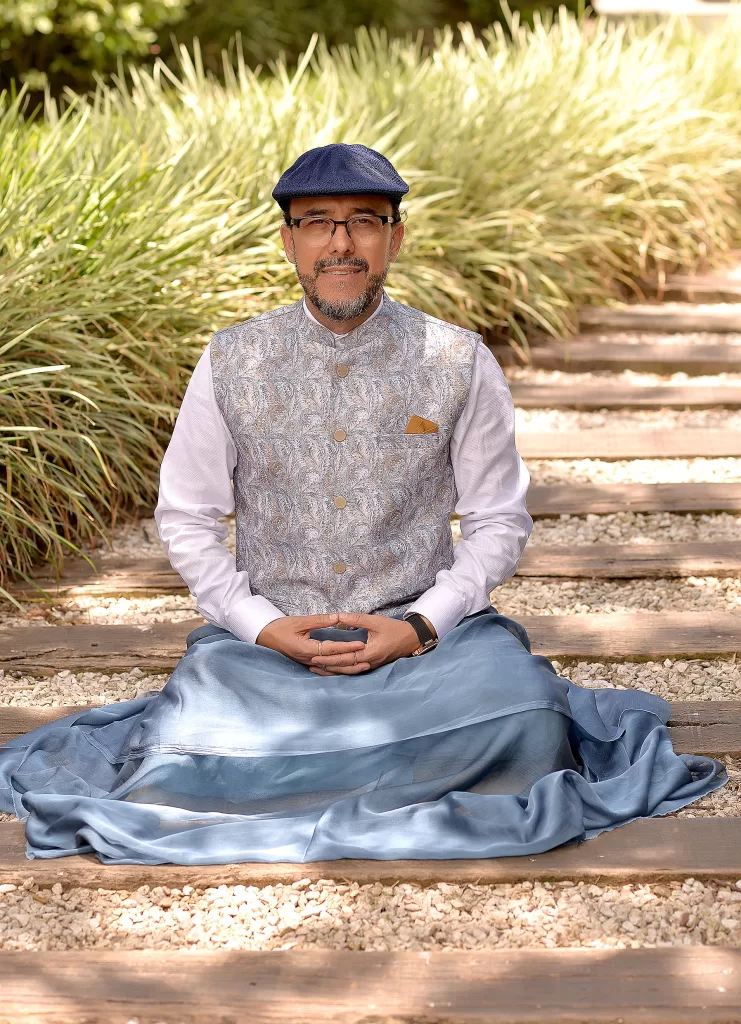
॥ विवेकचूडामणि ॥ … Vivekacūḍāmaṇi … by Acharya Tadany
Summary – Class 134, Aug 19, 2026.
Q&A before class
Dipti’s Question on Māyā, Mithyā, and Ātmā
Dipti raised a fundamental question about the nature of reality, asking what constitutes the real essence of the human body beyond its physical elements. She inquired about the relationship between Māyā (dependent existence), Mithyā (dependent reality), and Ātmā (the Self).
The Problem of Infinite Regression in Cause and Effect
Acharya Tadany explained that our entire understanding of manifestation is based on cause and effect relationships. We perceive a table as an effect whose cause is wood; wood comes from trees, trees from earth, and so forth. However, this chain of causality cannot continue infinitely—otherwise we face an endless regression (the chicken-and-egg problem).
Acharya Tadany emphasized that understanding where this logical reasoning must stop is crucial for comprehending ultimate reality. Our framework of thinking operates within causality, but there must be a point where causality itself ceases to apply.
Māyā: Dependent Existence vs. Illusion
Acharya Tadany clarified a critical distinction: Māyā is not an illusion but rather has dependent existence. This technical term means that Māyā cannot sustain itself independently—it depends on something else for its existence.
Māyā is described as the seed of everything, synonymous with Kāraṇa Śarīram (the causal body), as taught by Śaṅkarācārya in Vivekacūḍāmaṇi. In its undisturbed state, Māyā contains everything in potential existence—like a seed containing the potential for trunk, leaves, branches, roots, and fruits. When Māyā is disturbed, this potential manifests into the visible world.
The Three Guṇas of Māyā
Māyā is Triguṇātmikam—of the nature of the three guṇas: Sattva, Rajas, and Tamas. In its undisturbed state (Kāraṇa Prapañca), everything remains in potential, unmanifest form (avyakta). When disturbed, Māyā manifests the universe with all its diversity. We infer the nature of Māyā based on its effects, just as we infer that a seed contained the potential for an entire tree by observing the grown tree.
Satyam, Mithyā, and Asat: Three Categories of Reality
Acharya Tadany explained Śaṅkarācārya’s teaching that Māyā cannot be categorically classified as either Sat (absolutely real/Satyam) or Asat (completely non-existent). Sat refers only to Ātmā—the ultimate, independent reality. Asat refers to things that never existed at all, like the son of a barren woman or the horns of a hare. Māyā falls into a third category called Mithyā—it has dependent, relative existence. The fundamental teaching is: Ātmā Satyam, Jagat Mithyā—Ātmā alone is the absolute reality; the world (including Māyā) is Mithyā.
The Dream Analogy: Understanding Māyā’s Nature
To illustrate Māyā’s nature, Acharya Tadany used the powerful analogy of a dream. Imagine dreaming that a tiger is chasing you—in the dream world, you experience real fear, you run for your life, you yell for help. The experience feels completely real within the dream. However, the moment you wake up, you realize there was no tiger at all. You don’t ask, “Why was the tiger chasing me? Where did it come from?” because you recognize it had no independent existence—it was all a creation of your mind.
Similarly, for one who awakens to the knowledge of Ātmā, the entire manifest world is recognized as having only dependent existence, like a dream that vanishes upon waking.
The Wave Analogy: Dependent Existence
Acharya Tadany also used the wave-ocean analogy to clarify dependent existence. A wave cannot exist without water; remove the water, and there are no waves. Based on observing waves (the effect), we infer their cause—water. The wave has temporary, dependent existence. But when the wave realizes its true nature as water, it no longer fears breaking, disappearing, or being crushed by other waves. There is no death, no destruction—only water, which is its eternal nature. Similarly, when we realize our true nature as Ātmā, all fear and limitation dissolve.
Māyā’s Two Powers: Āvaraṇa and Vikṣepa Śakti
In Vivekacūḍāmaṇi, Śaṅkarācārya describes Māyā as possessing two powers: Āvaraṇa Śakti (veiling power) and Vikṣepa Śakti (projecting power). Āvaraṇa Śakti veils our true nature, preventing us from seeing that we are Ātmā. Vikṣepa Śakti projects the appearance of the manifest world, making it seem completely real and independent.
These two powers work together to create the experience of limitation, separateness, and bondage. Understanding these powers is essential for spiritual liberation.
Summary
Antarātmā: The Inner Self as Universal Essence
Acharya Tadany provided crucial clarification about the term Antarātmā (inner self). This does not mean Ātmā is located inside the body, which would make it finite and limited.
Instead, “inner” means Ātmā is the essence or content of everything—just as gold is the essence of all gold ornaments, and water is the essence of all waves. Ātmā is the Antarātmā of everything, not just the human body.
Understanding this prevents the mistake of thinking Ātmā is confined within the body. If Ātmā were inside the body, it would be finite; but Ātmā is infinite, all-pervading, the very content of all existence.
Puruṣa: Technical Definition in Vedānta
Acharya Tadany explained that Puruṣa is a technical term in Vedānta that does not mean “male human being” as in common usage. It is derived from puri (city/body) + śayāna (dweller), meaning “the indweller of the body.” The physical body is called a city (pura) because, like a city containing diverse inhabitants and activities, the body contains organs, organisms, bacteria, and countless interactions.
The body is described as Navadvāra Puram (city of nine gates): two eyes, two ears, two nostrils, one mouth, and two lower openings. The Kaṭha Upaniṣad describes it as Ekādaśa Dvāra Puram (city of eleven gates), adding the navel and crown opening (Brahmarandhra).
Puruṣa refers to consciousness dwelling not just in male or female bodies, but as the indweller everywhere.
The Hierarchical Structure: Body to Ātmā
Acharya Tadany taught the profound hierarchical structure from the Kaṭha Upaniṣad: Indriyebhyaḥ parā hyarthāḥ, arthebhyaśca paraṁ manaḥ, manasastu parā buddhir, buddherātmā mahān paraḥ. This describes the chain of command from hardware to ultimate programmer:
- Gross Body (Sthūla Śarīra): The physical shell, the hardware that follows orders—lift the arm, speak, hear. It has no intelligence of its own.
- Senses (Indriyāṇi): The sense organs of knowledge (jñānendriyāṇi)—eyes, ears, tongue, nose, skin. They are data collectors, constantly gathering information: sweet, bitter, beautiful, ugly, pleasant sounds, harsh sounds, fragrances, foul smells. They are restless, always reaching outward.
- Mind (Manas): The emotional processor, the chattering box. The mind receives data from the senses and reacts emotionally—”I want it! I love it! I hate it! I’m excited! I’m repulsed!” The mind is fast, highly emotional, and easily addicted.
- Intellect (Buddhi): The decision-maker, the logical and discriminating capacity. The intellect weighs pros and cons. When senses perceive pizza and the mind says “I want it!”, the intellect says “You’re on a diet—that’s 1,000 calories—don’t eat it.” The intellect should be the boss of the mind and senses.
- Ātmā (Self): Pure consciousness, the silent observer who witnesses everything. Ātmā watches the senses grabbing data, watches the mind craving sensations, watches the intellect deciding. Ātmā is not the brain, not logic, not emotions, not data—it is the witness of all.
Practical Application: Changing Habits Through the Hierarchy
Acharya Tadany explained that in most people, this hierarchical chain is broken or reversed. The senses overpower the mind (like children who act impulsively), and the mind overpowers the intellect (forcing the intellect to make excuses: “It’s just one slice, it won’t hurt”).
To change habits—whether related to food, coffee, drugs, alcohol, or any dependency—you cannot fight at the sense level. If you stare at the pizza, you will lose all the time.
Instead, you must pull back to a higher level: use clear reasoning (Buddhi) to overcome cravings and dependencies. Ultimately, go even higher to Ātmā, the witness—simply observe the craving without feeding it, without being disturbed, compelled, or carried away.
Like sitting on the riverbank watching rapids—if you’re in the rapids, there’s turmoil; as the witness on the bank, you remain cool and undisturbed. This is the psychology of Vedānta for habit change: always move one level up, using Viveka (discrimination) at the intellectual level and witnessing at the Ātmā level.
Puruṣaḥ Purāṇaḥ: Ever-Fresh, Timeless Consciousness
Śaṅkarācārya uses the term Purāṇaḥ (ancient) to describe Ātmā, but clarifies it means pura api navaḥ—though ancient, it is ever-fresh, never old. Ātmā has been present since beginningless time (anādi kāla), yet it is not subject to time. While the physical body ages over 60, 70, 80 years (the lowest level of the hierarchy), Ātmā remains changeless, ever the same, unaffected by time. The body is subject to time’s ravages, but Ātmā is timeless, ever-fresh.
Ānanda: Not Experiential Pleasure
Acharya Tadany provided crucial clarification on Ānanda. Śaṅkarācārya describes Ātmā as nirantara akhanda sukha anubhūti—continuous, unbroken bliss-consciousness.
However, we must not mistake Ānanda for experiential pleasure. We only know one type of pleasure: experiential—whether ordinary or mystical. Some teachers wrongly spread the idea that Ātmā-ānanda is a mystical experience you have when you close your eyes and feel a special breeze. But even mystical experiences are experiential pleasures, and all experiences are subject to time—they have a beginning, duration, and end.
Whenever someone talks about Ātmā-ānanda as an experience, they inevitably mention samādhi (a temporary state). But Ānanda is not an experience.
The term nirantara (continuous, not subject to time) indicates that Ānanda is not something that comes and goes.
You cannot have “permanent experiential pleasure”—that’s a contradiction, because anything experiential is by nature impermanent. Ānanda is the ever-present, timeless nature of consciousness itself, not a state to be attained or lost.
Q&A after class
The Three Bodies: Sthūla, Sūkṣma, and Kāraṇa Śarīra
Acharya Tadany explained the three bodies (Śarīra Trayam): the gross body (Sthūla Śarīra), subtle body (Sūkṣma Śarīra), and causal body (Kāraṇa Śarīra). When the physical body dies, it is the gross body that departs—this is the shortest-lived. The subtle body continues and is often mistaken for Ātmā. The subtle body persists either until liberation (mokṣa) is attained, or during cosmic dissolution (pralaya), when it returns to unmanifest form in Kāraṇa Prapañca. In the next cycle of creation (sṛṣṭi), it manifests again. The causal body has existed forever in potential form—all our vāsanās (tendencies) and karmas have been carried in the causal body for billions of years, even before this universe came into existence. Acharya Tadany humorously noted: “If you think you’re old, rethink it—your causal body is billions of years old!”
Ātmā: All-Pervading, Not Coming or Going
Acharya Tadany clarified that Ātmā does not come or go. If Ātmā were to leave the body, it would be a finite entity, something other than the infinite consciousness. Ātmā is all-pervading (sarvagata), infinite, self-evident, and ever-present. The essence of everything, Ātmā is present in living and non-living things alike, because Ātmā is not confined to or dependent on the physical body. It is the unchanging substratum of all existence.
The Crown Opening (Brahmarandhra)
When asked about the crown opening mentioned in the Upaniṣads, Acharya Tadany clarified that this is not a physical opening, though in babies the skull is softer at the crown (which doctors warn to protect). The Brahmarandhra is more a subtle, figurative concept—described in some traditions as the door through which consciousness moves at liberation, or in yogic traditions as the opening when Kuṇḍalinī rises. However, Acharya Tadany cautioned that these mystical traditions often describe experiential satisfactions and powers, which again fall into the trap of treating spiritual realization as an experience. The Śāstra does not elaborate much on this, and Vedānta does not focus on mystical experiences or states, but rather on knowledge of one’s true, timeless nature.
Key Insight: Reprogramming Our Mental Software
Acharya Tadany concluded by emphasizing that this teaching helps us reprogram our mental software. By understanding the hierarchical structure from body to Ātmā, recognizing Maya’s dependent existence, and applying Viveka (discrimination) through the intellect and witnessing through Ātmā, we can transform our habits, overcome dependencies, and ultimately realize our true nature as infinite, timeless consciousness—free from fear, limitation, and the illusion of separateness.
Acharya Tadany